


Art Nouveau Chandelier
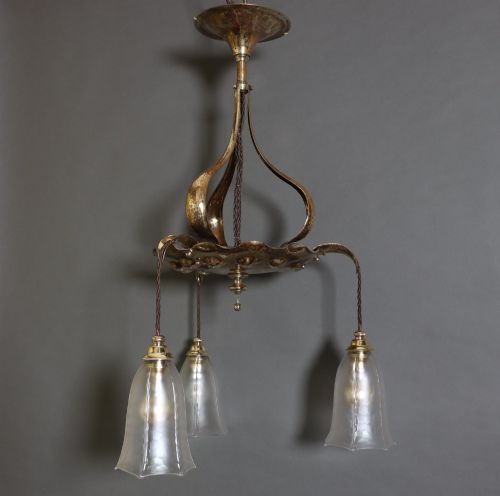
An art nouveau chandelier brings organic lines and fluid metalwork to a room, capturing the sculptural ambitions of the turn of the twentieth century.
Art Nouveau Chandelier
When you search for an art nouveau chandelier, you look at hanging light fittings that embody the curving, nature-inspired motifs of the late nineteenth and early twentieth centuries. These pieces encompass styles ranging from French Art Nouveau and Arts and Crafts to English and Continental interpretations, appearing as ceiling lights, pendant lights and bowl chandeliers.
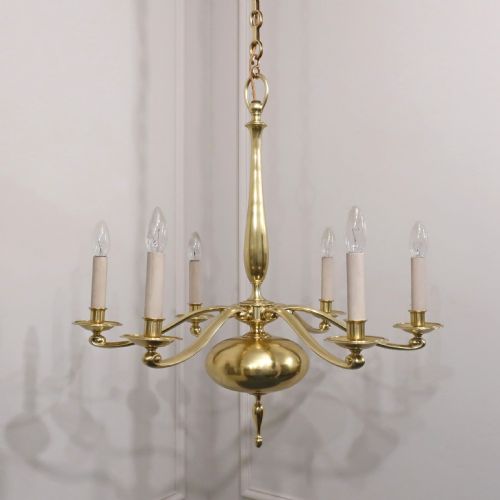
The versions you meet most frequently on this page date from the eighteen nineties up to nineteen twenty, often formed with multiple arms or suspended bowls. They utilise period materials such as brass, wrought iron and gilt bronze to support shades shaped as grapes, flowers or geometric glass.
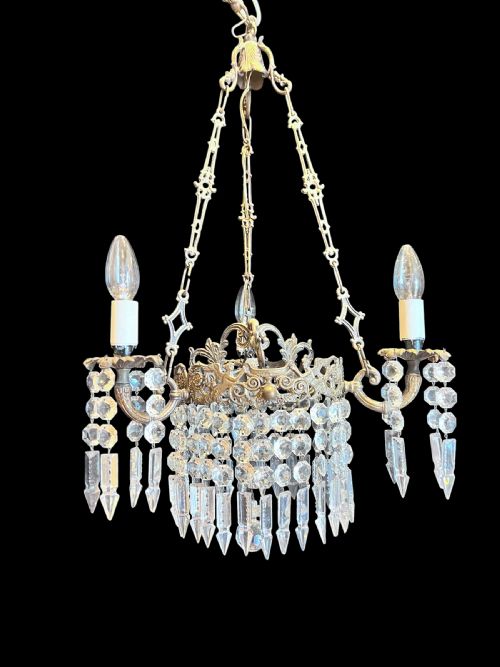
Makers and designers from the period, including G.E.C., Schneider, Verrerie Des Vosges and Muller Freres, shaped the inventory alongside unmarked continental and English workshops. These fixtures range from simple single-light brass fittings to elaborate multi-armed arrangements with crystal droplets.
Materials and construction
Makers formed the structural frames of an art nouveau chandelier using cast or beaten metals, employing brass, wrought iron, copper and gilt bronze. Metalwork was shaped by hand or cast to achieve the characteristic undulating stems and organic tendrils of the period.
Glass elements were integrated through specialised techniques, producing frosted glass, cranberry glass, opaque components and pate de verre. Workshops utilised moulded glass shades shaped as floral blooms or fruit to diffuse light across the room.
Some continental fixtures incorporated opaque glass grapes to cast a fruity glow across Edwardian dining rooms.
Judging quality in these chandeliers
Quality rests upon the execution of the metalwork and the integration of the glass components. Finer examples display crisp casting and hand-beaten detail in the bronze, copper or iron frames, whereas simpler pieces rely on standard commercial brass stampings.
The distinction also lies in the artistic merit of the glass shades and the harmony between metal and glass. Original signed glass by notable makers elevates a piece above standard unmarked production.
G.E.C·Schneider·Verrerie Des Vosges·Muller Freres
The Art Nouveau Chandelier Glossary
- Pate de verre
- A glass-making technique involving crushed glass packed into a mould and fused in a kiln. This method produces textured, coloured bowls and shades with mottled surfaces.
- Rise and fall
- A mechanical pulley system allowing the height of the ceiling light to be adjusted up and down. This mechanism was common in domestic interiors for task lighting over tables.
- Gilt bronze
- Bronze metal treated with a layer of gold or gold-coloured alloy to impart a rich finish. It provides a durable, decorative surface for sculptural chandelier arms.
- Cranberry glass
- A type of glass coloured with gold chloride during production to achieve a distinct pink-red hue. It appears frequently in period shades and bowls.
- Wrought iron
- Iron heated and hammered into shape by hand, resulting in visible tool marks and robust structural lines. It forms the darker, industrial framework of many continental designs.
Art Nouveau Chandelier: Frequently Asked Questions
How do I hang a heavy chandelier?
Heavy chandeliers require secure anchoring directly into ceiling joists using appropriate metal fixings and weight-rated hooks.
Electrical wiring must be assessed by a professional to ensure the existing ceiling box supports the total load.
Are these lights converted for modern bulbs?
Many period chandeliers retain historical lamp holders or have undergone conversions to accept standard modern light bulbs.
Rewiring is frequently undertaken to meet contemporary safety standards while preserving the original metal and glass components.
How do I clean delicate glass shades?
Glass shades benefit from careful removal and washing in warm, soapy water using a soft cloth.
Harsh chemical cleaners should be avoided to protect antique finishes and fragile coloured glass surfaces.
How do I date an antique chandelier?
Dating relies on stylistic markers, manufacturing techniques, materials and documented signatures or makers' stamps.
Comparing structural forms with pieces from known periods like the Edwardian era or nineteen ten helps establish an approximate age.