


Opal Cocktail Ring
An opal cocktail ring brings instant play of colour to the hand, combining fiery stones with gold, platinum and diamond sparkle.
Opal Cocktail Ring
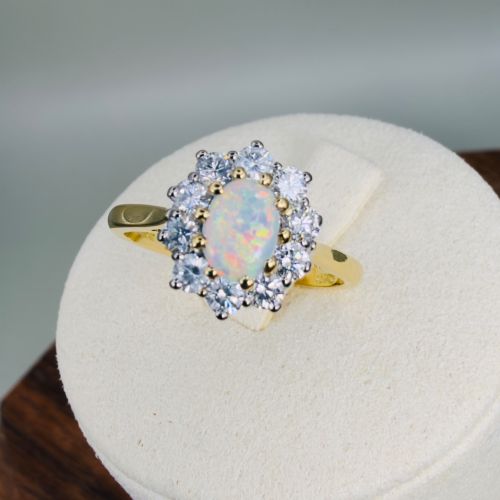
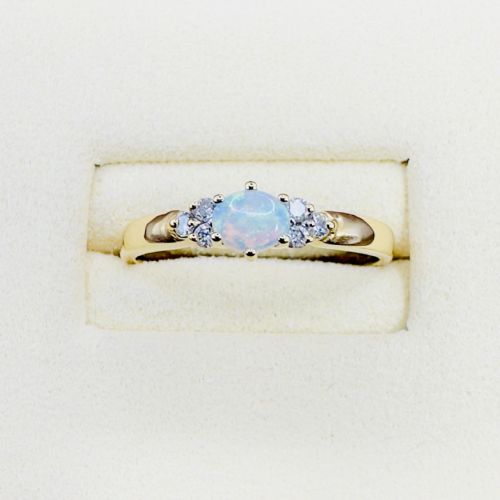
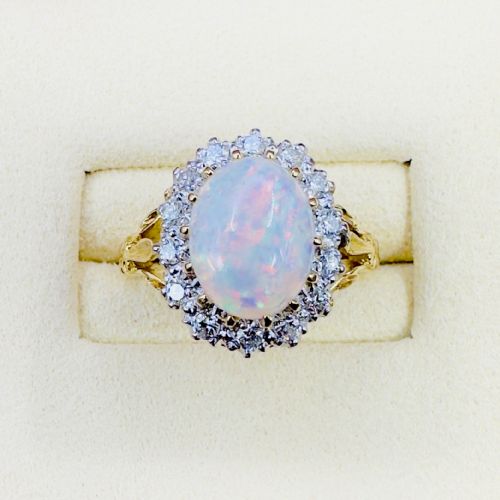
An opal cocktail ring is a statement piece designed to catch the eye with a prominent central stone surrounded by diamonds, emeralds or sapphires. When searching for an opal cocktail ring, you will encounter diverse forms ranging from bold Victorian clusters to sleek mid-century designs.
The pieces listed span periods from the Victorian era through the 1920s, 1940s, 1950s and 1960s, showcasing how jewellers continually reinvented the cluster and dress ring format. Most examples favour cluster settings where smaller diamonds frame a cabochon or oval cut opal.
Materials vary widely across the selection, featuring 18ct gold, 9ct gold, 18ct white gold, platinum and silver. Whether you prefer a subtle antique solitaire or a substantial mid-century cocktail piece, the variety reflects centuries of jewellery craftsmanship.
Materials and construction
Maker's hands combined precious metals like 18ct gold, 9ct gold, 14ct gold, platinum and silver to form durable mounts capable of securing softer gemstones. Stones were shaped into smooth cabochons or oval cuts to highlight their natural play of colour.
Cluster and dress rings relied on secure claw or bezel settings to hold central opals alongside supporting diamonds, emeralds or sapphires. Platinum and white gold gained favour in twentieth-century pieces to provide a bright, neutral contrast against colourful stones.
The material palette unites opal and diamond with accents of emerald, sapphire, and rose-cut diamonds set across yellow, white, and platinum bands.
Assessing quality and character
Quality rests in the vibrancy of the opal's play of colour and the stability of its mounting within the gold or platinum framework. Stones with deep spectral flashes command attention, whilst finer cluster work uses well-matched accent diamonds.
The weight of the metal and the precision of the stone-setting distinguish finer workshop output from standard production. Heavier mountings in 18ct gold or platinum offer longevity, ensuring the ring withstands daily wear whilst preserving its decorative harmony.
The Opal Cocktail Ring Glossary
- Cabochon
- A gemstone shaped and polished with a smooth, rounded surface rather than faceted. This style is particularly common for opals as it showcases their internal play of colour.
- Cluster ring
- A ring featuring a central stone encircled by a group of smaller gemstones, usually diamonds. This design maximises visual impact on the hand.
- Play of colour
- The optical phenomenon where spectral colours flash across an opal as the stone moves under the light. It results from the light diffraction of internal microscopic silica spheres.
- Solitaire
- A piece of jewellery featuring a single gemstone without accompanying accent stones. In this context, it highlights a large, uninterrupted expanse of opal.
- Rose cut
- An antique diamond cut featuring a flat base and a domed crown composed of triangular facets. It imparts a soft, twinkling lustre distinct from modern brilliant cuts.
Opal Cocktail Ring: Frequently Asked Questions
How do I care for my opal ring?
Opals contain water and require gentle treatment to avoid drying out or cracking. Remove your ring before washing hands, swimming or using harsh household chemicals.
Store the piece away from extreme heat and direct sunlight. Clean the metal and stones gently with a soft, damp cloth rather than ultrasonic cleaners.
Are these rings suitable for everyday wear?
Opal is a softer gemstone compared to diamond or sapphire, rating lower on the Mohs hardness scale. While durable enough for careful daily use, cocktail rings with prominent stones benefit from being worn mindfully.
Consider reserving substantial cocktail pieces for special occasions to protect the central cabochon from accidental knocks against hard surfaces.
What is the difference between white opal and black opal?
White opals display their play of colour against a lighter body tone, ranging from milky white to translucent cream. They offer a delicate and classic aesthetic.
Black opals feature a dark body tone, which intensifies the spectral colours and makes the flashes appear much more vivid and dramatic against the dark background.
How can I tell an antique opal ring from a vintage one?
Antique rings from the Victorian era or earlier often feature hand-cut stones, specific claw work and distinct hallmarks associated with nineteenth-century British assay offices. Shank thickness and metal colour can also offer clues.
Vintage pieces from the 1920s to the 1960s display stylistic markers of Art Deco or mid-century design, including geometric platinum mountings or atomic-age cluster arrangements.