
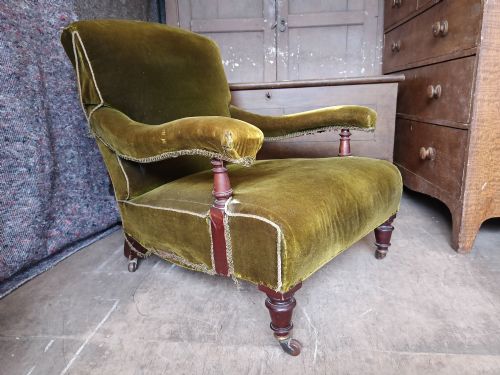


Olive Green Velvet Chairs
Olive green velvet chairs bring rich colour and tactile warmth to a room, offering both practical seating and traditional character.
Olive Green Velvet Chairs
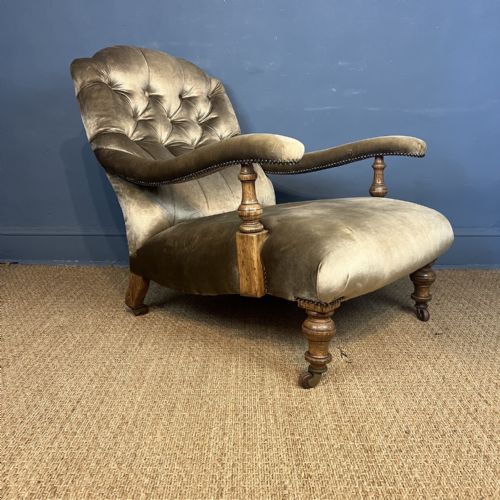
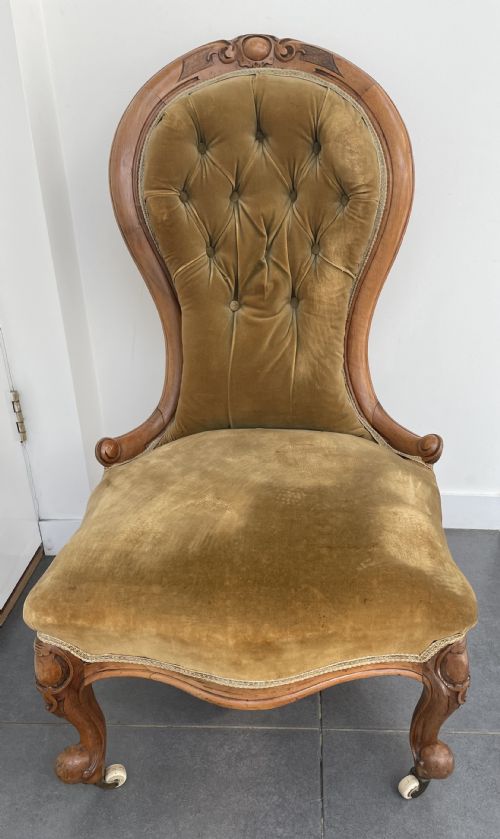
These olive green velvet chairs span multiple periods including Regency, Victorian, Edwardian, and the early twentieth century. The selection encompasses various forms such as open armchairs, nursing chairs, slipper chairs, rocking chairs, and chaise longues.
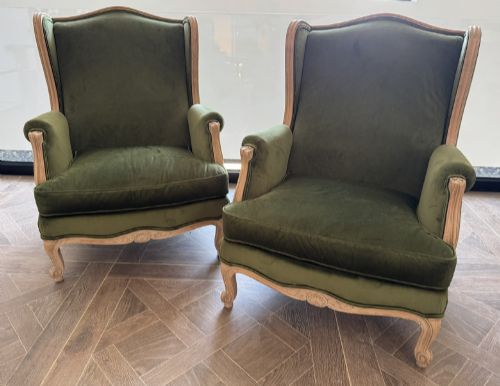
Buyers will encounter sturdy timber frames upholstered in soft pile fabrics, ranging from compact occasional seating to substantial library armchairs and wingbacks. Pieces often reflect specific regional styles like French chateau, Napoleon III, and Traditional American alongside English designs.
Materials and construction
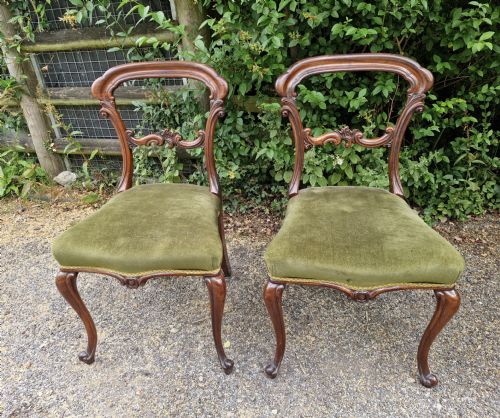
Frames are constructed from dense hardwoods such as mahogany, walnut, oak, and rosewood, providing structural integrity for upholstered seating. Timber components frequently feature carved details or turned supports.
Upholstery relies on traditional textile production using velvet, while metal elements like brass castors are incorporated into specific armchair legs for mobility.
Some nineteenth-century armchairs come equipped with brass castors so owners could easily chase the fireplace warmth.
Distinguishing quality in older seating
The refinement of the timber frame and the depth of its carving distinguish simpler utilitarian seating from more ambitious parlour and library pieces. Wood selection, such as figured rosewood or dense walnut, indicates the maker's original investment in materials.
Proportion and scale play a significant role, where balanced framing and well-executed joinery separate standard production from superior cabinetwork.
Hampton and Sons
The Olive Green Velvet Chairs Glossary
- Armchair
- A comfortable seat fitted with side supports for the arms. These range from light occasional chairs to heavy library seating.
- Chaise Longue
- An upholstered long chair designed for reclining, combining a chair with an extended footrest. Examples appear in nineteenth-century rosewood frames.
- Castor
- A small wheel mounted on a swivel attached to chair legs. Brass versions are typical on nineteenth-century armchairs to aid movement.
- Rosewood
- A dense, dark timber featuring distinct grain patterns. It was frequently utilised for high-status Victorian and Regency chair frames.
Olive Green Velvet Chairs: Frequently Asked Questions
How do I date an older armchair?
Dating relies on identifying stylistic markers, timber choices, and construction techniques associated with periods like the Regency or Victorian eras. Secondary woods and hardware also offer clues to the decade of manufacture.
Examining how the frame is joined helps establish whether a piece belongs to the nineteenth century or a later revival period.
What rooms suit a velvet slipper chair?
Low-slung slipper chairs work well in bedrooms, dressing rooms, or quieter corners of a living room where formal seating is unnecessary. Their compact profile allows them to fit comfortably without dominating the floor space.
The soft velvet texture introduces warmth that complements textiles in domestic interiors.
Are nineteenth-century armchairs comfortable for daily use?
Many nineteenth-century library chairs and easy chairs were designed with generous proportions and supportive padding for extended sitting. Their comfort often matches or exceeds modern equivalents due to traditional sprung construction.
Individual pieces vary depending on the original purpose, whether intended for relaxation or formal parlour use.
How should I care for antique velvet upholstery?
Velvet benefits from regular, gentle brushing with the pile to maintain its direction and prevent crushing. Professional cleaning is recommended for deep maintenance to protect the delicate fabric fibres.
Keeping velvet seating away from direct sunlight preserves the rich green dye over time.