




Old Silver Tankard
An old silver tankard is a robust drinking vessel for beer or ale, prized for its generous weight and handsome proportions.
Old Silver Tankard
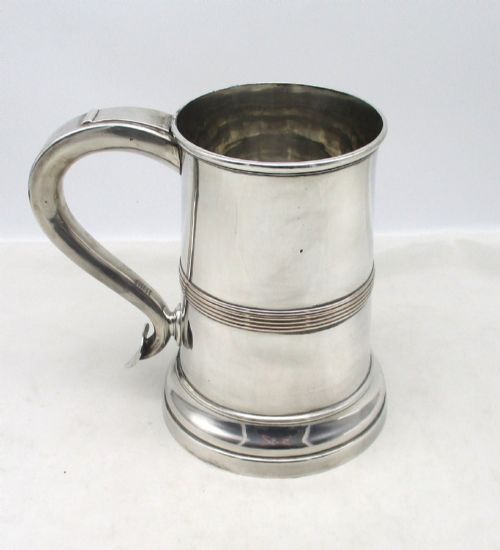
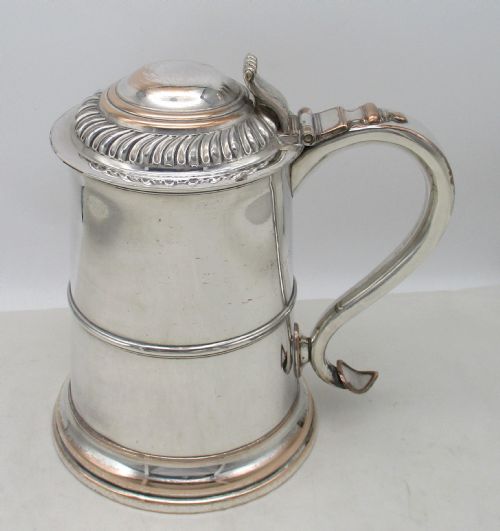
When you search for an old silver tankard, you encounter sturdy drinking vessels designed for beer and ale, largely originating from the Georgian and nineteenth-century periods. These items encompass pint and quart sizes, lidded examples, loving cups, and beer jugs.
The pieces most frequently met on this page are formed from Old Sheffield Plate rather than solid metal, reflecting the manufacturing methods of the eighteenth and early nineteenth centuries. They bridge the gap between functional tavernware and domestic dining service.
Forms range from small child's tankards to extremely large quart vessels and heavy beer jugs. Originating predominantly in English workshops, they display styles spanning the Georgian era into the Regency period.
How they were made
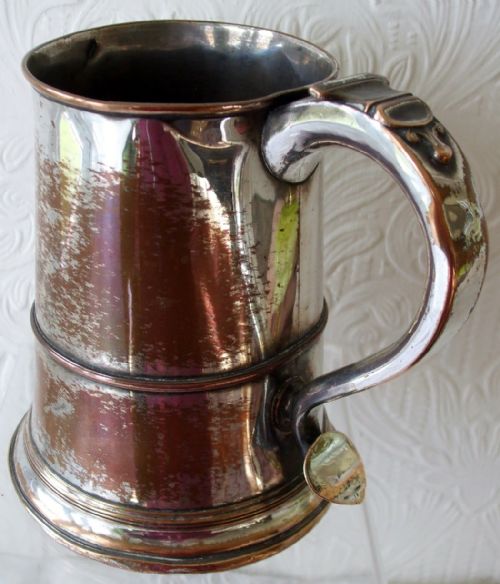
The material seen across these listings is predominantly Old Sheffield Plate, a method involving the fusion of a thin sheet of silver to a thicker copper base. This technique creates durable drinking vessels that possess the appearance of solid silver while maintaining structural rigidity.
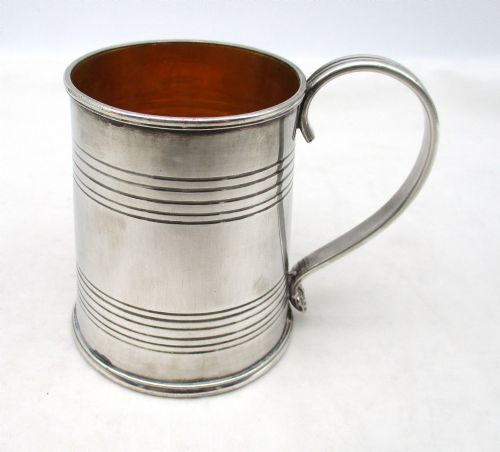
Surface embellishments include gilding, with gold gilt highlights applied to the interior or decorative details of selected pieces. Early marks on specific tankards point to maker specialisation during the eighteenth century.
Construction techniques involve soldered seams, applied handles, and hinged lids fitted securely to the main body of the tankard or jug.
A small child's tankard c1820 sits among these heavy quart vessels, proving that eighteenth-century toddlers took their ale very seriously indeed.
What varies in quality
The crispness of form and the retention of the original silver layer over the copper core distinguish finer examples from standard items. Pieces with well-preserved proportions, sturdy handles, and intact hinges hold greater appeal for collectors.
The presence of early marks or attribution to known makers such as Richard Morton elevates the interest of a piece. Furthermore, the capacity and scale - ranging from small child's vessels to large quart tankards - influence desirability among buyers.
Richard Morton
The Old Silver Tankard Glossary
- Old Sheffield Plate
- A composite material made by fusing a sheet of silver onto a copper ingot before rolling them into sheets together. This technique preceded modern electroplating and produced durable tableware.
- Quart Tankard
- A large drinking vessel holding a full quart of liquid, typically fitted with a sturdy handle and sometimes a hinged lid. These substantial pieces were designed for communal or heavy tavern use.
- Loving Cup
- A large drinking vessel featuring two or more handles, intended to be passed among company. They appear in silver plate from the early nineteenth century.
- Gold Gilt
- A thin layer of gold applied to the interior surface or decorative mounts of a vessel. It provides a luxurious finish and protects the underlying metal from tarnishing.
- Early Marks
- Punches or stamps struck into the metal by the maker to indicate origin or quality. They assist in dating and attributing eighteenth-century pieces.
Old Silver Tankard: Frequently Asked Questions
What is an old silver tankard made of?
Most examples from this period are actually constructed from Old Sheffield Plate, which fuses a layer of silver onto a copper base. This method gives the appearance and durability of solid metal.
Some pieces also incorporate gold gilt highlights, particularly on the interior surfaces or decorative mounts.
How do I tell pint and quart tankards apart?
Pint and quart tankards differ primarily in physical scale and liquid capacity. Quart tankards are substantially larger and heavier, designed to hold twice the volume of a standard pint vessel.
Both forms typically feature sturdy handles and cylindrical bodies, though some include hinged lids.
Were these tankards used for drinking?
These vessels were created for consuming beer, ale, and other beverages in domestic or tavern settings. Their robust construction made them suitable for daily use.
Over time, many transitioned from functional tavernware to display pieces in dining rooms and collections.
How should I clean my plated tankard?
Cleaning requires a gentle touch to preserve the thin silver layer over the underlying copper base. Use a mild silver polish and a soft cloth without abrasive scrubbing.
Avoid harsh chemical dips that can strip the plating or damage any interior gold gilt.