



Oil Canvas Townscape
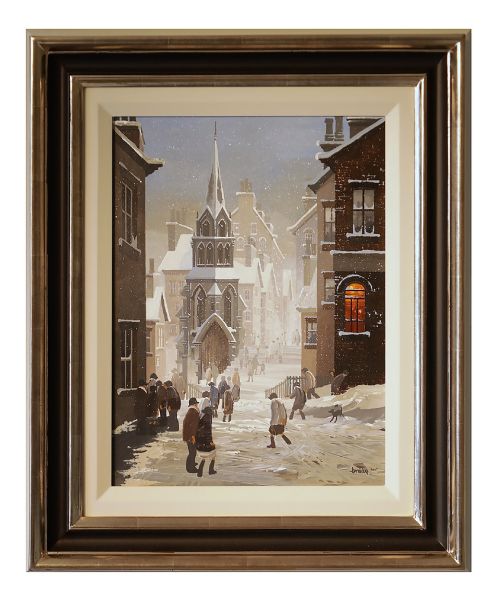
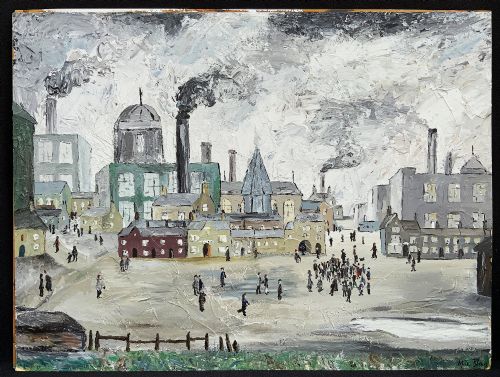
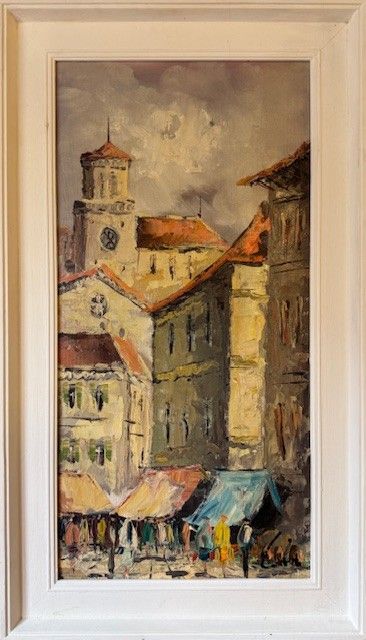
These oil canvas townscape pieces capture bustling streets, quiet canals and industrial quays across British and Continental settings.
Oil Canvas Townscape
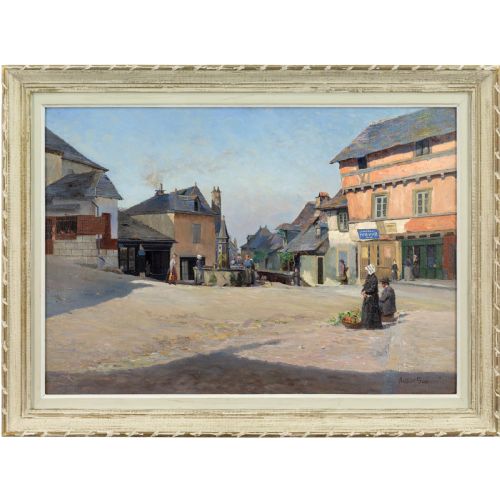
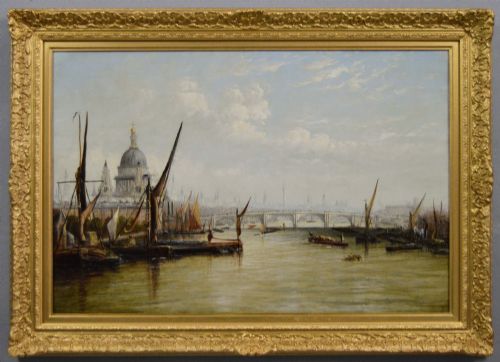
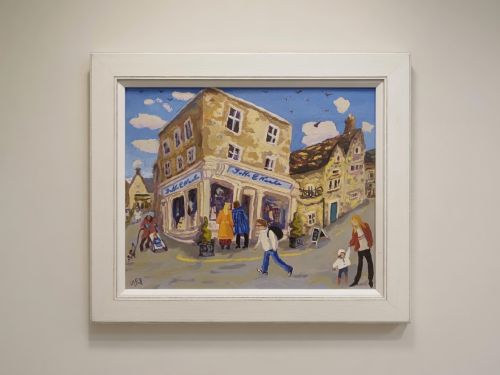
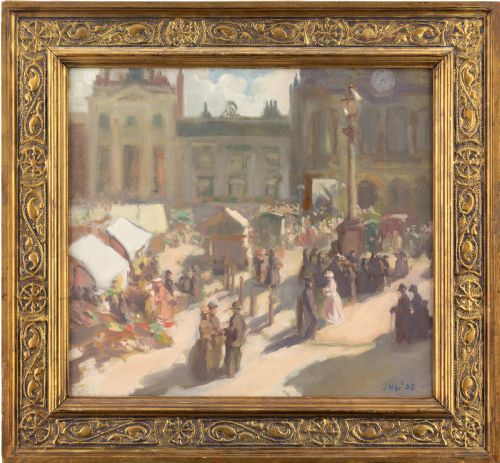
An oil canvas townscape records urban and street scenes, ranging from Victorian river views and Venetian canals to Northern industrial centres and French market squares. A buyer encounters works spanning the nineteenth century through the mid twentieth century, executed in styles that include British Impressionism, Realism and Post-Impressionism.
The most common examples on this page balance architectural precision with atmospheric light, depicting specific locations such as London, Venice, and various rural market towns. Artists use oil paint on canvas, occasionally mounted in giltwood frames, to document the changing character of European and British settlements.
Materials and construction
Painters build an oil canvas townscape by applying oil paint onto stretched canvas, supported by wooden stretcher frames that provide structural tension. Artists layer pigments to create depth in skies, stone facades and water reflections, employing brushwork ranging from tight academic realism to looser impressionistic strokes.
Many of these works retain their original frames, constructed from wood and embellished with gold leaf or giltwood mouldings. The combination of durable oil pigments and sturdy canvas supports has allowed these urban records to survive across generations.
Several canvases capture bustling market squares where stray dogs and hurried tradesmen share the cobblestones.
Distinctions in quality
Quality in an oil canvas townscape rests upon the sureness of the brushwork and the artist's command over perspective, light and architectural proportion. Stronger examples capture the specific atmosphere of a location rather than relying on formulaic rendering of buildings and figures.
The handling of natural light, whether reflecting off a Venetian lagoon or illuminating a snowy Northern river quay, separates masterly compositions from routine topographical records. Furthermore, the preservation of the original paint surface without extensive overpaint determines the enduring integrity of the piece.
Francis Moltino·Alfred Pollentine·Edward Henry Holder·Jane Vivian·Ludwig Hermann·George Willis Pryce·Brian Shields Braaq·Letitia Marion Hamilton
The Oil Canvas Townscape Glossary
- Oil paint
- A slow-drying paint made by combining pigments with a drying oil, typically linseed oil. This medium allows for rich colour blending and textured impasto applications.
- Canvas
- A heavy woven fabric, usually linen or cotton, stretched tightly across a wooden frame to serve as a durable support for painting. It forms the base for the majority of works seen here.
- Giltwood
- Wood carved and treated with a thin layer of gold leaf or gold paint. It is commonly found on the decorative frames enclosing nineteenth-century paintings.
- Post-Impressionism
- An art movement developing from the late nineteenth century that extended Impressionism while rejecting its limitations. Artists sought to express emotional and structural responses to their subjects through bold colours and distinct forms.
Oil Canvas Townscape: Frequently Asked Questions
How do I date an oil canvas townscape?
Dating relies upon stylistic clues, clothing of figures, architectural details, and sometimes inscriptions or signatures left by the artist on the canvas or stretcher frame.
Material evidence such as the type of canvas weave, stretcher construction, and framing techniques also help narrow down the period of creation.
Where should I hang a townscape painting?
These works suit dining rooms, studies or living spaces where adequate wall space allows the composition and frame to command attention.
Positioning the painting away from direct sunlight and high humidity protects the oil paint and canvas from premature degradation.
What is the difference between an impressionist and a realistic townscape?
Realistic townscapes focus on architectural accuracy, crisp lines and precise topographical detail, documenting buildings and bridges exactly as they stood.
Impressionist works prioritize the play of light, weather conditions and atmospheric mood over strict linear precision, using visible brushstrokes to evoke a scene.