





Ogee Feet Chest Drawers
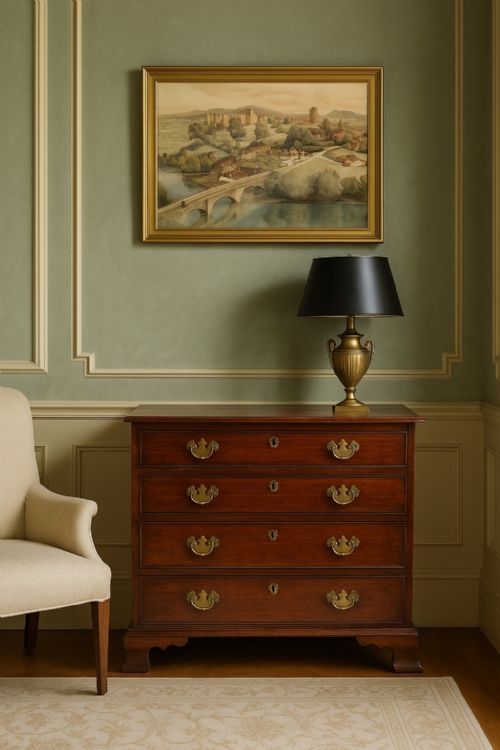
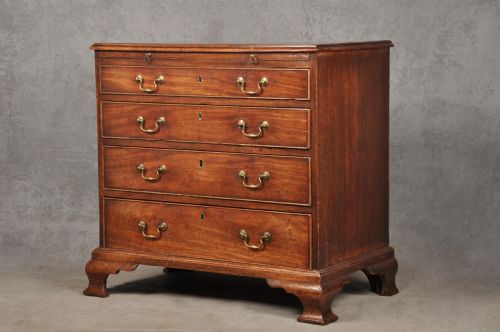
Ogee feet chest drawers are substantial storage pieces raised on distinctive double-curved bracket supports, offering timeless proportion and deep mahogany timber.
Ogee Feet Chest Drawers
When searching for ogee feet chest drawers, you are looking at sturdy wooden storage furniture raised on signature moulding supports that curve outwards and back in. These pieces date principally from the eighteenth century into the nineteenth century, encompassing Georgian eras alongside later revival interpretations.
Many of these items display regional English craftsmanship, featuring lined drawers, brass swan neck handles, and sometimes integrated brushing slides. They range from compact small proportions up to larger housekeepers trunks, maintaining a solid architectural presence across all periods.
How they were made
Cabinet makers constructed these chests primarily using solid mahogany, oak, and pine, often incorporating fruitwood inlay for decorative contrast on drawer fronts and surfaces. Timber selection governed the weight and grain movement of each carcase, ensuring stability across decades of domestic use.
The defining feet were shaped directly from solid wood blocks or integrated brackets, demanding precise joinery to achieve the signature double curve. Drawers were typically oak lined and fitted with cast brass swan neck handles, held in place by traditional dovetail joints.
Housekeepers stored extra blankets and linen in these deep mule chests while keeping a watchful eye on the house keys.
What varies in quality
Quality in these chests rests upon the crispness of the timber grain and the integrity of the original construction, particularly where the bracket feet meet the lower moulding. Finer pieces retain their untouched brass hardware and unblemished mahogany surfaces, whereas lesser examples show heavy timber replacement or poorly executed repairs.
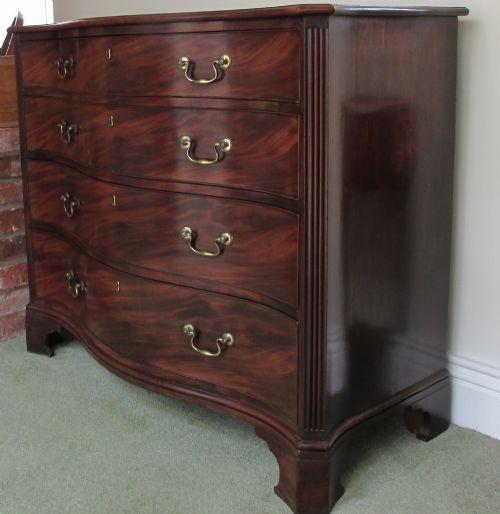
Proportion and scale also dictate value, with smaller pieces and serpentine fronts commanding greater appreciation from collectors. The depth of the colour in the mahogany and the tightness of the dovetailing reveal the original maker's standard of work.
The Ogee Feet Chest Drawers Glossary
- Ogee
- A moulding profile composed of a double curve, resembling an S-shape, which forms the signature bracket feet on these chests.
- Brushing slide
- A pull-out wooden shelf positioned above the top drawers, historically used for folding clothes or writing.
- Mule chest
- A storage box combining drawers in the base with a lift-top trunk compartment above, often fashioned in oak or mahogany.
- Serpentine front
- A cabinet face curved in a wave-like form, featuring a convex centre flanked by concave ends.
- Swan neck handle
- A type of brass furniture pull shaped like a bird's neck, fastened through a backplate on Georgian drawer fronts.
Ogee Feet Chest Drawers: Frequently Asked Questions
What is an ogee foot?
An ogee foot is a bracket support featuring a continuous S-shaped curve that swells outwards before sweeping back inwards to the floor. It gives heavy chests a slightly lighter, grounded architectural stance.
This form of foot appears frequently on Georgian case furniture, distinguishing standard bracket feet from more ornate carved styles.
How do I date a mahogany chest?
Dating relies on examining secondary timbers like oak drawer linings, hand-cut dovetail joints, and the style of the brass hardware. Earlier pieces often display rich Cuban mahogany and candle burn marks or general wear inside.
Later nineteenth-century revivals tend to use machine-cut elements or possess a different timber density and colour tone compared to eighteenth-century originals.
What is a brushing slide used for?
A brushing slide is a pull-out wooden board mounted directly beneath the top surface or above the uppermost drawer. Gentlemen used it to brush garments or sort linens without placing them on a bed.
In modern rooms, it serves as a convenient temporary shelf when viewing the contents of the top drawer.
Where should I place a chest?
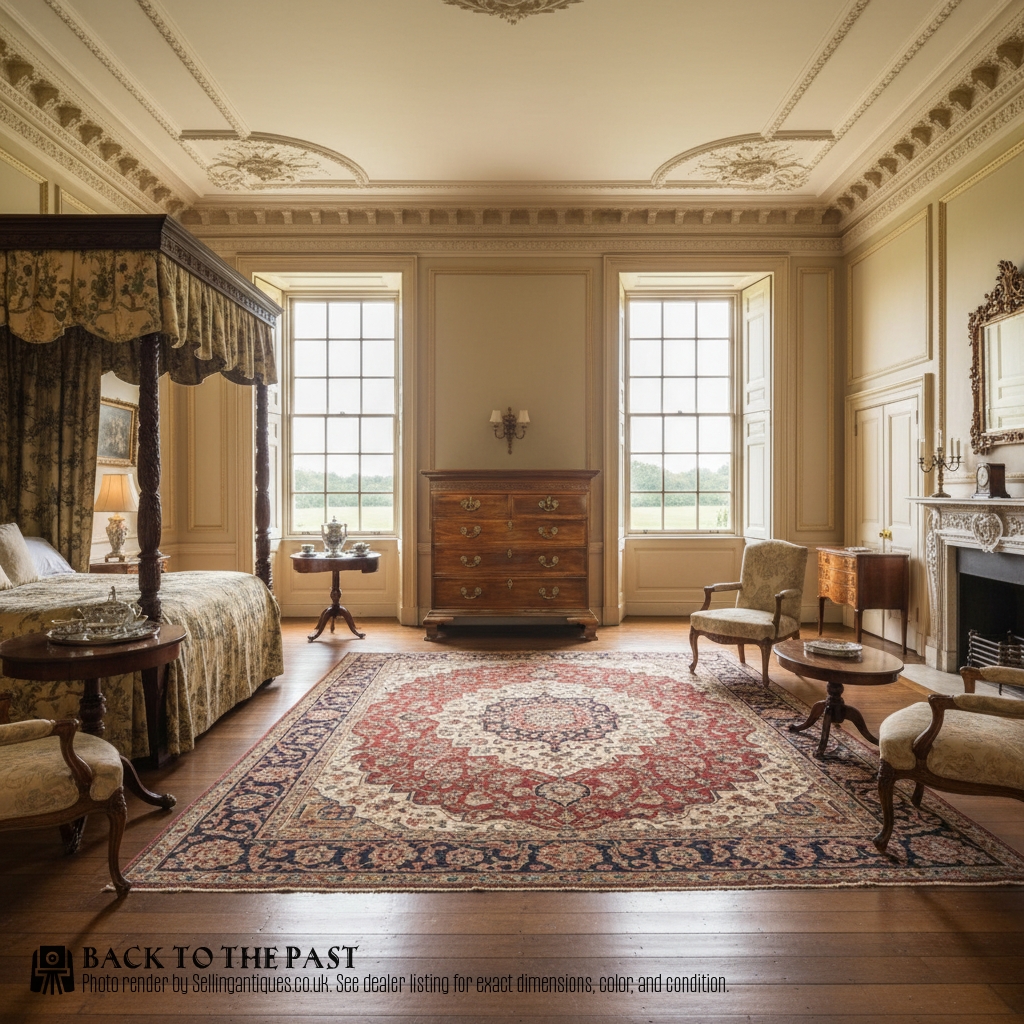
These robust wooden chests suit bedrooms, hallways, or living spaces where deep drawer storage is required. Their rich mahogany and oak tones anchor a room effectively against neutral walls.
Keep them away from direct heat sources and strong sunlight to prevent the solid timber from drying out or fading over time.