
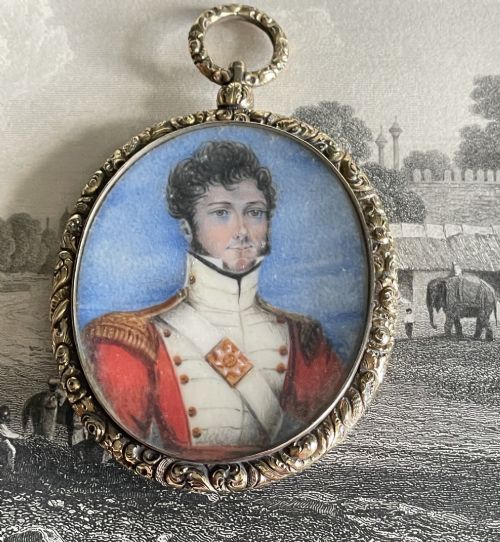


Officer Miniature Painting
Officer miniature painting captures military service in meticulous detail, offering collectors a personal window into historical regiments and campaigns.
Officer Miniature Painting
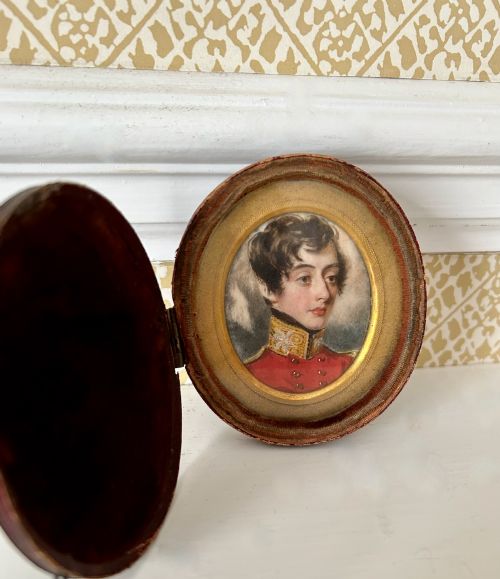
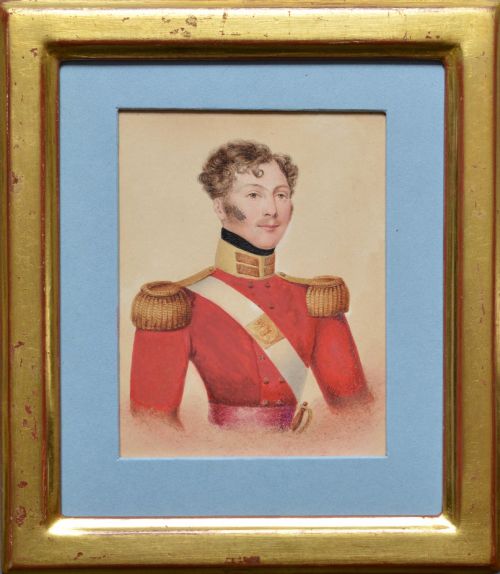
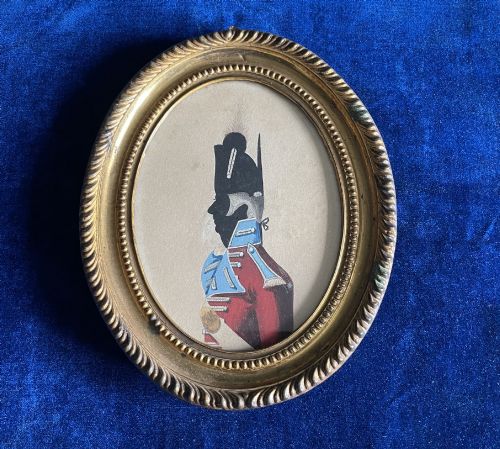
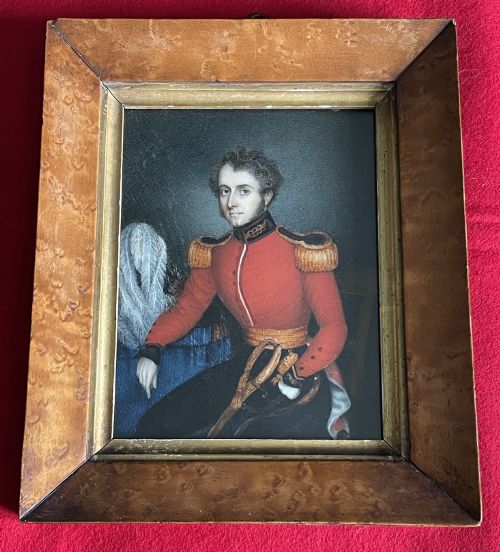
An officer miniature painting depicts military figures from the eighteenth and nineteenth centuries, often rendered as bust-length portraits on small scales. These works range from Georgian and Regency depictions to Edwardian examples, capturing naval, dragoon, and infantry commanders.
The pieces on this page originate primarily from British and Anglo-Indian contexts, showing officers from specific regiments such as the Staffordshire 80th Regiment of Foot and the Royal Artillery. Portrait miniatures and miniature portraits dominate the available forms, preserved in period frames of gold, giltwood, or burl wood.
Buyers encounter works attributed to known artists like Henry Bone, Edward Pugh, Sir William John Newton, and Gerrit Schipper, alongside works assigned to the British School. Subjects include named individuals such as Lieutenant-General Vernon, Captain Richard Hamilton, and Field Marshal Sir Samuel Hulse.
Materials and construction
Artists executed these works using watercolour or enamel pigments applied to delicate supports including paper, ivory, and agate panels. These materials demanded precise brushwork to capture uniform details, facial expressions, and insignia on a small scale.
Finished paintings were typically protected beneath glass and housed in purpose-built frames fashioned from eighteen-karat gold, gold leaf, giltwood, or burl wood. The integration of precious metals and specialised glazing protected the fugitive pigments from light and handling.
Some officers evidently requested slight touch-ups to their campaign scowls before the paint dried.
Assessing quality and execution
The distinction between standard and superior pieces rests upon the finesse of the brushwork and the anatomical accuracy of the facial likeness. Master miniature painters achieved remarkable depth in uniform detailing and flesh tones despite the extreme restriction of scale.
Framing and mounting also dictate quality, with original gold or giltwood housings that retain their structural integrity commanding greater regard. The preservation of the underlying paper, ivory, or agate panel without significant fading or cracking determines the overall integrity of the piece.
Henry Bone ARA·Edward Pugh·Sir William John Newton·Gerrit Schipper
The Officer Miniature Painting Glossary
- Miniature portrait
- A small-scale painting, typically executed on ivory, paper, or panel, designed to be held in the hand or worn upon the person. These works required specialised magnifying lenses and fine brushes.
- Enamel miniature
- A painting created by fusing vitreous coloured pastes onto a metal ground, usually copper or gold, under high heat. This technique ensured the image remained impervious to fading over centuries.
- Regency
- A stylistic period spanning the early nineteenth century, characterised by classical restraint and specific military dress codes. Pieces from this era often reflect the height of the Napoleonic Wars.
- Agate panel
- A polished stone support used occasionally as a canvas for miniature painting. The natural grain of the stone was sometimes incorporated into the background of the portrait.
Officer Miniature Painting: Frequently Asked Questions
How were officer miniatures displayed?
These small works were often carried in pockets, worn as pendants, or displayed on tabletop easels within private chambers. Their intimate scale allowed officers to transport likenesses of themselves or their colleagues during campaigns.
Collectors today generally display them on dedicated miniature stands or group them on walls within secure, low-light environments to prevent fading of the delicate watercolours.
How do I identify the regiment?
Uniform details, collar badges, facings, and headwear provide the primary clues for identifying the specific regiment or branch of service. Contemporary service records and military archives often corroborate the insignia visible in the paint.
Inscribed labels on the reverse of the frame frequently name the sitter and their military rank, linking the artwork directly to historical muster rolls.
What is the difference between ivory and paper supports?
Watercolour on ivory produces a characteristic luminous quality because light penetrates the translucent surface and reflects back through the pigment. Paper supports offer a more matte appearance, typical of earlier or specific school traditions.
Both materials require stable environmental conditions, though ivory is particularly sensitive to fluctuations in relative humidity.
Are these works signed by the artist?
Many fine examples bear the artist's signature or monogram, often subtly placed along the edge of the portrait or inscribed on the reverse casing. Signatures by established miniaturists significantly enhance the historical record of the piece.
Unsigned works were frequently produced by competent practitioners within the British School or provincial portrait painters whose identities remain lost to time.