




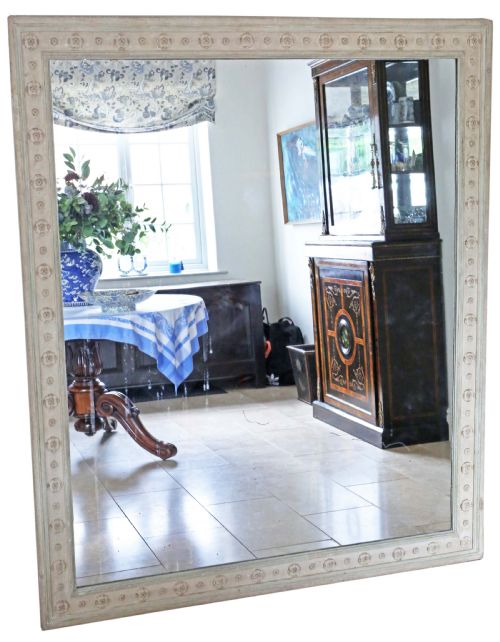


Off White Carved Mirror
An off white carved mirror brings light and texture into a room, spanning periods from the eighteenth century to the Edwardian era.
Off White Carved Mirror
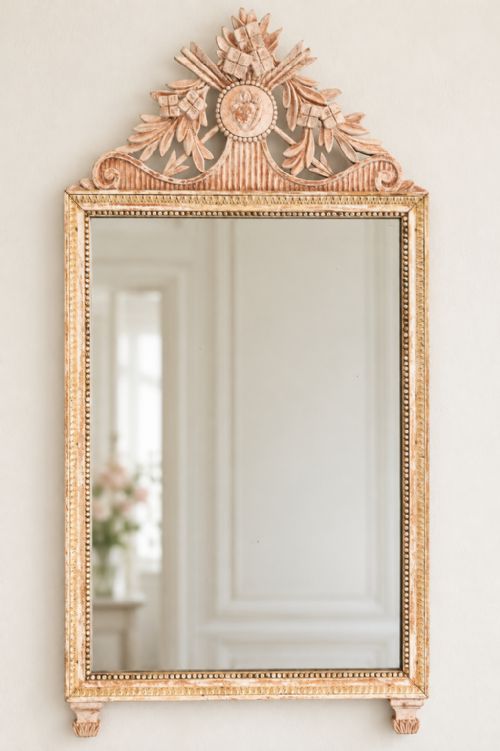
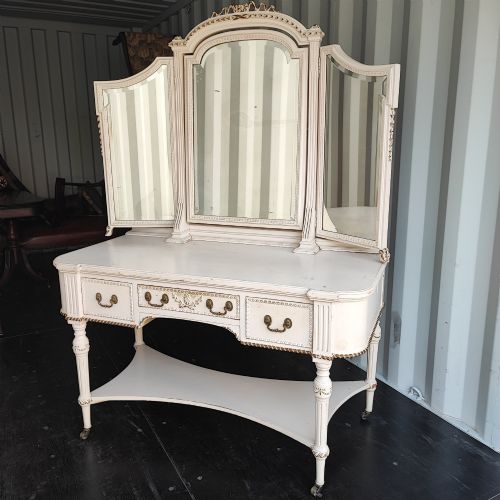
An off white carved mirror is a decorative looking glass designed for walls, overmantels, and dressing tables. These pieces draw on French Provincial, Italian Rococo, and Victorian styles.
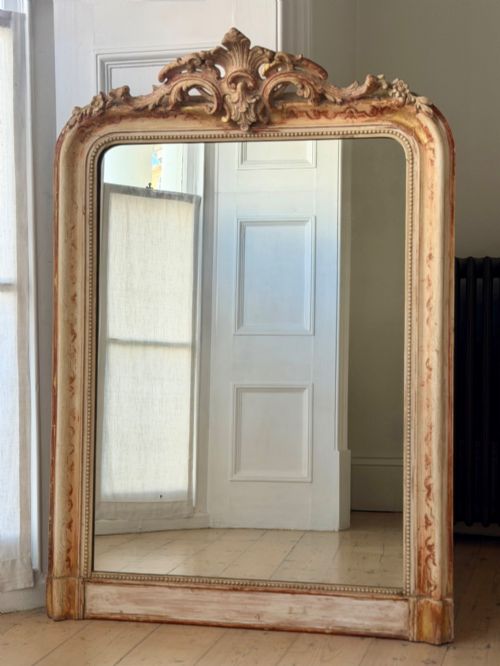
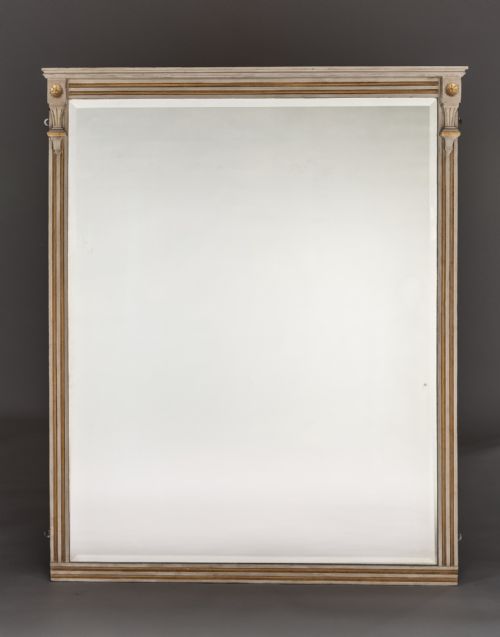
The version most commonly met on this page is the large nineteenth century overmantel mirror with carved wooden frames and painted surfaces. Pieces range from Georgian architectural forms to Edwardian free standing examples.
Origins stretch across English, French, and Italian workshops, reflecting diverse regional aesthetics within the same pale painted palette. Wall mirrors and marginal mirrors appear alongside grander architectural overmantels.
Materials and construction
Makers shaped solid timber frames from carved wood before applying layers of gesso to smooth the surface for paint. This combination allowed intricate architectural mouldings and scrollwork to hold a uniform off white or parcel gilt finish.
Reflecting historical techniques, mirror glass is set within these frames, sometimes paired with brass hardware or original painted decoration. Overpainted gilt surfaces also appear, showing older metallic layers beneath the pale topcoats.
Off White Carved Mirror Retail Price Guide 2026
Typical asking prices for off white carved mirror among the pieces listed under this phrase on Sellingantiques today, from the lower quarter to the upper quarter. They describe what is for sale here now, not the wider market.
Some nineteenth century mirrors survived by hiding under decades of dark paint before restorers uncovered the original off white underneath.
Judging quality in carved mirrors
Quality rests in the crispness of the hand carving beneath the paint and the depth of the gesso work. Finer pieces retain intricate relief details on arched tops and shaped frames without losing definition under multiple layers of historic paint.
The handling of the off white finish itself separates standard items from exceptional ones. Original paint surfaces that show authentic patination and subtle parcel gilding carry greater visual weight than flat, modern repainting.
Maples of London and Paris
The Off White Carved Mirror Glossary
- Gesso
- A plaster mixture applied to wood frames to create a smooth surface for painting or gilding. It allows carvers to achieve sharp details that wood alone might not hold.
- Overmantel mirror
- A large glass designed specifically to hang above a fireplace mantel. These horizontal formats often dominate chimney breasts in Victorian and Georgian interiors.
- Trumeau mirror
- An architectural wall glass incorporating a painted panel or artwork above the mirror plate. Originating in France, these pieces served as permanent wall decoration.
- Parcel gilt
- A technique where selective areas of a frame are highlighted with gold leaf while the rest remains painted. This provides contrast against off white or darker ground colours.
- Marginal mirror
- A style featuring a central glass plate surrounded by smaller bevelled mirror segments held within the frame. It adds complexity to how light reflects across the room.
Off White Carved Mirror: Frequently Asked Questions
Where should I hang an overmantel mirror?
These large mirrors sit naturally above a fireplace mantel, reflecting light and anchoring the room's proportions.
They also work on principal living room walls where their scale creates a striking focal point.
How do I care for antique painted wood?
Dust the carved frame gently with a dry, soft cloth to protect the historic gesso and paint layers.
Avoid liquid cleaners or abrasive cloths that can damage the aged surface or lift the original finish.
Are these mirrors heavy to mount?
Due to solid wood construction, gesso, and thick glass, many nineteenth century pieces carry substantial weight.
Secure wall fixings into structural studs or masonry to support the weight safely.
How do I distinguish French and English styles?
French examples often display curved, arched tops with flowing floral carving akin to Louis XVI Revival and French Provincial aesthetics.
English pieces tend toward architectural symmetry, particularly in Victorian overmantels and Georgian decorative wall mirrors.