



Octagonal Wooden End Table
An octagonal wooden end table brings geometric precision and rich grain to a corner, offering a compact surface for lamps and books.
Octagonal Wooden End Table
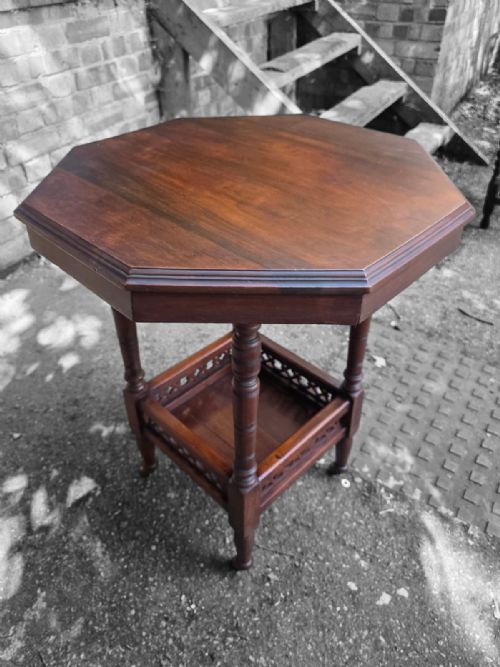
An octagonal wooden end table provides a distinctive eight-sided top that breaks the monotony of square and round corners in a room. These pieces function primarily as side tables, occasional tables, or lamp tables, slotting easily beside seating.
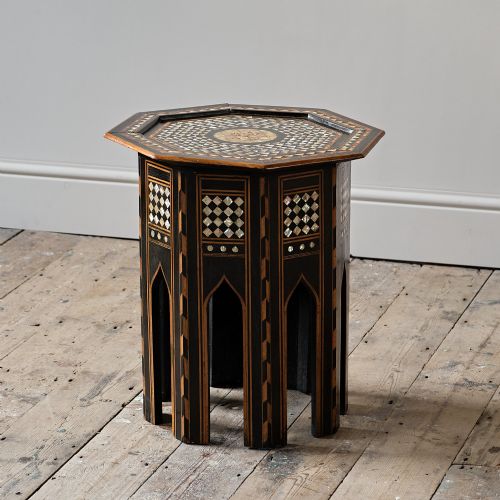
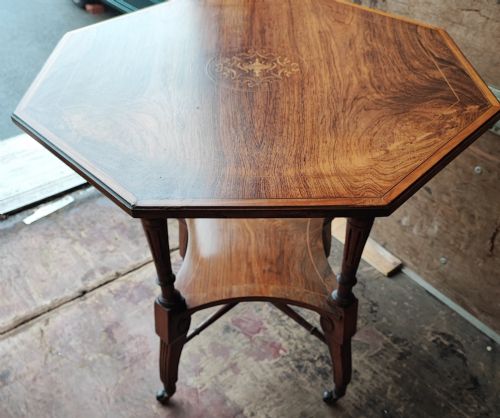
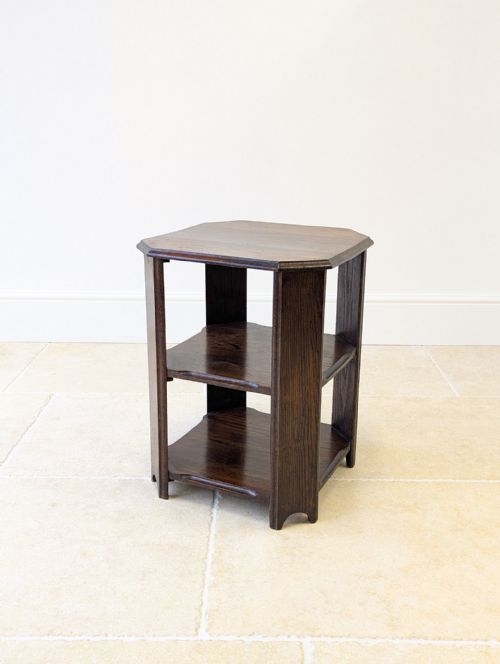
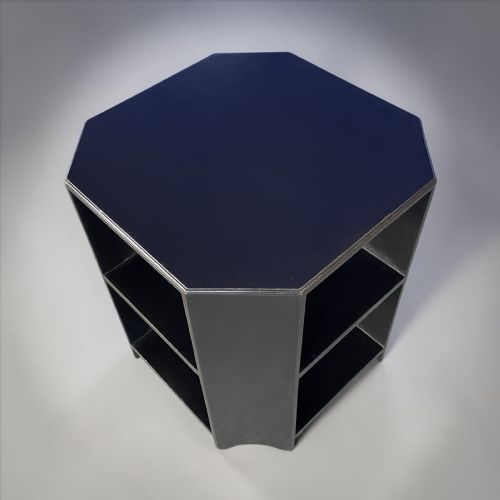
The versions met on this page span several decades and stylistic revivals, taking inspiration from Victorian parlour traditions, Edwardian parlours, and the clean lines of the Art Deco era.
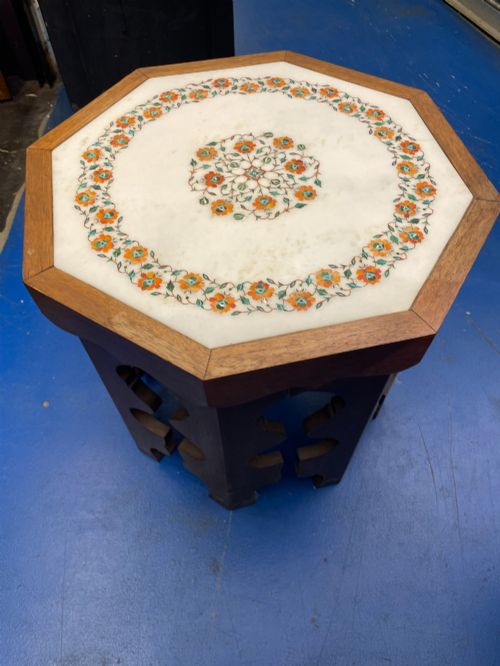
Origin points range from British workshops to Anglo-Indian Colonial hubs, showing how makers adapted the eight-sided form across different global markets and design movements.
How they were made
Makers utilised solid timbers such as mahogany, oak, walnut, teak, padauk, and partridge wood, often working the natural grain to define the visual weight of the top. Hardwood construction ensured stability across the eight-sided geometry.
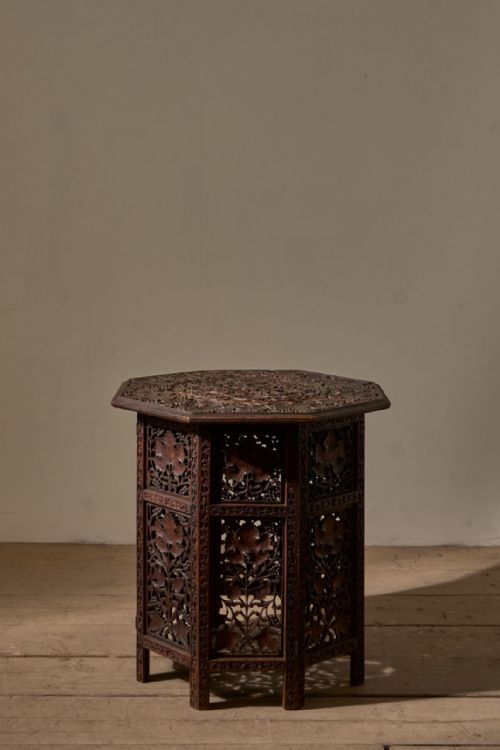
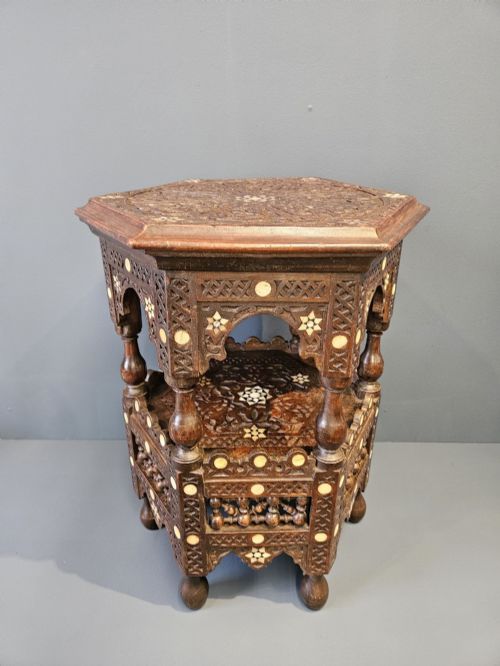
Surface ornamentation involved intricate carving, inlay, and brass detailing, with specific pieces incorporating mother-of-pearl or ebonised finishes. Carved floral or leaf motifs frequently anchor the legs and aprons.
Octagonal Wooden End Table Retail Price Guide 2026
Typical asking prices for octagonal wooden end table among the pieces listed under this phrase on Sellingantiques today, from the lower quarter to the upper quarter. They describe what is for sale here now, not the wider market.
Camels carved from teak occasionally hold up the corners, proving that Victorian living rooms enjoyed a touch of exotic wildlife.
What varies in quality
The depth and sharpness of the hand-carved ornamentation separate standard production from superior examples, particularly on Anglo-Indian pieces where relief work defines the surface. Crisp lines in the eight-sided geometry show skilled joinery.
Selection of timber figure and the integration of secondary materials like mother-of-pearl or brass inlay distinguish finer tables. A balanced proportion between the top and the supporting base dictates overall structural harmony.
The Octagonal Wooden End Table Glossary
- Occasional table
- A small, movable table designed for specific, intermittent use in a principal room. These pieces can be relocated easily as needs change.
- Anglo-Indian
- Descriptive of furniture made in India during the British period, frequently combining traditional regional carving techniques with European furniture forms. These items often feature dense hardwoods.
- Ebonised
- Wood treated with a finish that darkens the surface to resemble ebony. This technique gained popularity in various nineteenth and twentieth-century revival styles.
- Inlay
- A decorative technique where contrasting materials are inserted into recessed portions of the base timber. This creates patterned surfaces on the table top.
- Padauk
- A heavy, durable tropical hardwood noted for its deep reddish hue. Makers selected it for pieces requiring strong structural support and rich colour.
Octagonal Wooden End Table: Frequently Asked Questions
Where should I place an octagonal table?
These tables fit well beside an armchair or sofa where a standard rectangular table might feel too blocky. The eight-sided top softens traffic flow in tighter corners.
They also serve effectively as lamp tables in hallways or landings, providing a compact surface that catches the light from multiple angles.
How do I clean wooden surfaces?
Dust the timber regularly with a dry, soft cloth to prevent grit accumulation in the carved recesses. Avoid silicone-based sprays that build up residue over time.
Apply a traditional beeswax polish occasionally to nourish the grain and maintain the natural lustre of the hardwood.
Can these tables hold heavy lamps?
Solid hardwood construction provides sturdy support for standard table lamps and decorative objects. The eight-sided frame distributes weight evenly across the central pillar or legs.
Heavier items should be placed near the centre rather than the outer edges to maintain overall balance.
How do I identify Edwardian pieces?
Edwardian items often feature lighter mahogany frames with delicate inlay work, reflecting a shift away from heavier Victorian aesthetics. The proportions tend to be slender and graceful.
Construction methods from this period show precise machine-assisted joinery combined with hand-finished details.