



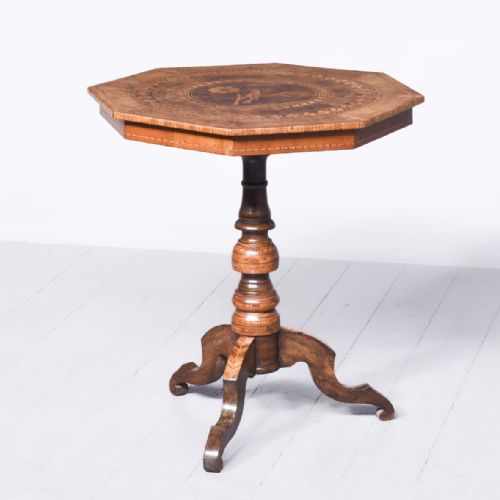


Octagonal Walnut Wine Table
An octagonal walnut wine table brings geometric form and rich timber grain to a corner, serving drinks with understated elegance.
Octagonal Walnut Wine Table
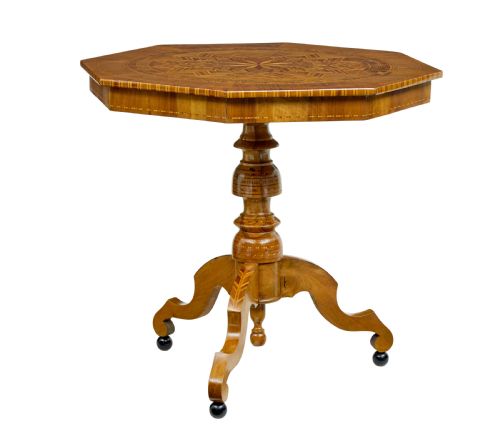
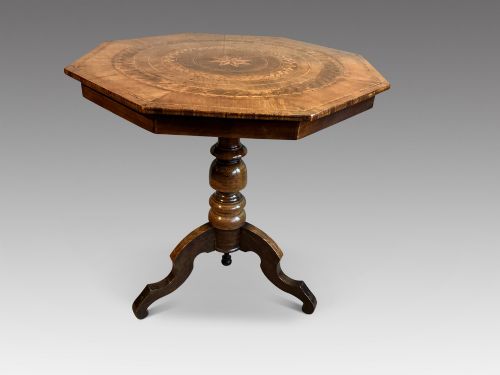
An octagonal walnut wine table is a compact occasional piece designed for portability and display, appearing frequently in Victorian, Edwardian, and Art Deco iterations. These small tables utilise the eight-sided top to soften room layouts, often standing on a central pillar or tripod base for stability in tight spaces.
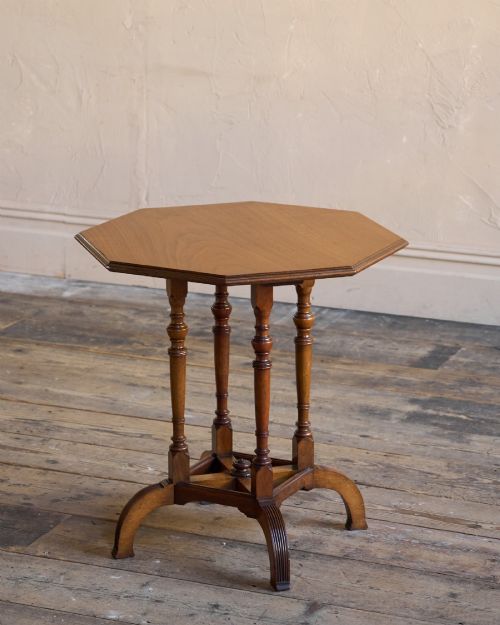
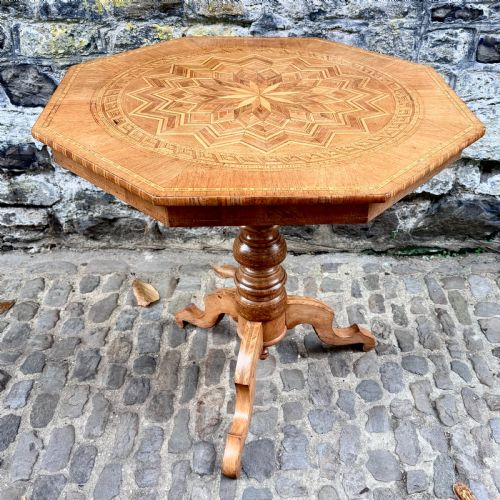
The versions met most often on this page date from the nineteenth century onward, including heavily patterned Sorrento ware and inlaid Italian examples alongside simpler British occasional pieces. Makers utilised rich fruitwood and olive wood alongside primary walnut to create striking geometric patterns across the small tops.
Buyers encounter forms ranging from tilt-top and snap-top mechanisms to static centre tables and pedestal tables intended for intimate gatherings. The predominant material is walnut, frequently veneered or inlaid to showcase contrasting timbers within the octagonal boundary.
How they were made
Makers constructed these pieces using solid timber and veneer over a secondary wood, applying precise geometric inlay in contrasting fruitwood and olive wood. The characteristic eight-sided tops required careful jointing to ensure stability across the grain.
Pillar supports and tripod bases turned on a lathe provide the structural backbone, sometimes incorporating tilt-top or snap-top brass mechanisms for storage. Surface finishing relied on shellac polishing to bring out the dark figures of the walnut and the lighter tones of the specimen inlays.
Octagonal Walnut Wine Table Retail Price Guide 2026
Typical asking prices for octagonal walnut wine table among the pieces listed under this phrase on Sellingantiques today, from the lower quarter to the upper quarter. They describe what is for sale here now, not the wider market.
Listings feature walnut, fruitwood, and olive wood alongside brass fittings across nineteenth-century and early twentieth-century periods.
What varies in quality
Quality rests in the precision of the geometric inlay and the choice of timber figures, where burr walnut and varied specimen woods elevate the visual impact of a small top. The crispness of the turning on the pedestal and the structural tightness of the base jointing determine the durability of the piece.
Sophistication of design separates standard utilitarian examples from works featuring intricate Sorrento or Italian Grand Tour marquetry. The seamless integration of tilt-top mechanisms without wobble distinguishes superior cabinet work.
C. Hindley and Sons
The Octagonal Walnut Wine Table Glossary
- Sorrento Ware
- Decorative woodwork originating from Southern Italy featuring micro-mosaic inlaid veneers of various coloured timbers. This technique often depicts architectural scenes or geometric patterns on table tops.
- Snap Top
- A table top hinged to a pedestal base that locks in a vertical position with a metal catch when not in use. This mechanism allowed tables to be stored flat against a wall.
- Specimen Wood
- Furniture surfaces composed of many different types of timber arranged to show off contrasting natural colours and grains. These woods are frequently assembled in geometric or botanical motifs.
- Burr Walnut
- Timber taken from a growth deformation on a walnut tree, producing highly twisted and swirling grain patterns. Cabinet makers prized this wood for its decorative veneer potential.
- Tilt Top
- A hinged table top configuration identical in function to a snap top, allowing the surface to swivel and tilt for compact storage.
Octagonal Walnut Wine Table: Frequently Asked Questions
What is an octagonal walnut wine table used for?
These compact pieces serve as convenient surfaces for holding drinks, books, or small decorative objects in sitting rooms and studies. Their eight-sided tops fit comfortably into corners where round or square tables waste space.
Historically, the tilt-top and snap-top variations allowed the tables to be moved out of the way when not in use, a practical feature for smaller period interiors.
How do I date an octagonal walnut wine table?
Dating relies on examining the timber preparation, the style of the pedestal turning, and any inlay techniques present on the top. Nineteenth-century examples often feature hand-cut dovetails, dense walnut timber, and traditional French polish finishes.
Later Edwardian and Art Deco pieces display sleeker lines, lighter construction, and different veneer thicknesses compared to their heavier Victorian predecessors.
Are these tables sturdy enough for daily use?
Most pedestal and tripod tables offer a stable foundation for everyday items like lamps or cups, provided the central pillar and leg joints remain tight. The eight-sided top distributes weight evenly across the central support.
Care should be taken with tilt-top mechanisms to ensure the locking catch is fully engaged before placing heavy items on the surface.
How do I care for walnut and inlaid surfaces?
Maintenance involves keeping the timber away from direct heat sources and strong sunlight to prevent the walnut veneer and delicate inlays from drying out or fading. Regular dusting with a soft, dry cloth preserves the polished finish.
Applying a mild furniture wax occasionally helps nourish the wood and maintain its natural lustre without building up heavy residue.