




Octagonal Plant Table
An octagonal plant table brings geometric form and varied timbers to a room, holding greenery or serving as an occasional surface.
Octagonal Plant Table
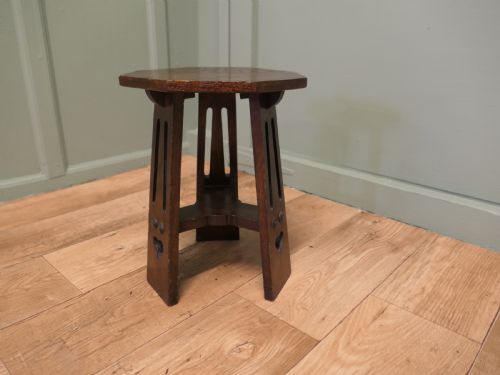
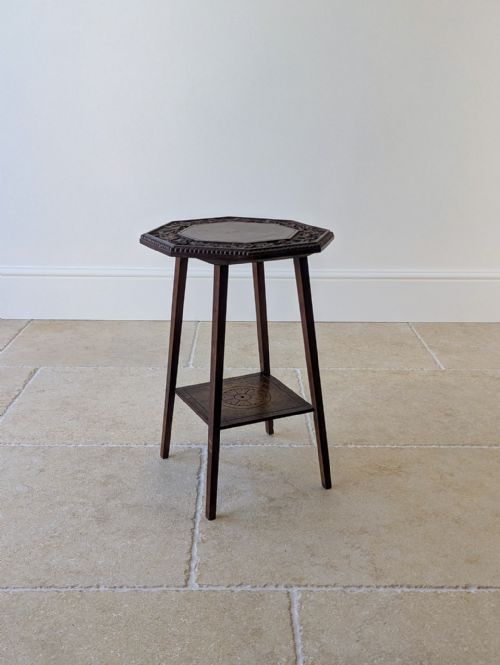
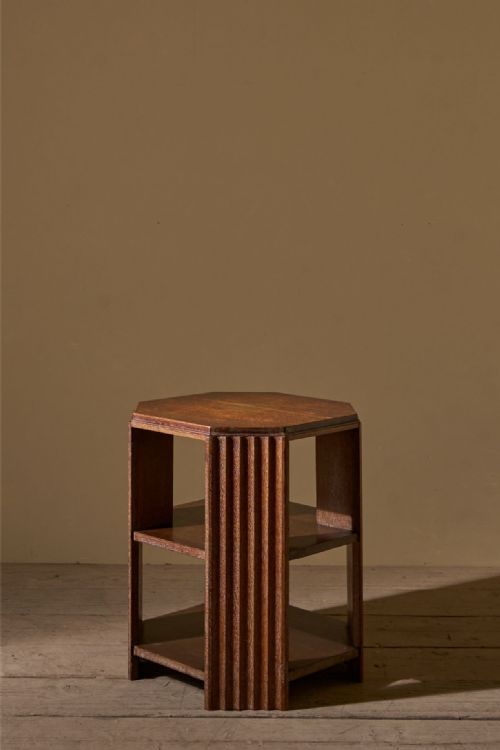
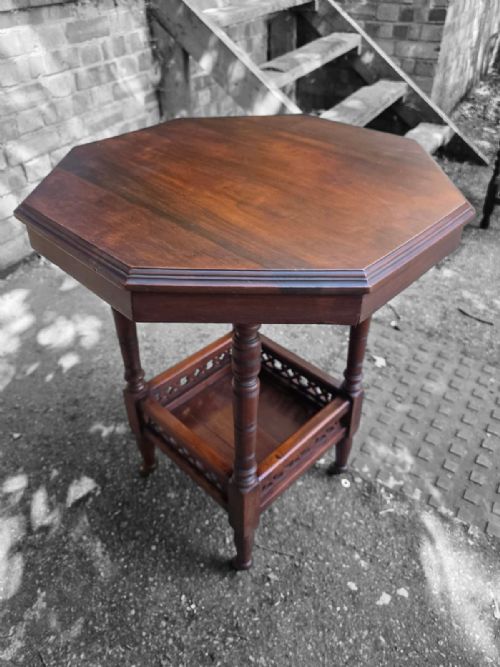
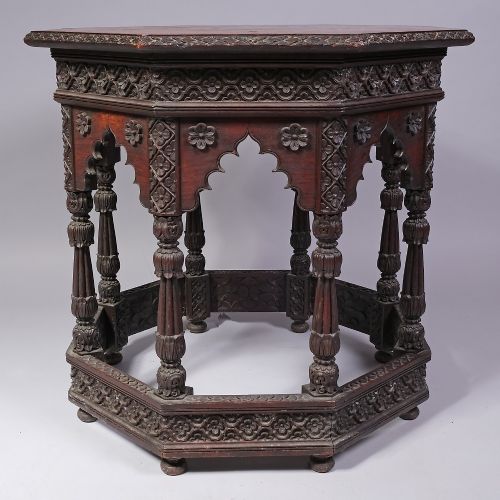
An octagonal plant table is a multi-sided surface designed to hold flowers, lamps, or decorative items, appearing frequently in Victorian, Edwardian, and Arts and Crafts contexts. Buyers seek these pieces for their compact footprint and distinct eight-sided geometry, which fits neatly into corners or beside seating.
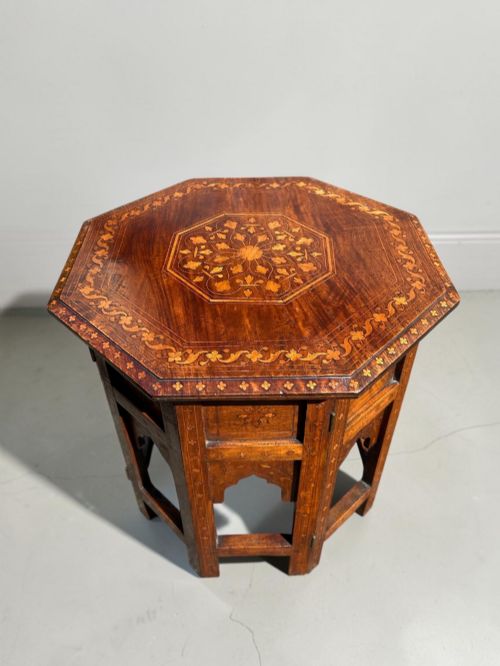
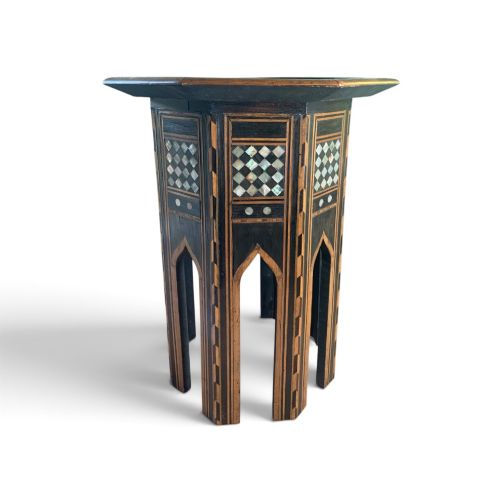
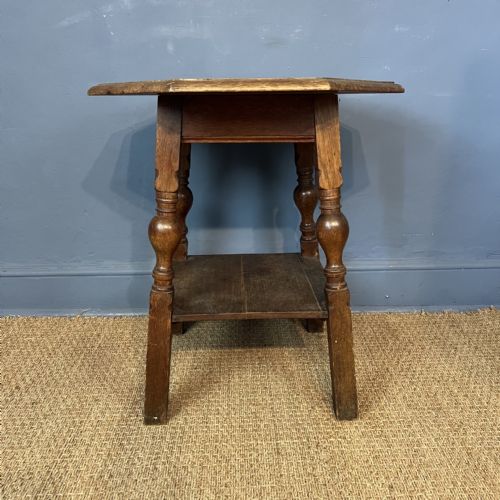
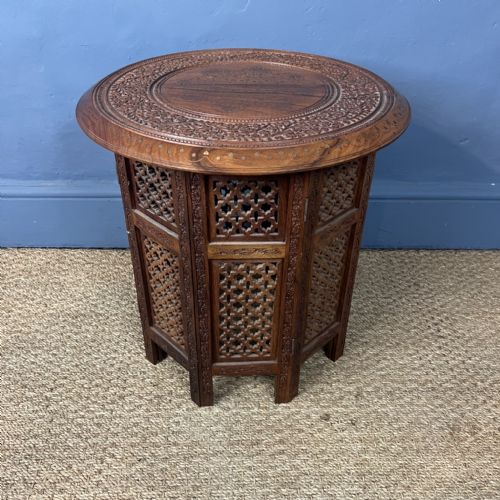
The versions met on this page range from solid oak and walnut English examples to intricate Anglo-Indian and Moorish imports. Makers produced these tables across the eighteenth, nineteenth, and early twentieth centuries, utilising local timbers or exotic hardwoods depending on the regional workshop.
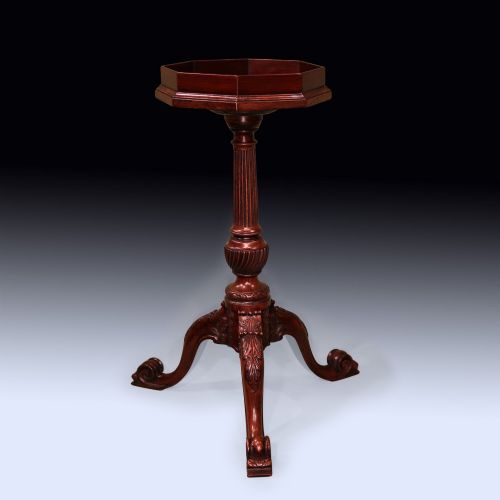
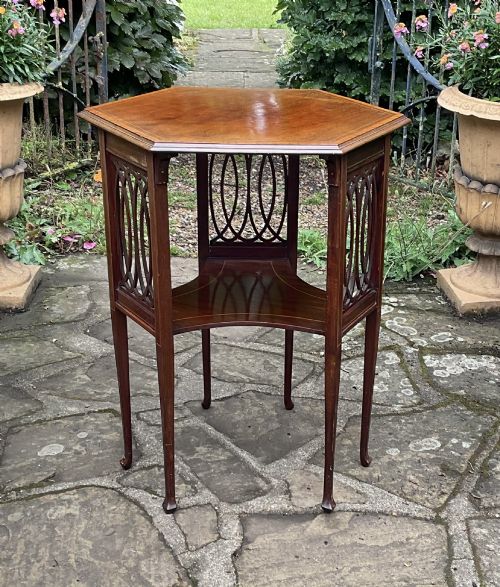
Forms overlap with plant stands, occasional tables, and torchere candle stands, sharing similar heights and top dimensions. The octagonal format allows craftsmen to showcase inlaid patterns or carved borders across each symmetrical panel.
Materials and Technique
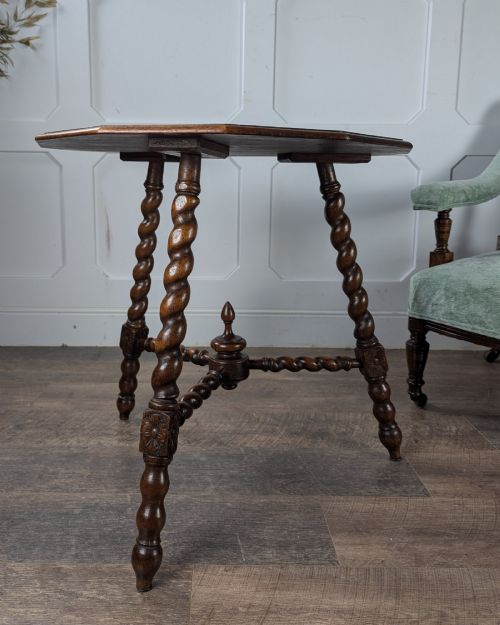
Construction relies heavily on traditional cabinetmaking methods using hardwoods such as mahogany, oak, teak, and walnut. Artisans joined tops to turned, barley twist, or folding legs using tenons and dowels to ensure stability for heavy plants and ceramics.
Imported tables from regions like Hoshiarpur or Bombay incorporate intricate surface ornamentation, utilising brass, bone, and lighter woods inlaid into darker teak. European makers employed carving, hand painting, and liming techniques on satinwood and oak to achieve distinct decorative finishes.
Some nineteenth-century tables arrived from India featuring hidden compartments and folding legs designed for colonial officers on the move.
Craftsmanship and Detail
Quality separates pieces through the precision of the joinery and the depth of the carving or inlay work. Superior examples display tightly fitted geometric joints and crisp, hand-carved relief rather than shallow machine stamping.
The choice of timber and the intricacy of the secondary materials, such as genuine bone or heavy brass wire inlay, mark the difference between standard production items and high-status studio or imported pieces.
Shoolbred·Liberty and Co
The Octagonal Plant Table Glossary
- Anglo-Indian
- Furniture made in India during the British period, often combining traditional eastern carving techniques with western furniture forms.
- Torchere
- A tall, slender stand designed to hold a candle or lamp, sharing structural similarities with many plant tables.
- Barley twist
- A type of turning resembling a twisted rope, commonly found on the legs of seventeenth-century revival and Victorian tables.
- Inlay
- A technique where pieces of contrasting materials like brass, bone, or satinwood are inserted into depressions in the base wood to form a pattern.
- Occasional table
- A small, portable table intended for light, intermittent use in a sitting room or hallway.
Octagonal Plant Table: Frequently Asked Questions
What is an octagonal plant table used for?
These tables provide a compact surface designed originally to elevate potted plants, ferns, or decorative lamps. Their distinct shape allows them to fit efficiently into corners or small spaces within a room.
Over time, owners have utilised them as general occasional surfaces for books or tea, adapting their height and stability for daily living spaces.
How do I identify an Anglo-Indian table?
Anglo-Indian tables typically feature dense carvings of foliage, animals, or geometric patterns executed in teak or padauk timber. Many incorporate intricate wire inlay made from brass or sections of bone.
Examining the underside often reveals traditional construction methods and native woods distinct from standard British cabinetmaking.
Are these tables sturdy enough for heavy plants?
Most solid hardwood versions in oak, mahogany, or teak offer robust support for standard ceramic pots and heavy greenery. Folding or lighter occasional variants require careful placement to maintain balance.
Checking the leg joints and central pillar fixings ensures the structure remains stable under sustained weight.
How do I date an octagonal plant table?
Dating relies on observing the timber species, secondary woods, and decorative style, such as Arts and Crafts simplicity or Moorish revival fretwork. Nineteenth-century examples often display hand-turned elements and traditional patina.
Comparing the construction details with documented pieces from periods like the Victorian era or early twentieth century narrows the timeframe of manufacture.