






Octagonal Needlework Table
These octagonal needlework table examples offer practical storage for sewing implements alongside the refined proportions of nineteenth-century occasional furniture.
Octagonal Needlework Table
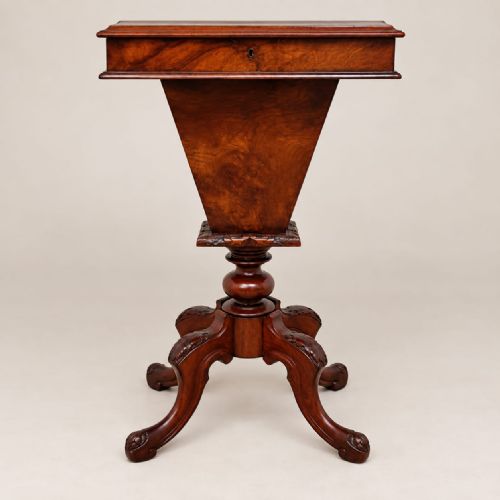
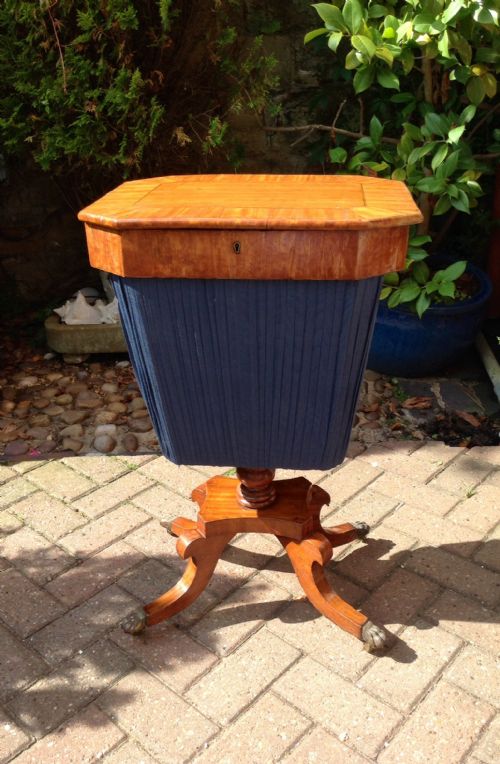
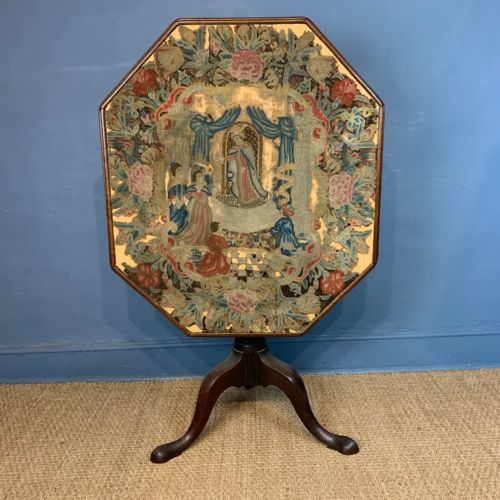
An octagonal needlework table combines a hinged top or compartment for sewing gear with a stable pedestal or tripod base. The examples recorded here span the Georgian, Regency, William IV, Victorian, and Edwardian periods.
What varies in quality
Construction standards depend upon the choice of timber and the precision of the marquetry or stringing applied to the top and pedestal. Pieces featuring figured burr walnut or detailed satinwood indicate higher workshop execution.
The integrity of the internal compartments, the smoothness of the turning on the pedestal columns, and the preservation of original fabric silk baskets determine the overall desirability of an individual specimen.
Octagonal Needlework Table Retail Price Guide 2026
Typical asking prices for octagonal needlework table among the pieces listed under this phrase on Sellingantiques today, from the lower quarter to the upper quarter. They describe what is for sale here now, not the wider market.
Many Victorian trumpet tables hide secret compartments beneath their silk baskets for stray buttons.
The Octagonal Needlework Table Glossary
- Trumpet workbox
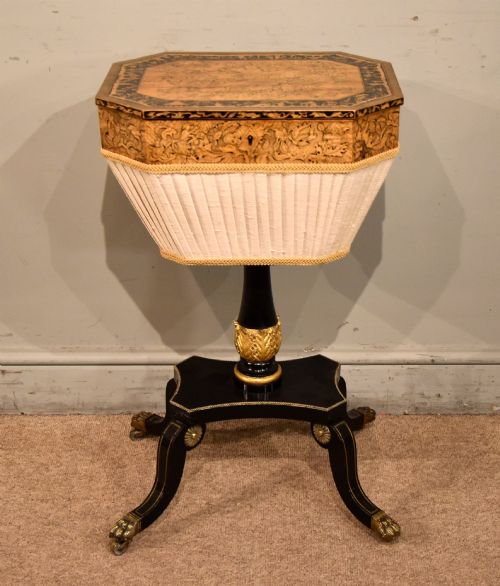
- A sewing table featuring an octagonal body that flares outward toward the base, resembling the bell of a trumpet. This form gains stability from a tripod support.
- Marquetry
- The decorative technique of applying thin veneers of various woods onto a structural surface to create pictorial or geometric patterns. It appears frequently on Victorian and Edwardian examples.
- Penwork
- A surface decoration created by drawing intricate designs in dark ink upon a light wood ground before sealing. This method appears on specific Regency specimens.
- Tripod base
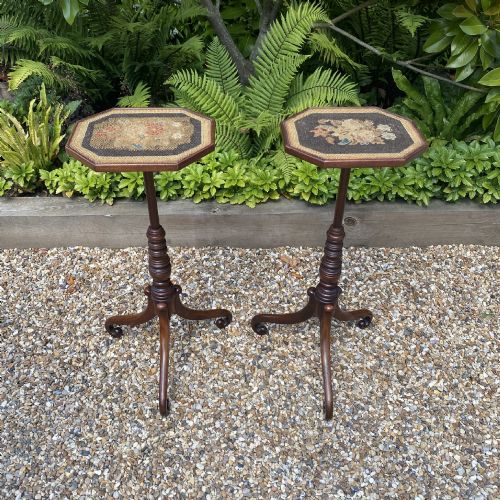
- A support structure comprising three legs radiating from a central pillar. It provides balanced elevation for small occasional tables.
Octagonal Needlework Table: Frequently Asked Questions
What is an octagonal needlework table?
These pieces are specialised items of antique furniture designed to hold sewing equipment, threads, and fabrics inside a compartment beneath an eight-sided lid.
They generally stand on a central pillar supported by a tripod base or platform feet, serving both a practical and decorative function in nineteenth-century interiors.
How were these tables used originally?
Gentlewomen utilised these tables to store ongoing needlepoint, embroidery, and sewing supplies close at hand in the parlour or drawing room.
The hinged lid opened to reveal fitted compartments for reels and pins, while the suspended fabric basket caught scraps of wool and cloth.
How do I identify a Regency period table?
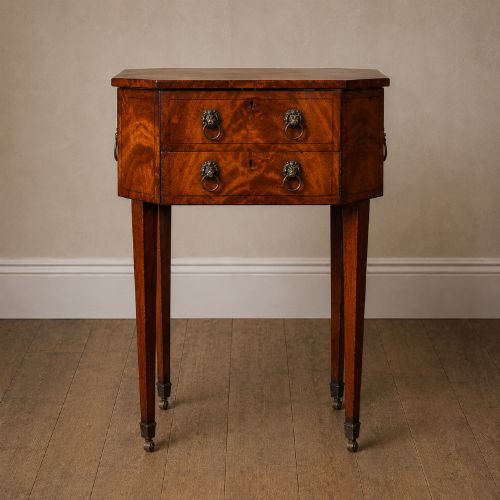
Regency examples often display clean classical lines, architectural pedestals, and contrasting wood inlay or penwork rather than heavy floral carving.
Cabinet makers working in this era favoured mahogany and satinwood, frequently incorporating brass mounts and austere geometric forms.
Where do trumpet workboxes get their name?
The term describes the distinctive flared profile of the octagonal body, which slopes outward from the lid down to the broad base.
This trumpet shape became particularly popular during the Victorian period, especially when executed in burr walnut or rosewood.