


Octagonal Carved Lamp Tables
Octagonal carved lamp tables bring geometric shape and detailed woodwork to living spaces as versatile side pieces.
Octagonal Carved Lamp Tables
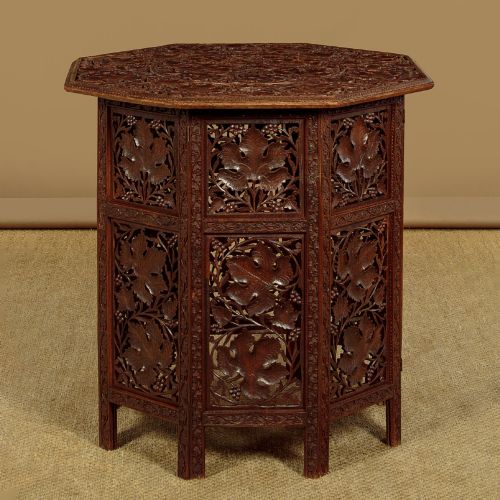
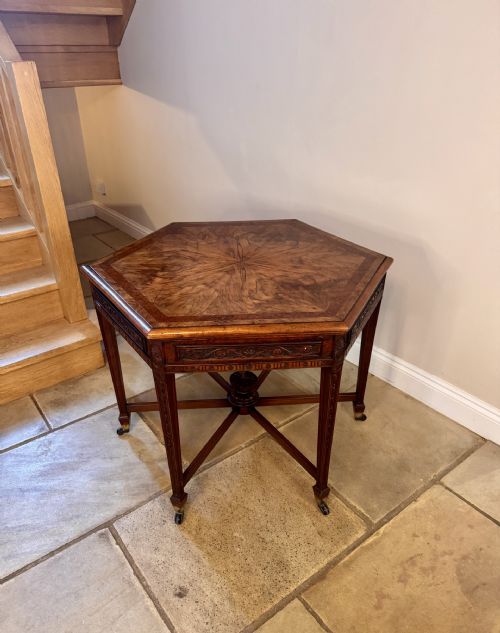
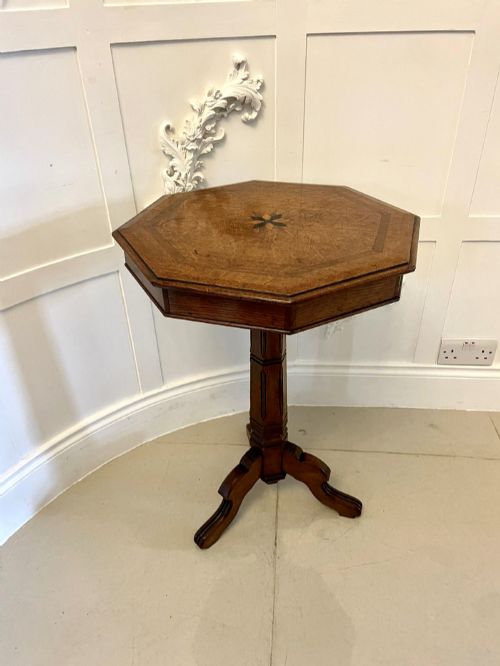
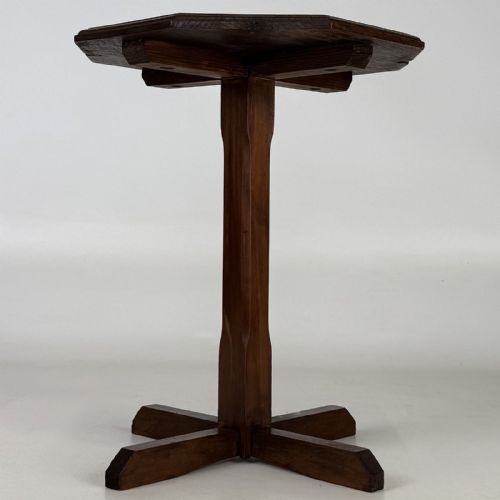
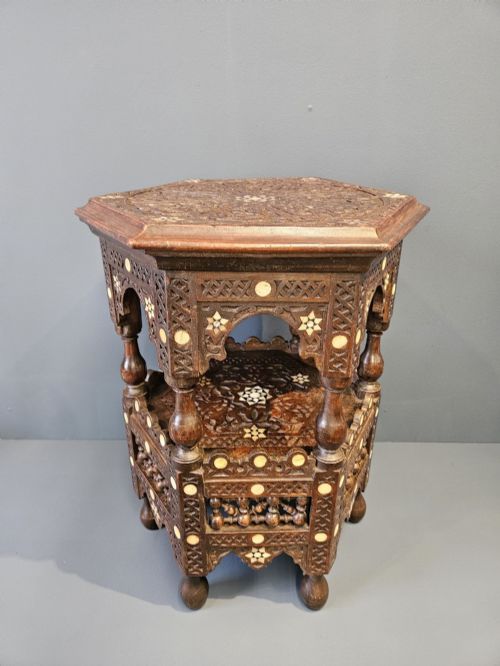
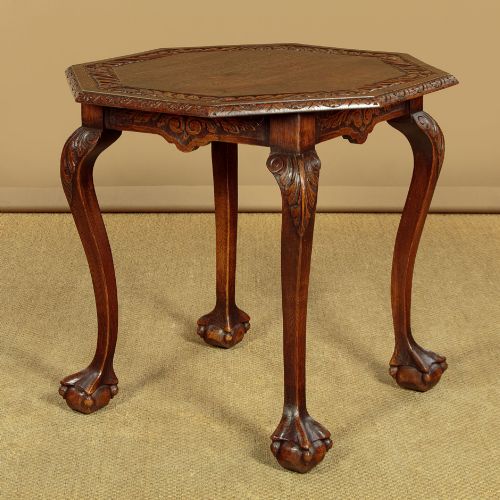
Octagonal carved lamp tables combine multi-sided tops with carved wooden bases, functioning primarily as occasional or side tables in sitting rooms. These pieces emerge predominantly from nineteenth-century and early twentieth-century workshops, spanning Victorian, Edwardian, and Regency periods.
Makers construct these tables in forms ranging from compact occasional tables to larger centre tables, often incorporating folding frames or tier arrangements. The inventory relies heavily on English oak and walnut alongside specialised regional examples.
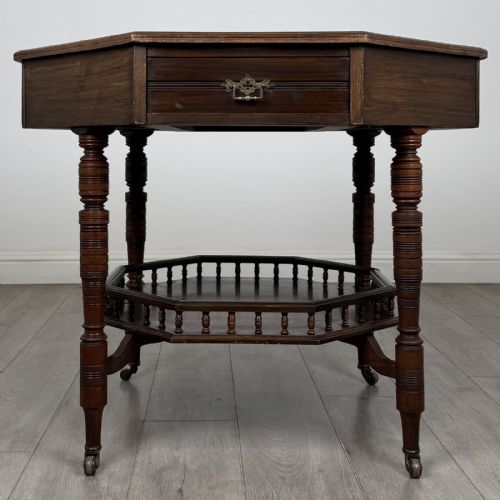
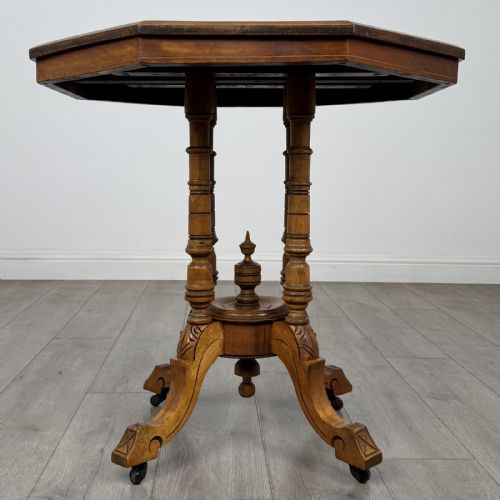
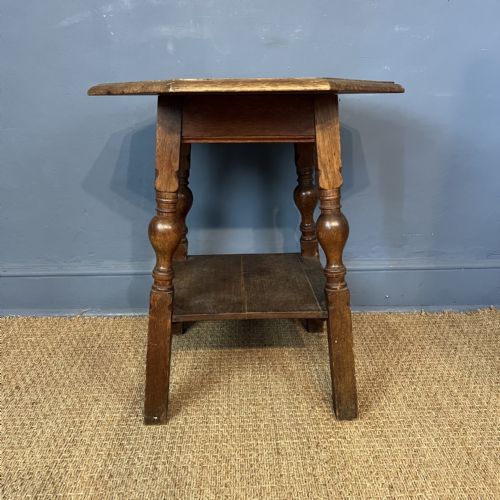
The dominant survival on this page is the Victorian oak or walnut occasional table, frequently displaying geometric carving or turned supports. Edwardian walnut variants also appear regularly, offering softer wood tones and lighter proportions.
Materials and technique
Carpenters shape these tables using solid hardwoods such as oak, walnut, mahogany, and teak, frequently accenting surfaces with boxwood stringing or specialised specimen woods. Artisans employ dense timbers to support intricate hand-carved motifs across the octagonal tops and structural supports.
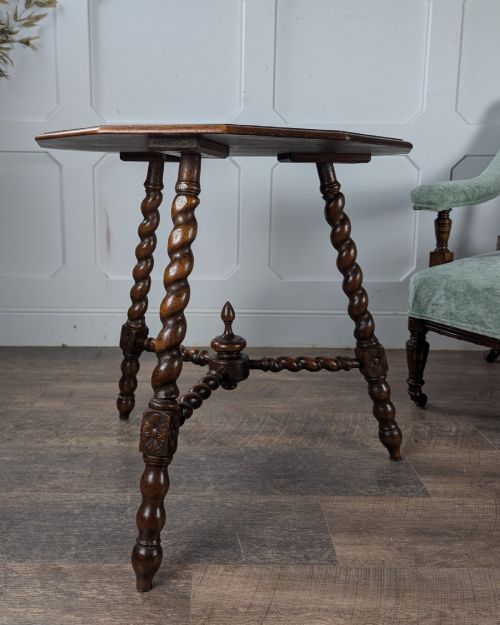
Joinery techniques combine traditional frame construction with turned elements like barley twist legs or carved column pedestals. Certain regional styles integrate inlaid elements and complex folding mechanisms into the hardwood framework.
Octagonal Carved Lamp Tables Retail Price Guide 2026
Typical asking prices for octagonal carved lamp tables among the pieces listed under this phrase on Sellingantiques today, from the lower quarter to the upper quarter. They describe what is for sale here now, not the wider market.
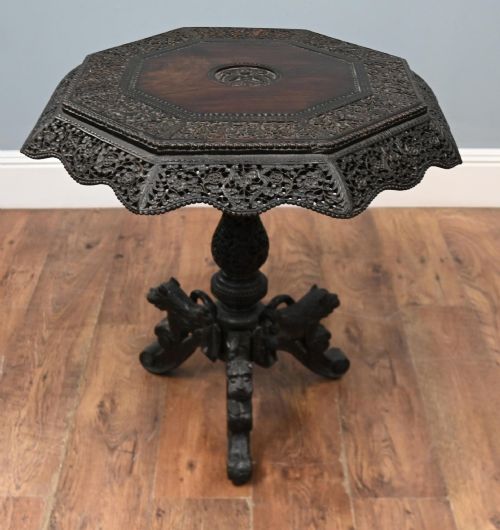
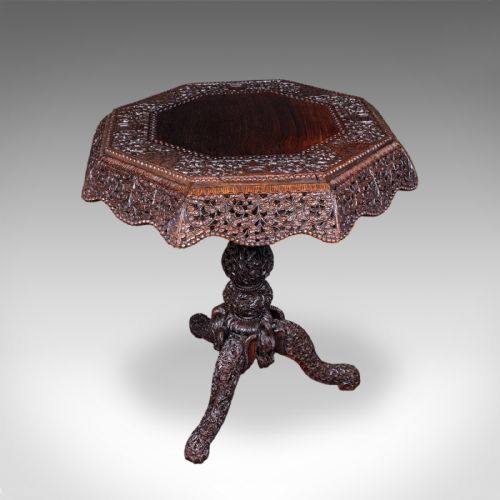
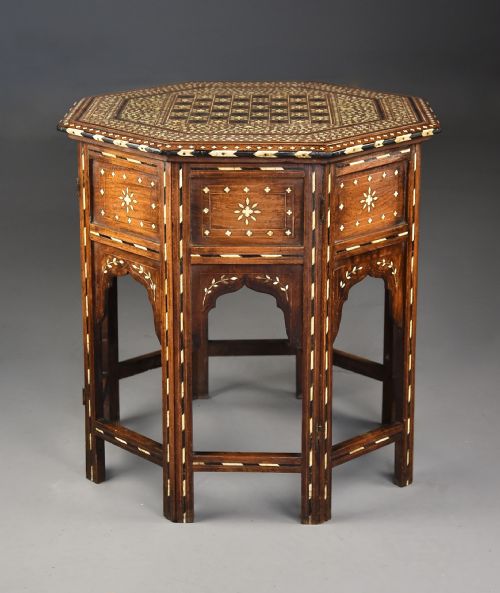
The inventory records regional variations including Anglo-Indian folding tables and Chinese hardwood stands.
Craftsmanship and distinction
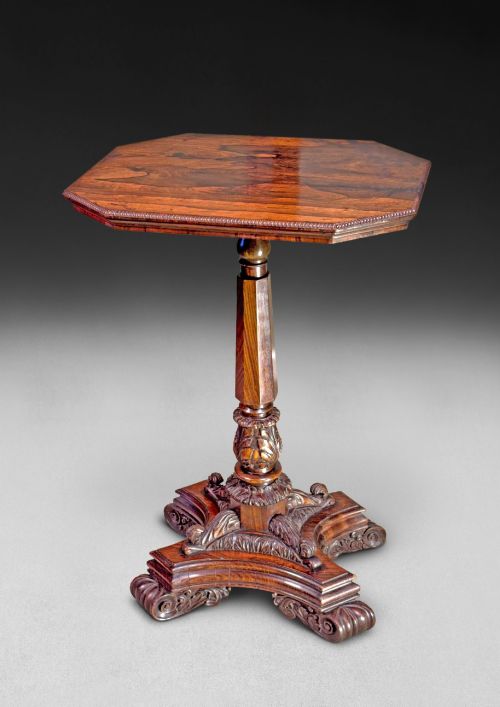
Quality rests in the depth and precision of the hand-carving across the octagonal surface and structural supports, where crisp detailing distinguishes superior output from routine workshop production. Selection of timber figure, such as flame mahogany or burr walnut veneers, elevates the visual weight of the piece.
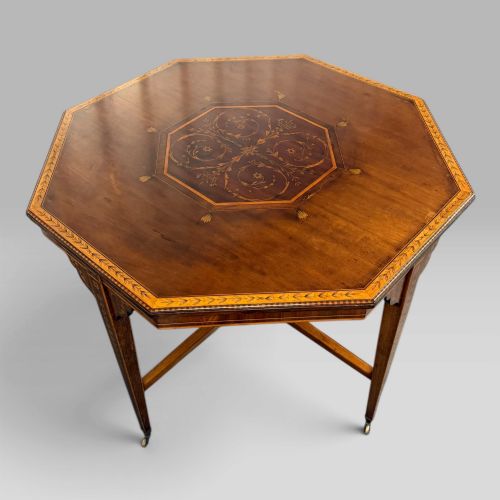
Integration of secondary materials, including boxwood stringing or specialised inlay work, signals higher workshop ambition. Construction integrity, manifested in stable joints and well-balanced pedestals, separates utility furniture from finer decorative examples.
Liberty and Co·Gillows
The Octagonal Carved Lamp Tables Glossary
- Octagonal top
- A geometric tabletop possessing eight distinct sides, creating a defined alternative to circular or rectangular surfaces.
- Barley twist
- A spiral turning technique resembling a twisted rope, commonly found on the legs and vertical supports of nineteenth-century tables.
- Occasional table
- A small, movable table designed to serve incidental functions around a principal room rather than a fixed dining purpose.
- Boxwood stringing
- Thin inlaid lines of light-coloured boxwood set flush into dark wood surfaces to create geometric borders.
- Hoshiarpur
- A North Indian centre of wood carving and inlay work known for intricate geometric patterns executed in hardwood.
Octagonal Carved Lamp Tables: Frequently Asked Questions
What is an octagonal carved lamp table?
These pieces are small multi-sided tables featuring decorative woodwork, designed to hold lamps or display objects in reception rooms.
They combine compact footprints with stable bases, making them practical for corners or beside seating furniture.
How do I date an antique table?
Dating relies on examining the timber species, construction methods, and prevailing decorative styles visible in the piece. Victorian examples often display heavy oak or walnut carving, while Edwardian versions tend toward lighter proportions.
Secondary woods and hardware details further anchor the piece to a specific decade or aesthetic movement.
Where should I place these tables?
These tables suit sitting rooms, studies, or hallways where an eight-sided top breaks up straight architectural lines.
Their compact dimensions allow them to function as side surfaces next to armchairs or as central stands for lamps and decorative items.
Are all these tables English?
While many pieces originate from English workshops utilising local oak and walnut, the selection includes international variants.
Examples from Anglo-Indian and Chinese traditions introduce alternative timbers like teak and distinct carving techniques.