
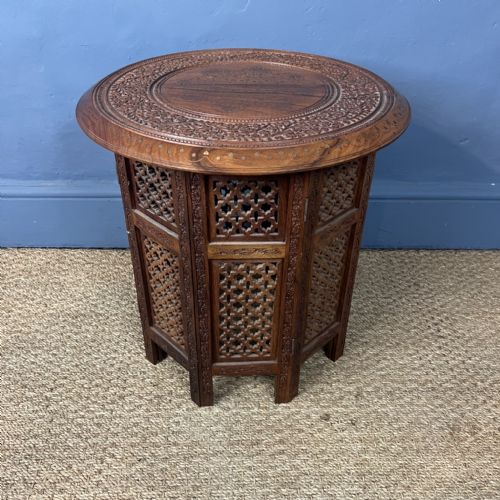
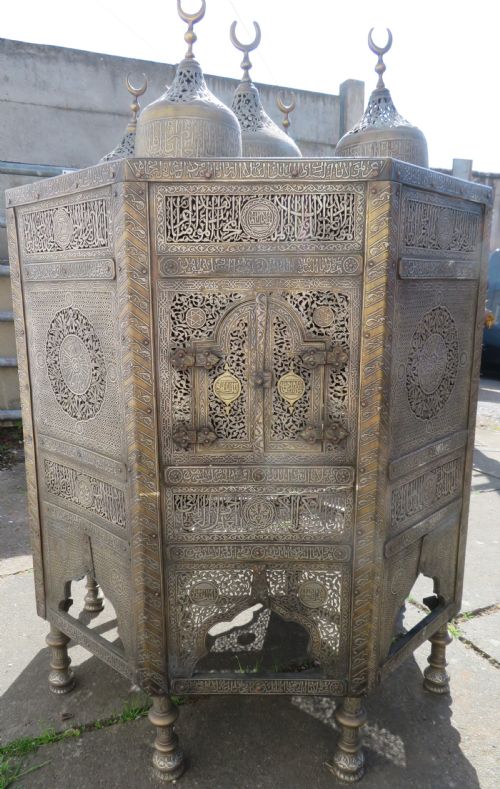


Octagonal Brass Inlaid Table
An octagonal brass inlaid table brings rich geometry and intricate metalwork into a room, offering a distinct surface for display.
Octagonal Brass Inlaid Table
An octagonal brass inlaid table combines eight-sided symmetry with detailed metal wire work set into dense timber. The pieces seen here span from the Regency period through to the early twentieth century, originating from British workshops and North Indian production centres.
The Anglo-Indian and Hoshiarpur examples dominate the selection, featuring folding carved bases alongside standard occasional forms. Rosewood, teak, and shisham provide the dark timber foundation that makes the bright metalwork stand out sharply.
How they were made
Artisans channelled dense hardwoods like rosewood, teak, and shisham, cutting precise grooves into the surface to receive fine brass, copper, and silver wire. Bone, ebony, and boxwood also appear as supplementary inlay materials, creating complex geometric and floral motifs across the top and base.
Indian workshops utilised folding, pierced, and carved wooden supports that allowed the octagonal tops to be stored flat when not in use. British cabinet makers applied similar brass inlay techniques to rosewood tripod tables and games surfaces during the Regency period.
Many of these tables fold completely flat, proving that nineteenth-century artisans understood the value of flat-pack furniture long before modern warehouses did.
What varies in quality
The precision and density of the metal inlay set the standard for these pieces, with finer work showing tight joints between the brass wire and the surrounding timber. Simpler arrangements use broader strips of metal, whereas superior examples integrate copper and silver wire alongside bone elements into elaborate patterns.
The choice of primary wood affects the overall weight and presence, with dense rosewood and seasoned teak holding sharper carved details than softer hardwoods. The execution of the folding or tripod base reveals the maker's hand, particularly where pierced carving meets the inlaid top.
Walker and Hall
The Octagonal Brass Inlaid Table Glossary
- Anglo-Indian
- A term describing furniture made in India during the British colonial period, often combining traditional eastern forms with western tastes. These items frequently utilise local hardwoods and intricate metal inlay.
- Hoshiarpur
- A town in Punjab renowned for its distinct woodwork and inlay traditions. Tables from this region often feature dense brass, copper, and ebony inlay on shisham or teak.
- Cairo Ware
- Metalwork and furniture influenced by Islamic designs from Egypt, typically incorporating intricate silver and brass inlay on brass or wooden bodies. Such pieces reached European markets during the nineteenth and early twentieth centuries.
- Shisham
- An Indian rosewood timber valued for its durability and rich grain. It serves as the primary structural wood for many inlaid tables from the region.
- Tripod Table
- A small table supported by a central pillar and three legs. This form appears frequently in Regency pieces with brass inlaid rosewood tops.
Octagonal Brass Inlaid Table: Frequently Asked Questions
How do I care for brass inlaid timber?
Keep the wood nourished with appropriate wax to prevent the timber from shrinking around the metal wire. Avoid excessive moisture, which can tarnish the brass and weaken the bond with the wood.
Dust the surface regularly with a soft cloth and gently polish the metal elements only when necessary to preserve their natural finish.
Are these tables sturdy enough for daily use?
Most occasional and side tables function well for holding lamps, books, or decorative items. Folding bases on Indian examples require careful handling when moving the furniture.
Heavier items and uneven floors demand attention to ensure the stability of tripod and folding support structures.
How do I distinguish Regency from Anglo-Indian styles?
Regency tables typically feature dark rosewood with precise brass stringing or neoclassical motifs, often supported by a central pillar. Anglo-Indian pieces rely on denser overall wire inlay, folding carved bases, and regional timbers like teak.
Examining the construction methods and wood species usually reveals the distinct geographic origin of the piece.
What is the purpose of the folding base?
Many traditional Indian tables were designed with collapsible or folding bases to allow easy storage and transport. This practical feature enabled merchants to pack the furniture flat.
The carved and pierced wooden supports lock into place to sustain the heavy octagonal top securely.