
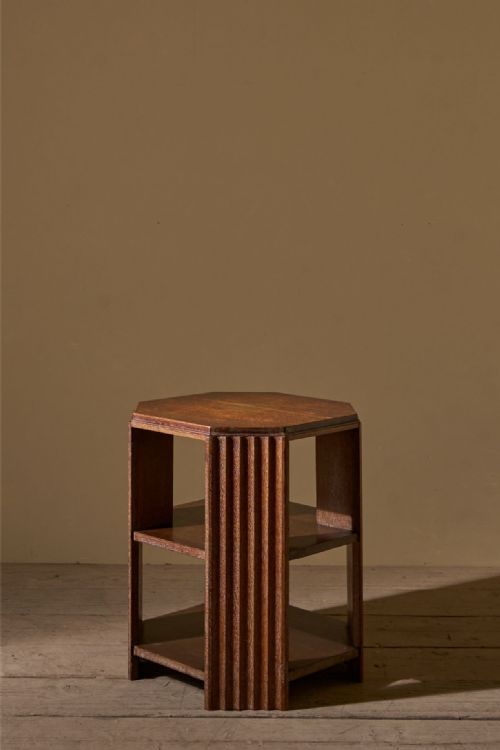
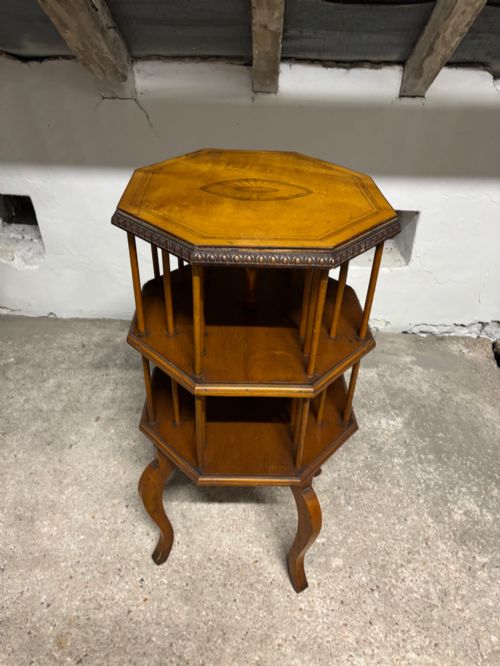
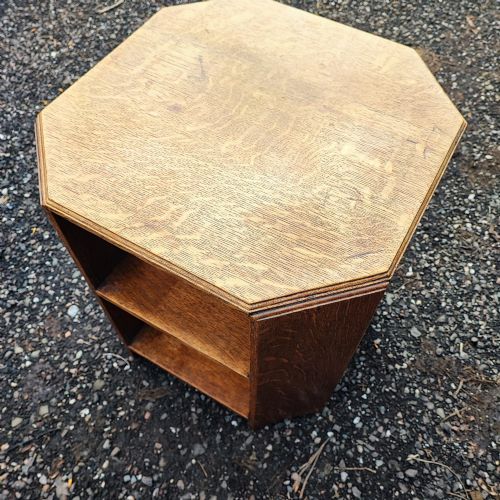
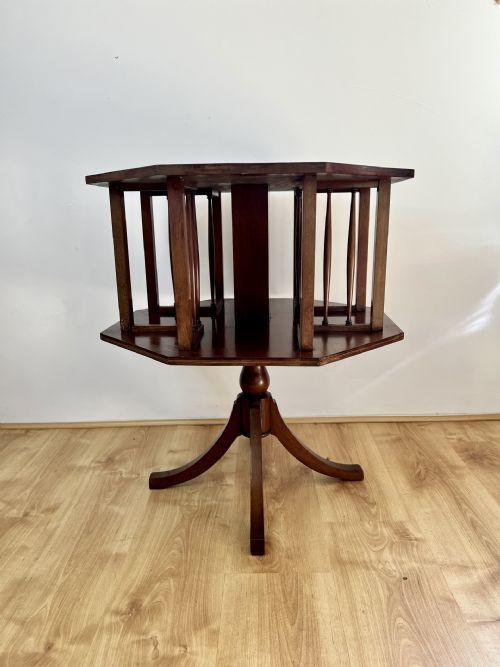
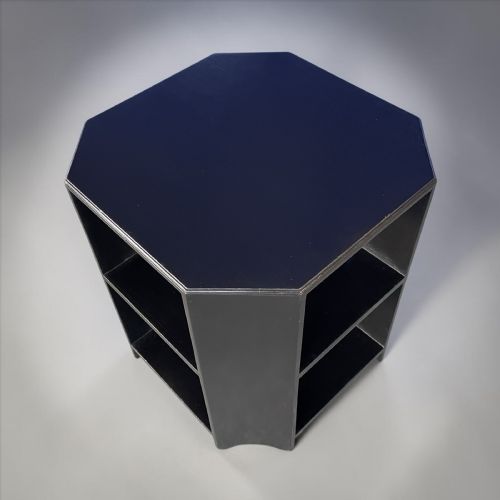
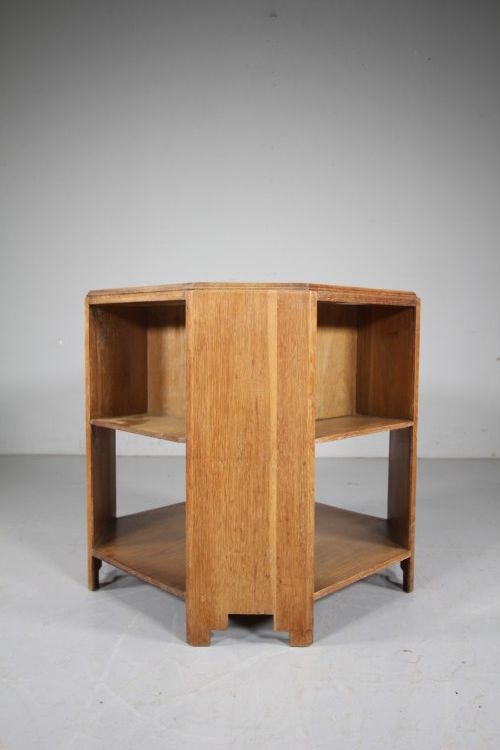


Octagonal Book Table
An octagonal book table offers eight-sided display and storage, bringing compact geometry and practical surface space to a room.
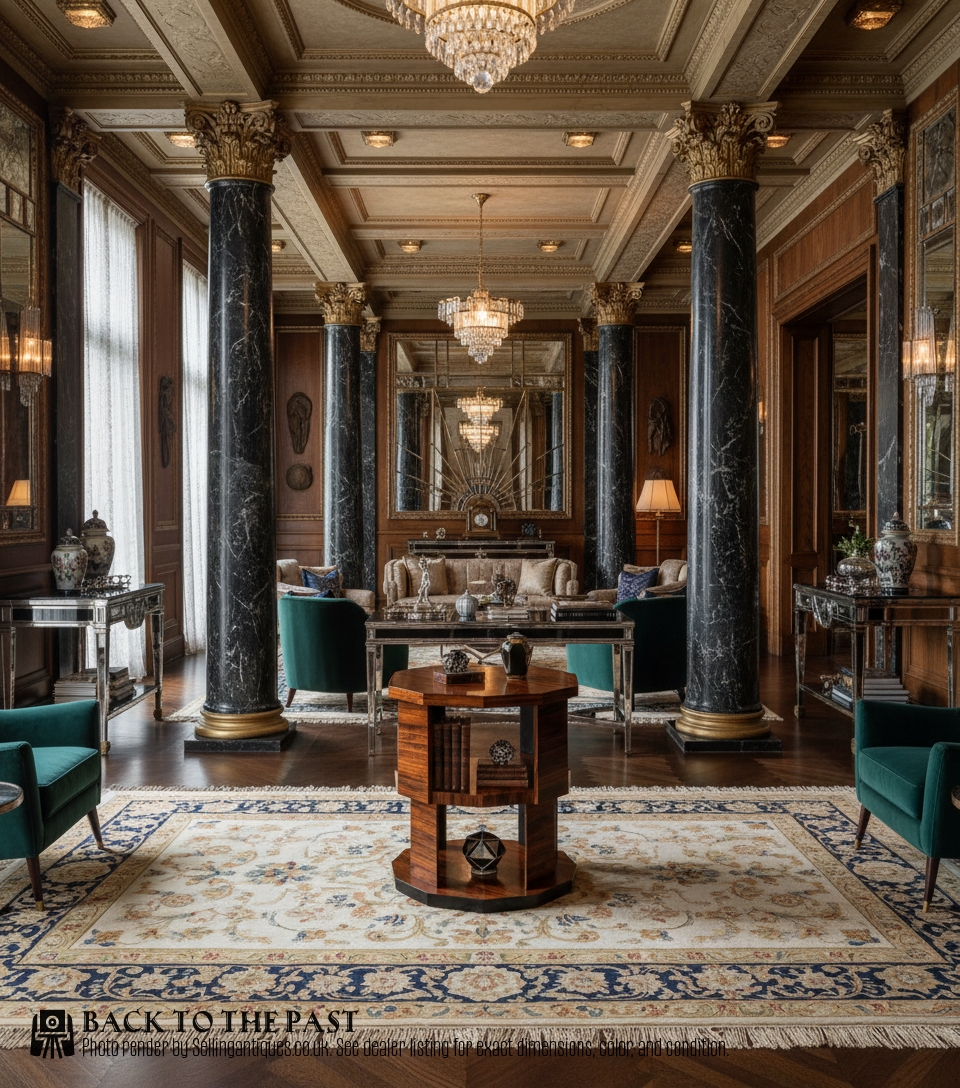
Octagonal Book Table
An octagonal book table provides a central surface above integrated tiers or compartments for volumes, combining a compact footprint with accessible storage.
Examples on this page span from Victorian and Edwardian periods into the 1930s, encompassing styles such as Art Deco, Arts and Crafts, and Regency.
Forms range from static side tables with built-in shelving to revolving bookcases and tiered cabinet designs.
Materials and construction methods
Cabinetmakers utilised timber solids and veneers including oak, mahogany, walnut, and burr walnut veneer, occasionally incorporating ebonised wood or satinwood.
Decorative surface techniques include fine inlay work and pietra dura panels, alongside limed finishes applied to oak during the twentieth century.
Octagonal Book Table Retail Price Guide 2026
Typical asking prices for octagonal book table among the pieces listed under this phrase on Sellingantiques today, from the lower quarter to the upper quarter. They describe what is for sale here now, not the wider market.
Skyscraper tiers let miniature libraries rotate in place.
Distinctions in quality
The standard of timber selection and veneer matching defines the visual weight of the piece, particularly on expansive octagonal tops.
The precision of joinery in the revolving mechanisms, shelving partitions, and multi-tiered structures determines the mechanical integrity of the furniture.
Heals
The Octagonal Book Table Glossary
- Revolving bookcase
- A freestanding fixture mounted on a central pivot that allows rotation for easy access to volumes from any angle.
- Limed oak
- Timber treated with a specialised finish that leaves white pigment in the grain pores, popular during the early twentieth century.
- Pietra dura
- An artistic technique using cut and fitted polished-stone mosaics to create decorative table tops.
- Burr walnut veneer
- Thin slices of ornamental wood taken from walnut tree growths, valued for intricate swirling grain patterns.
Octagonal Book Table: Frequently Asked Questions
Where does an octagonal book table fit best?
These pieces suit placement beside a seating group or in the centre of a room where access from multiple directions is useful.
The eight-sided shape allows the furniture to occupy corners or open spaces while keeping volumes within reach.
How do I care for timber surfaces?
Maintain the wood by avoiding direct sunlight and excessive moisture, using dry or lightly damp cloths for cleaning.
Wax or polish formulated for period wood helps preserve the finish and protects veneers over time.
What is the difference between static and revolving versions?
Static tables provide fixed shelving or enclosed storage beneath the top surface without movement.
Revolving versions incorporate an internal pivot mechanism that lets the entire tier spin to reveal stored volumes.
How do I date an octagonal book table?
Dating relies on observing construction methods, timber choices, and stylistic markers such as Arts and Crafts simplicity or Art Deco geometry.
Matching the finish and secondary woods to known periods helps narrow the timeline of manufacture.