



Ochre Oil Canvas Painting
When you search for an ochre oil canvas painting, you enter a world of warm earth tones applied to woven supports across multiple centuries.
Ochre Oil Canvas Painting
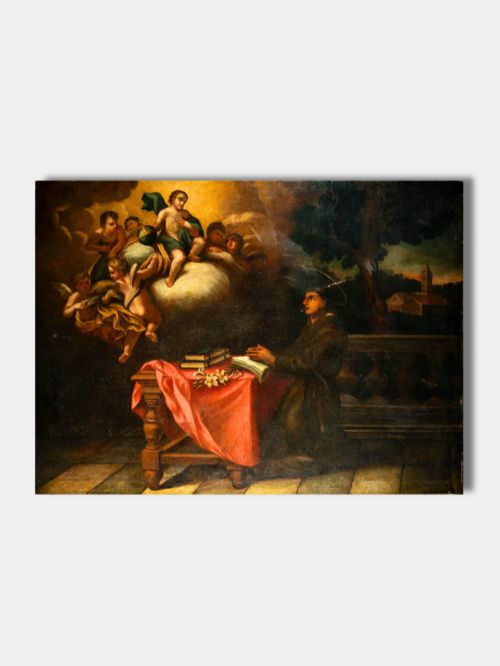
An ochre oil canvas painting brings together traditional woven fabric supports and ground earth pigments that produce enduring yellow-brown hues. Buyers searching this phrase encounter works spanning from the eighteenth century through the mid-twentieth century, encompassing landscapes, portraits, and domestic interiors.
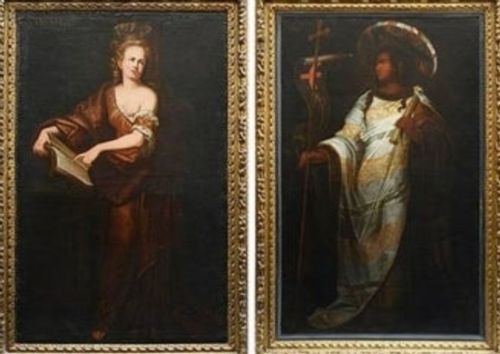
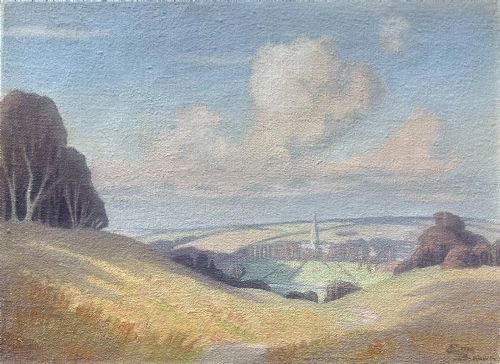
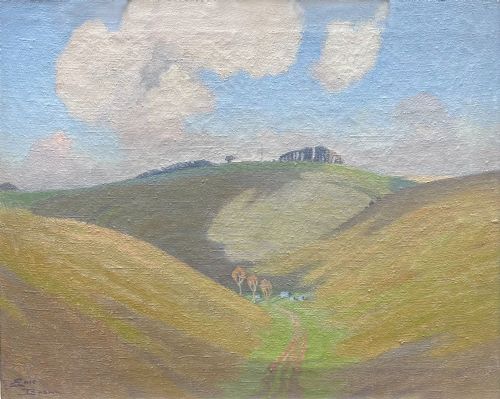
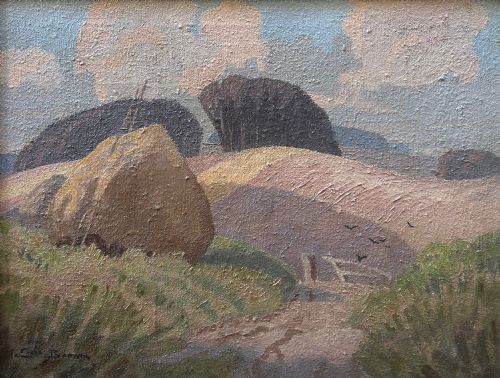
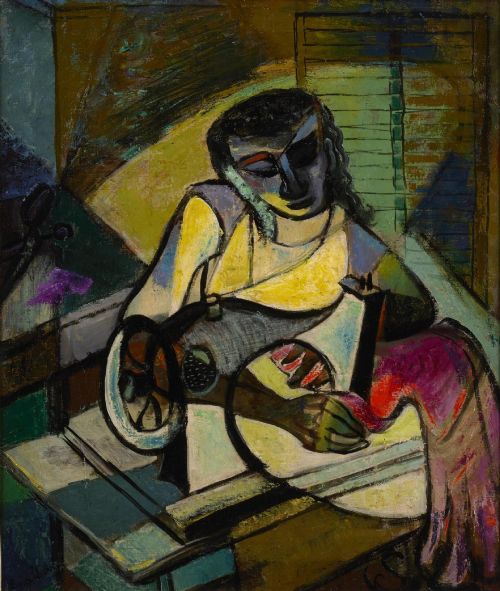
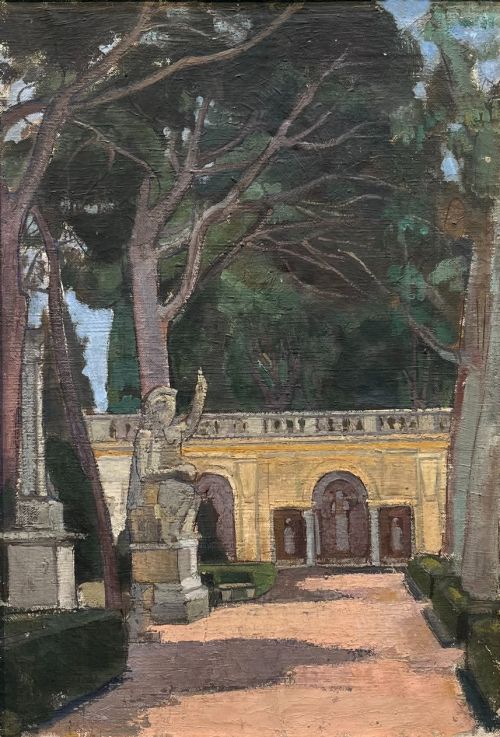
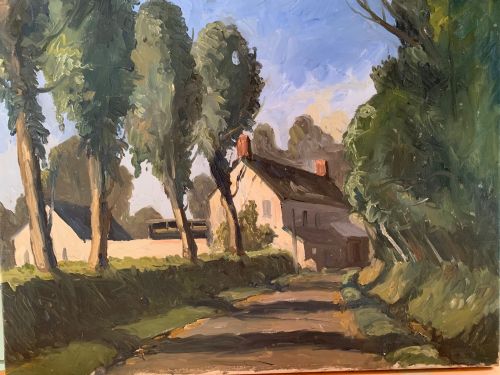
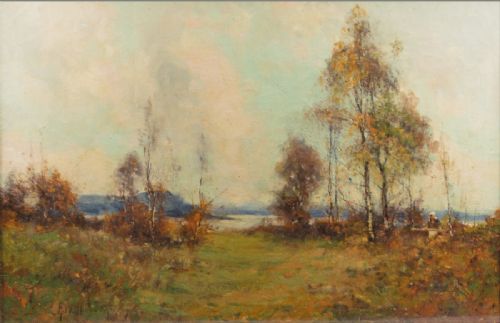
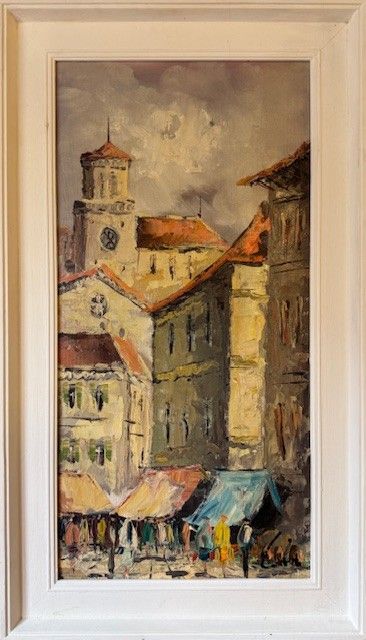
The most common examples on this page date from the early to mid-twentieth century, reflecting British Impressionism, Post-Impressionism, and Mid-Century Modern movements. These pieces range from intimate pastoral scenes and architectural studies to bold modernist compositions executed by named artists and anonymous hands alike.
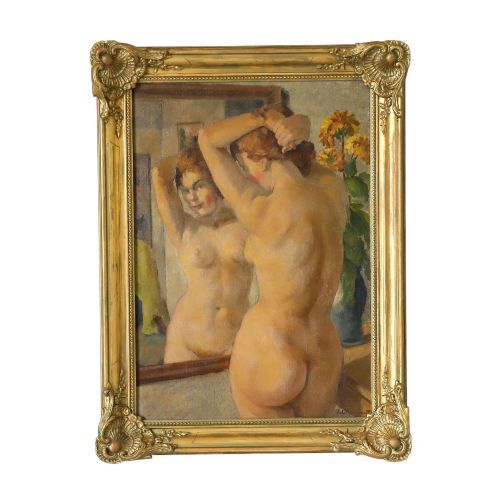
Framed formats dominate the selection, preservation having protected the underlying canvas and oil paint layers. Works often originate from British, French, Scandinavian, and broader European studios, showing the wide geographic reach of canvas painting traditions.
Materials and Construction
Makers built these works upon stretched woven canvas, securing the textile to wooden frames before applying preparatory grounds. This flexible surface received applications of oil paint mixed with natural earth pigments, predominantly iron oxides that yielded stable ochre tones.
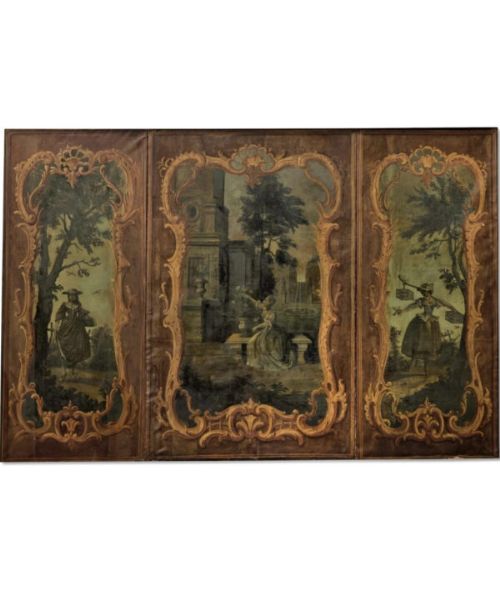
Artists utilised brushes and palette knives to layer viscous oil mediums, creating varied textures from smooth neoclassical glazes to thick impasto strokes. Gold leaf and gilt details occasionally supplement the primary pigments, particularly on nineteenth-century frames and decorative panels.
Listings span multiple decades from 1800 to 1960, incorporating nineteenth-century realism alongside twentieth-century British and French modernism.
Distinctions in Quality
Quality rests in the handling of the medium and the sureness of the composition, where confident brushwork creates depth and atmosphere rather than flat repetition. Superior works demonstrate deliberate control over light and shadow, allowing the warm ochre underpaintings to unify the entire visual field.
The integrity of the physical support also separates works, with stable canvas tension and minimal restoration indicating careful preservation over decades. Furthermore, the expressiveness of the brushwork in secondary elements distinguishes accomplished studio production from routine output.
Eric Brown·Lena Gurr·Philippe de Rougemont·Alexander Wellwood Rattray·Raymond Picque·Reginald Grange Brundrit·Cecil Rochfort D'Oyly-John·Amile Coppieters·Ron Folland·Charles Malfroy·William George Meadows·James William Booth·Sir Matthew Smith·Claude Thomas Stanfield Moore·Arthur Winter Shaw·Frederick Christian Lund·Frederick William Jackson·John Cawthorn·Ernest Higgins Rigg
The Ochre Oil Canvas Painting Glossary
- Canvas
- A heavy woven fabric, typically linen or cotton, stretched tightly across a wooden frame to serve as the foundation for oil painting. This support provides the necessary tooth and flexibility to hold viscous pigment layers.
- Ochre
- A natural earth pigment containing hydrated iron oxide that produces yellow, brown, or red hues. It forms a stable and permanent foundation for landscape and portrait palettes across centuries.
- Impasto
- Paint applied thickly to a canvas so that brush or palette knife marks stand proud of the surface. This technique adds literal three-dimensional texture and catches light dynamically.
- Grisaille
- A painting executed entirely in shades of grey or neutral monochromatic tones, often used as an underpainting or to simulate sculptural relief. It establishes tonal values before colour application.
- Impressionism
- A nineteenth-century painting style focused on capturing the visual impression of the moment, paying attention to shifting light and unblended brushstrokes. Practitioners prioritized open-air observation over rigid academic finish.
Ochre Oil Canvas Painting: Frequently Asked Questions
How do I care for an oil painting on canvas?
Keep the piece away from direct sunlight and fluctuating humidity to prevent the canvas from slackening and the oil paint from cracking. Dust the surface gently with a soft, dry brush without applying pressure.
Avoid using water, chemical cleaners, or damp cloths on the painted surface. Professional conservators should handle any deeper cleaning or varnish removal.
How can I tell the age of a canvas painting?
Examine the wooden stretcher frames, tacking margins, and the type of canvas weave utilised behind the composition. Older works often feature hand-planed wood, square-cut nails, and coarse linen textures.
Look also at the craquelure pattern within the paint layer, which develops naturally as oil medium ages and hardens. Signatures, exhibition labels, and framer stamps on the reverse offer additional chronological clues.
What is the difference between Impressionist and modernist styles?
Impressionist works prioritize the atmospheric effects of natural light and optical colour mixing using visible brushstrokes. They generally retain a recognizable connection to observed landscapes and figures.
Modernist pieces push further into abstraction, simplification, and subjective colour choices. Forms are often reduced to essential geometric shapes to emphasise the physical surface of the canvas over strict realism.
Were these paintings always framed?
Most oil paintings on canvas were created with an intended frame to protect the fragile edges and complete the visual presentation. Original frames often match the historical period of the artwork itself.
Some mid-century and modernist works were framed in simple floating mouldings or left unframed to highlight the raw canvas edges. The presence of period framing frequently enhances the integrity of the piece.