



Occasional Window Table
An occasional window table provides a light, moveable surface designed to catch the natural light by a room's glazing.
Occasional Window Table
An occasional window table is a versatile surface originating primarily from the Victorian and Edwardian eras, designed to sit comfortably in a light-filled bay or beside a pane. These pieces function as small centres, side tables, or lamp supports, shifting easily to suit the room's needs.
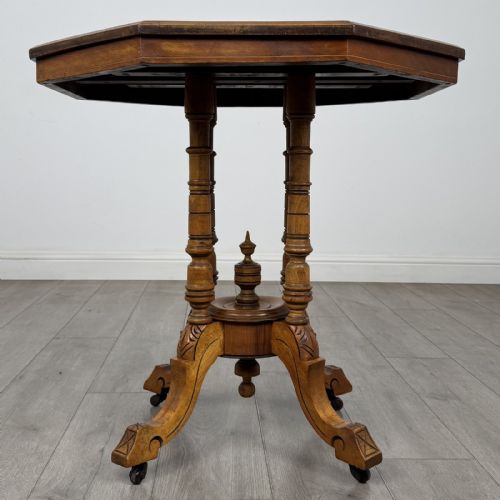
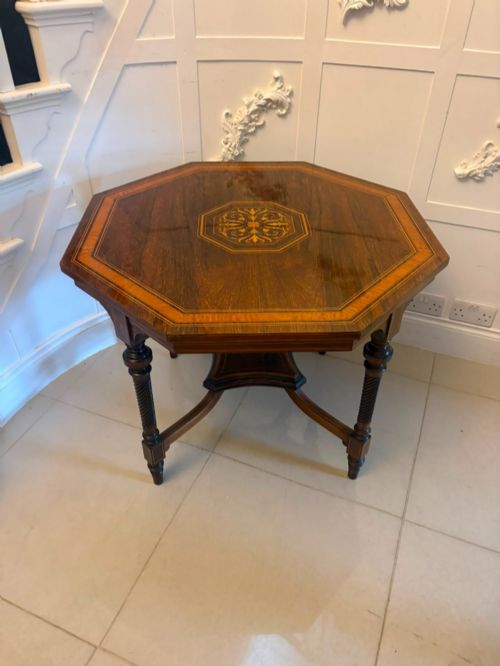
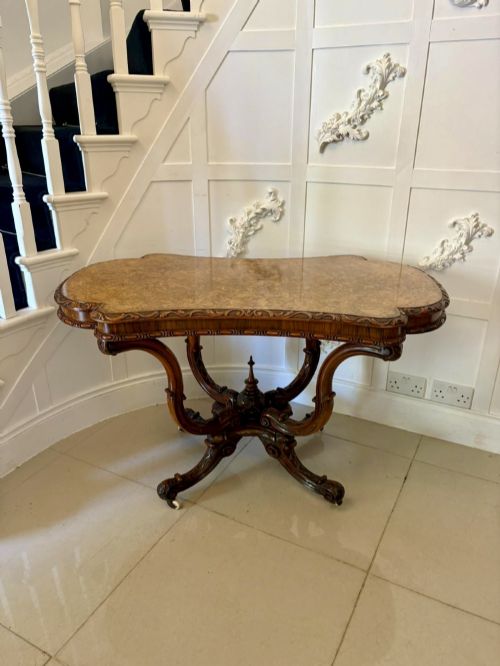
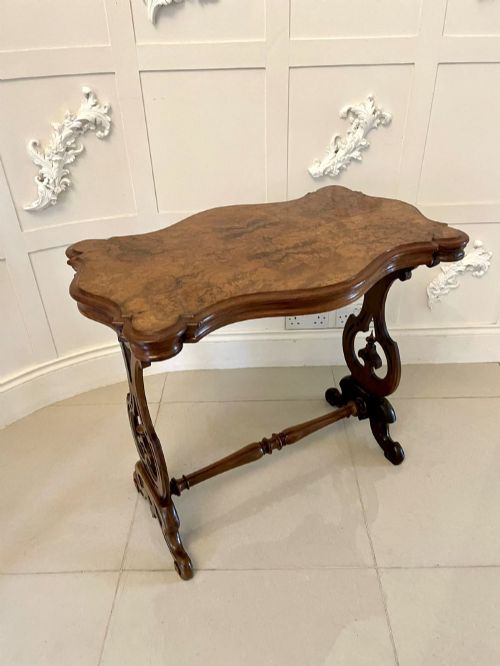
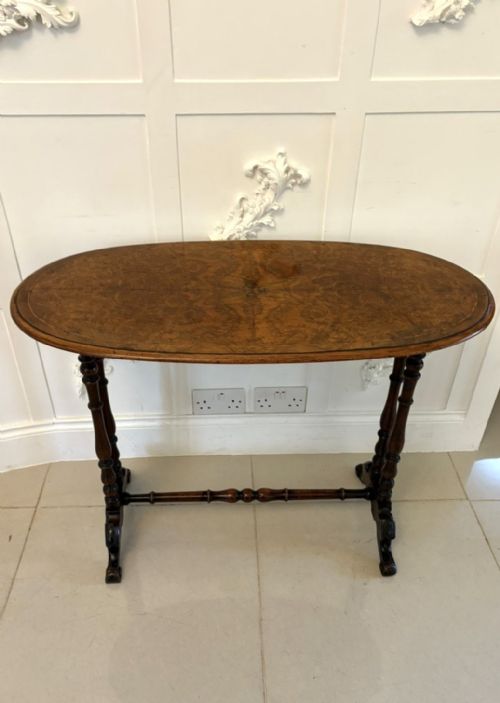
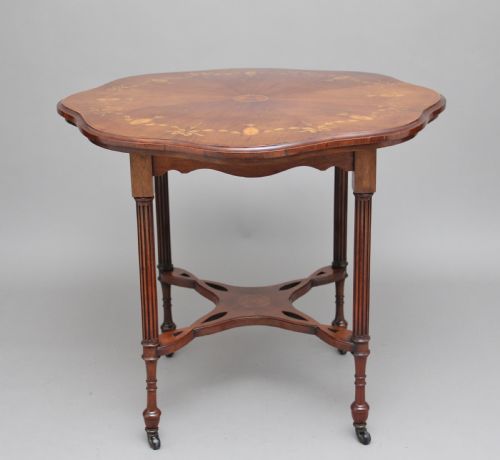
The versions most frequently met on this page span the nineteenth and early twentieth centuries, appearing in shapes that include oval, octagonal, and shaped rectangular tops. Walnut, mahogany, and rosewood dominate the forms, frequently enriched with marquetry or wood inlay.
Makers of the period conceived these tables for flexible placement rather than heavy formal dining, resulting in proportions that remain manageable and polite. They suit contemporary interiors precisely because their compact footprint accommodates lamps, books, or decorative objects without dominating the floor space.
How they were made
Cabinet makers utilised dense hardwoods such as mahogany and walnut, frequently selecting figured burr veneers to cover the primary surfaces. These timbers provided a stable foundation for intricate marquetry and geometric parquetry decoration.
Joinery techniques relied on traditional framing to secure the tops to turned or carved pedestals and legs. Surface enrichment involved careful hand-carving of foliate details alongside contrasting inlay woods like satinwood and amboyna.
Occasional Window Table Retail Price Guide 2026
Typical asking prices for occasional window table among the pieces listed under this phrase on Sellingantiques today, from the lower quarter to the upper quarter. They describe what is for sale here now, not the wider market.
Materials recorded on these tables include walnut, burr walnut, mahogany, rosewood, oak, brass, and bamboo.
What varies in quality
The selection of timber sets the baseline for quality, with highly figured burr walnut and rich flame mahogany commanding greater visual depth than plain utility woods. Richness of grain and consistency in the veneer matching across the top define the more ambitious examples.
Execution of decorative details separates standard production from finer workshop output. Crispness in the hand-carved foliate elements and precision in the marquetry inlay indicate the level of craftsmanship invested in the piece.
The Occasional Window Table Glossary
- Burr walnut
- A highly prized wood featuring swirling, knotty grain patterns harvested from tree growths. It provides a decorative surface texture highly favoured by nineteenth-century cabinet makers.
- Marquetry
- The art of applying pieces of veneer to a structure to form decorative patterns and pictures. Craftsmen utilise various coloured woods to achieve tonal contrast.
- Parquetry
- Geometric mosaic woodwork used for repeating patterns on tabletops. This technique demonstrates precision in cutting and fitting small wooden tiles.
- Occasional table
- A small, moveable piece of furniture intended for light, intermittent use. These tables include lamp tables, window tables, and small centre pieces.
- Aesthetic Movement
- A late nineteenth-century design style emphasising visual beauty over narrative meaning. Pieces from this movement display clean lines and refined decorative restraint.
Occasional Window Table: Frequently Asked Questions
Where should I place a window table?
These tables find a natural home beside a large window or in a bright corner where their detailed timbers catch the light. They also serve effectively as lamp stands or small side surfaces in a sitting room.
Because of their compact scale, they move easily to accommodate guests or to fill an awkward gap between seating.
How do I identify a Victorian table?
Victorian pieces frequently utilise rich burr walnut or dense mahogany, often incorporating carved foliate details and shaped tops. The proportions lean towards robust construction and elaborate surface decoration.
Cabinet makers of this period also favoured centre tables with multi-legged pedestals and rich grain patterns.
What is an Edwardian window table?
Edwardian examples generally display lighter proportions, frequently rendered in mahogany or satin walnut with delicate inlay. Octagonal and oval tops supported by slender legs are common characteristics of this later period.
The aesthetic shifts towards refined grace and simpler geometric or floral marquetry rather than heavy carving.
Can I use an occasional table daily?
These pieces were built for practical use in nineteenth and early twentieth-century homes, making them entirely suitable for modern daily life. Placing a ceramic lamp or books on the surface causes no harm.
Care should be taken with moisture and direct heat, using coasters to protect the polished wood surfaces.