



Serpentine Accent Table
A serpentine accent table brings fluid movement and rich timber figure to a room, turning a functional surface into a sculptural focal point.
Serpentine Accent Table
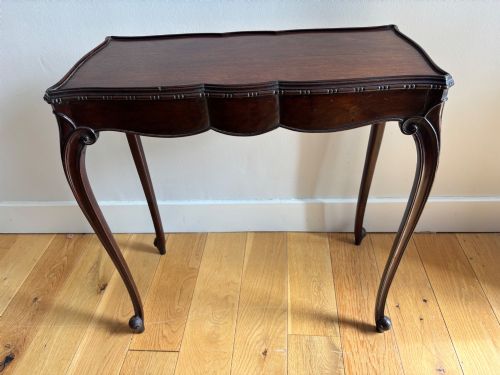
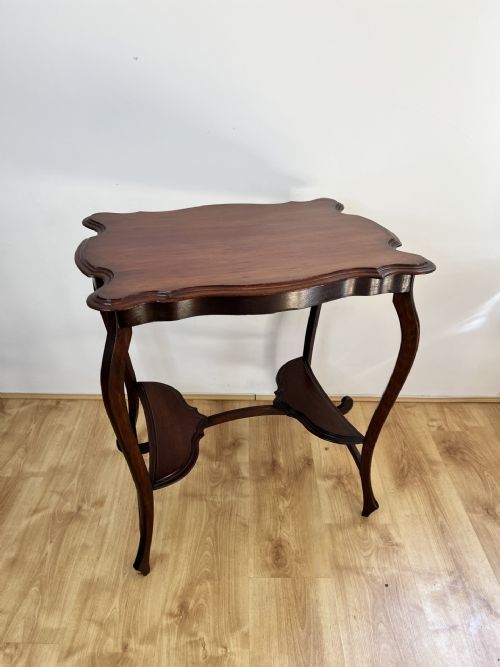
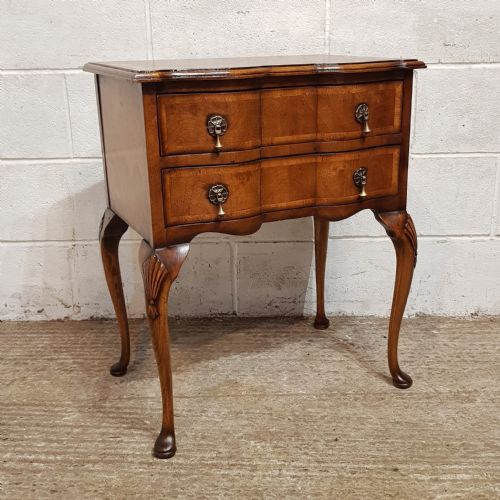
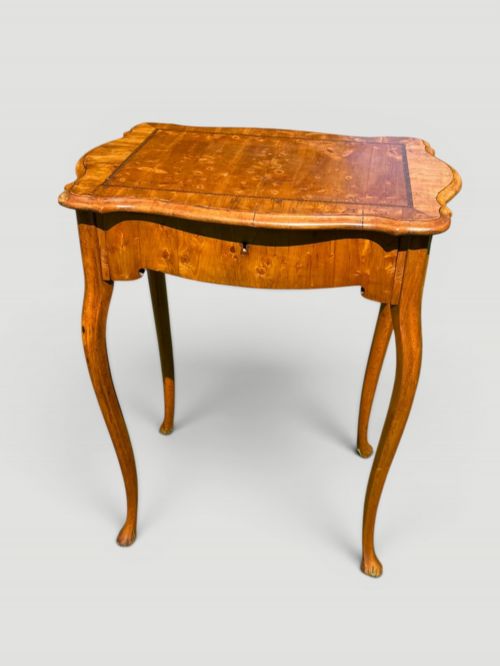
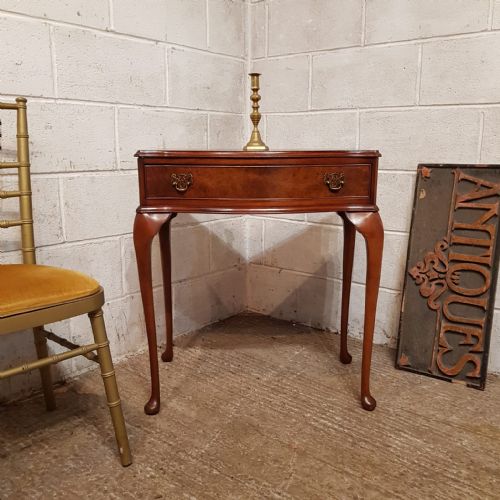
A serpentine accent table presents a distinctive undulating front edge that curves outward at the centre and inward at the sides, introducing a graceful rhythm to domestic spaces. These tables appear across multiple periods, most notably in Victorian, Edwardian, and Georgian designs, functioning variously as side tables, occasional tables, and card tables.
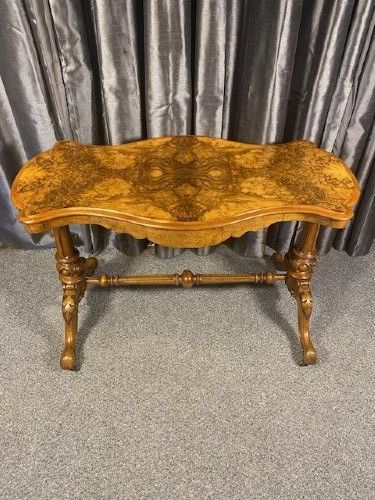
The versions most commonly encountered on this page combine compact proportions with rich timber grains, including burr walnut and mahogany. Makers utilised this shaped outline to soften the rigid geometry of a room, applying it to pieces ranging from small lamp tables to larger centre tables.
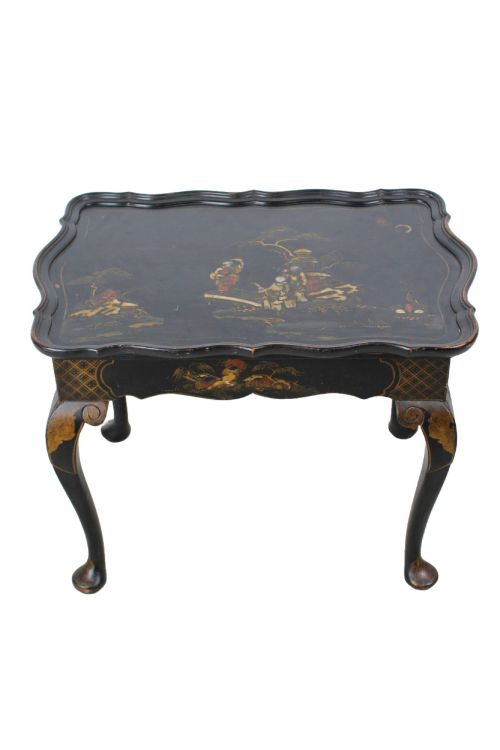
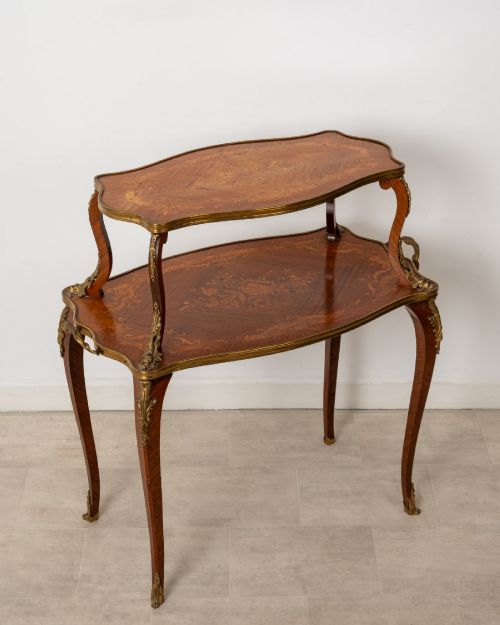
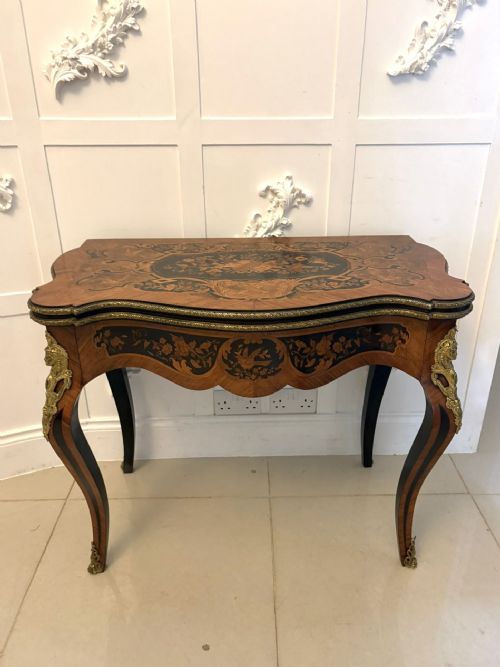
Origin influences the decorative vocabulary, shifting between restrained English George III interpretations and elaborate French Louis XV styles featuring Ormolu mounts. Whether standing on slender cabriole legs or tripod bases, these tables maintain a delicate balance between utility and ornament.
Materials and Construction
Cabinetmakers constructed these tables using a sturdy foundational carcass of softwood or hardwood, onto which they applied decorative veneers such as burr walnut, kingwood, rosewood, and satinwood. The curved serpentine front required meticulous cutting and shaping of the timber to ensure the grain flowed smoothly along the undulating line without splitting.
Many examples feature intricate marquetry inlay, Boullework, or painted decoration, set into the timber surface with great precision. Ormolu mounts, cast in bronze and gilded, were frequently applied to the corners and legs of French-influenced pieces to accentuate the flowing contours.
Table tops were often finished with brass galleries, finely carved wooden edges, or marble inserts, secured to robust frames supported by cabriole, tapered, or pillar-and-tripod legs.
Listings feature woods such as walnut, mahogany, burr walnut, rosewood, kingwood, and satinwood across the nineteenth and early twentieth centuries.
Distinguishing Quality
The distinction between standard production and the finest work lies in the choice and matching of veneers. Top-tier examples display symmetrical burr walnut or meticulously cut marquetry that wraps seamlessly around the difficult curves of the serpentine edge.
Construction methods reveal the hand of the maker, particularly in the joinery of the drawers and the crispness of the hand-carved details on the wooden frames. Castings for ormolu mounts on superior pieces exhibit sharp chasing and heavy gilding, whereas lesser work relies on softer, simpler brass elements.
The harmony of the proportions dictates overall success, where the sweep of the front edge relates logically to the stance of the legs and the thickness of the top.
Maison Millet
The Serpentine Accent Table Glossary
- Serpentine
- A curved line of furniture fronting that bends inward and outward in a continuous wave. This shape requires advanced cabinetmaking skill to execute correctly across timber veneers.
- Marquetry
- Decorative patterns formed by inserting pieces of contrasting veneer into a wood foundation. Craftsmen use varied woods to create pictorial or geometric designs.
- Ormolu
- Gilded bronze mounts applied to furniture for decorative effect. The technique involves coating cast bronze with a mercury and gold amalgam.
- Boulle
- A form of marquetry utilising tortoiseshell and brass inlay developed in France. It creates a striking contrast of dark amber and gleaming metal.
- Étagère
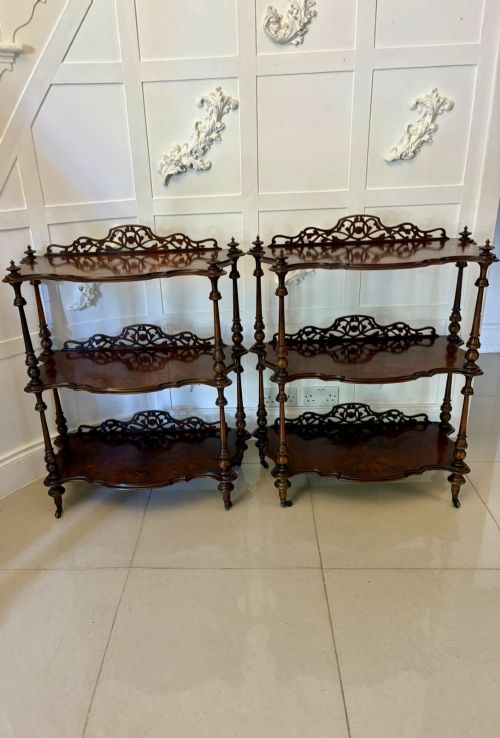
- A set of open shelves for displaying small objects or books. These pieces often feature multiple tiers supported by slender uprights.
- Quartetto
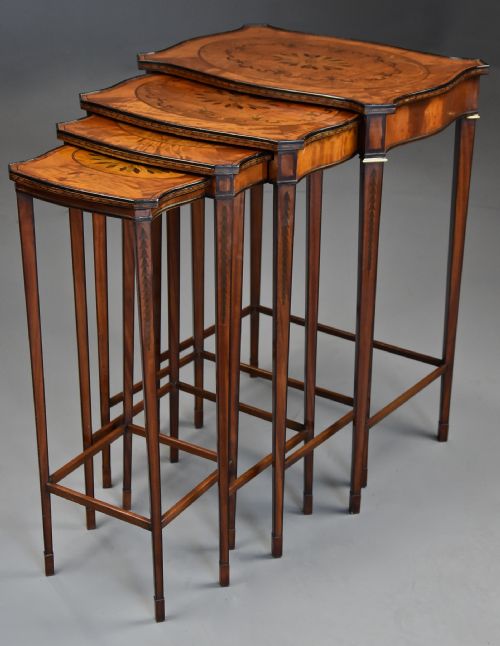
- A nest of four tables designed to slide neatly beneath one another. They became particularly popular during the Edwardian period in satinwood and mahogany.
Serpentine Accent Table: Frequently Asked Questions
What is a serpentine accent table used for?
These tables serve primarily as decorative surfaces for lamps, books, or ornaments in sitting rooms and hallways. Their shaped fronts allow them to fit neatly against walls or float within a room as occasional pieces.
Historically, specific variants such as card tables or games tables also provided folding tops for indoor entertainment. Their compact sizes made them versatile additions to drawing rooms across the Georgian and Edwardian eras.
How do I date a serpentine accent table?
Dating relies on examining the underlying wood construction, the style of the legs, and the choice of surface decoration. Georgian pieces often display restrained mahogany lines, whereas Victorian and Edwardian examples lean heavily into burr walnut veneers and revival styles.
Secondary woods inside drawers and the method of timber preparation also offer clues, moving from hand-sawn boards in the eighteenth century to more standardised factory milling by the late nineteenth century.
Are French and English tables different?
English versions typically favour architectural restraint, relying on the natural figure of mahogany or walnut and subtle inlay. They often look to Chippendale or Sheraton design vocabulary for inspiration.
French pieces embrace elaborate ornamentation, frequently incorporating ormolu mounts, boullework, and curved Louis XV or Louis XVI framework. The use of exotic woods like kingwood and rosewood is also more prevalent in continental workshops.
How do I care for burr walnut veneer?
Burr walnut requires stable environmental conditions away from direct sunlight and strong heat sources to prevent the delicate veneer from drying and lifting. Dusting should be done regularly with a dry, soft cloth.
Occasional application of high-quality furniture wax helps nourish the timber and maintain the deep lustre of the grain. Avoid chemical sprays or excessive moisture, which can damage the historic polish.