

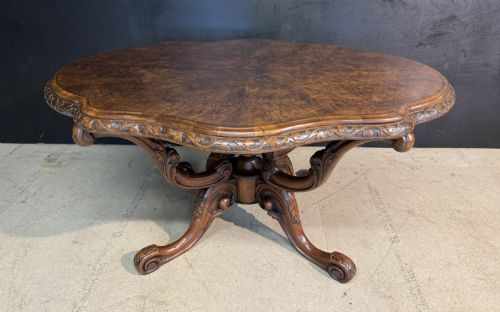
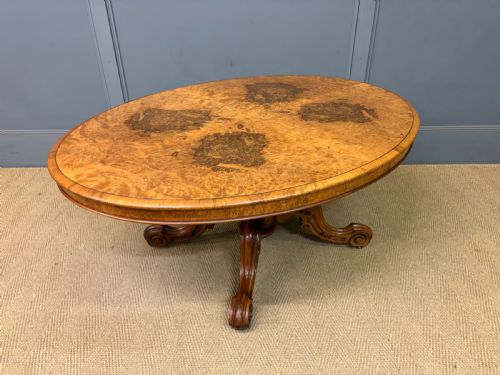


Carved Quadruped Base Table
These carved quadruped base table pieces offer sturdy support and distinctive timber grain, making them a practical centrepiece for any traditional room.
Carved Quadruped Base Table
A carved quadruped base table provides a solid four-legged foundation supporting surfaces ranging from coffee tables to larger dining and centre tables. When you search for this phrase, you encounter items originating primarily from the nineteenth century, including Victorian, Edwardian, William IV, and George IV periods.
The selection on this page centres on practical furniture forms such as coffee tables, side tables, loo tables, and breakfast tables. Walnut, burr walnut, mahogany, and oak dominate the available items, reflecting the preference for rich timber during these eras.
You are most likely to meet Victorian and nineteenth-century examples featuring figured veneers, marquetry inlay, or turn-over leaves. These domestic pieces served various daily functions in period homes, from tea service to sewing and casual dining.
How they were made
Cabinet makers utilised dense hardwoods like mahogany and walnut, frequently applying burr walnut or figured veneers across table tops to create striking grain patterns. Fruitwood inlay and intricate marquetry further ornamented the surfaces of finer domestic tables.
Structural elements relied on substantial timber supports, hand-carved bases, and occasional brass fittings such as castors. Folding mechanisms on tea tables and turn-over side tables required precise joinery to ensure the top surface remained level when open.
Carved Quadruped Base Table Retail Price Guide 2026
Typical asking prices for carved quadruped base table among the pieces listed under this phrase on Sellingantiques today, from the lower quarter to the upper quarter. They describe what is for sale here now, not the wider market.
Sewing tables often hid compartments for yarn and needles, doubling as discreet catch-alls for Victorian domestic clutter.
What varies in quality
The grade of timber selection largely dictates the visual merit of each piece, with figured walnut and burr veneers commanding greater attention than plain woods. Richness of grain and the depth of the finish separate standard domestic items from finer parlour furniture.
The execution of the hand-carved base reveals the competence of the workshop behind the piece. Crisp detailing on the quadruped support and smooth operation of folding leaves or tilt-top mechanisms indicate superior original construction.
The Carved Quadruped Base Table Glossary
- Burr Walnut
- A timber obtained from the wart-like growths on walnut trees, prized for its swirling, highly figured grain patterns. Cabinet makers typically used it as a veneer on prominent surfaces.
- Marquetry Inlay
- The art of applying pieces of veneer to a structure to form decorative patterns and pictures. Fruitwoods are commonly utilised for this detailed surface ornamentation.
- Loo Table
- A large round or oval nineteenth-century table designed for card games, featuring a tilting top mechanism. They often stand on a central pillar with a carved quadruped base.
- Turn-over Table
- A table with a hinged top that folds open to double its surface area, frequently serving as a tea or side table. This clever design saved space in period interiors.
Carved Quadruped Base Table: Frequently Asked Questions
What rooms suit a carved quadruped base table?
These pieces fit naturally into living rooms, sitting rooms, or studies as coffee tables, side tables, or lamp tables. Their sturdy four-legged supports provide stability on various floor surfaces.
Larger versions like dining or loo tables function effectively as central pieces in dining rooms. The rich mahogany and walnut tones complement traditional interior colour schemes.
How do I identify a Victorian table?
Victorian examples often feature heavy timber construction, dark walnut or mahogany finishes, and elaborate hand-carved details. Many incorporate figured veneers or decorative marquetry inlay across the top.
Makers of this era frequently produced functional domestic forms such as coffee tables, loo tables, and sewing tables with robust quadruped bases.
What is a breakfast table?
A breakfast table is a nineteenth-century dining table, often round or oval, designed for smaller morning meals or intimate gatherings. They frequently feature a tilt-top mechanism supported by a heavy pedestal and carved base.
William IV and Victorian examples in this category showcase feathered mahogany or walnut timbers.
How do fold-over tea tables work?
Fold-over tea tables feature a hinged top that rests double when closed against the wall. When guests arrived for tea, the top unfolded to reveal a larger surface.
This practical mechanism allowed the furniture to function as a compact side table when not in use during the day.