
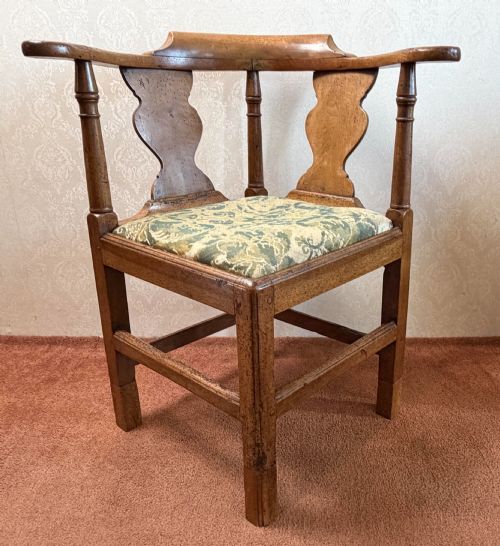


Oak Writing Armchair
An oak writing armchair provides a sturdy seat at the desk, combining solid timber with practical support for daily work.
Oak Writing Armchair
An oak writing armchair appears most frequently as a corner chair or library desk chair designed for study and correspondence. These pieces span from the eighteenth century through the Victorian era, offering robust seating for the desk or corner of a room.
The form often includes a rounded backrail supported by pillars and turned legs, providing a stable frame for prolonged sitting. Regional variations such as North Country examples show distinctive local turning and joinery.
Makers utilised solid timber to construct these chairs, frequently pairing oak with fruitwood or leather inserts. The integration of fabric, needlepoint, or rush upholstery adds comfort to the wooden frame.
How they were made
Joiners built these frames from solid oak and fruitwood, employing traditional pegged mortise and tenon joints to secure the structure. Turned wooden spindles and central splats support the curved armrails.
Upholstered elements incorporate leather, fabric, or needlepoint pads fixed directly onto the wooden seat frames or drop-in panels. Brass tacks frequently secure the edges of leather desk chair pads.
Carved details appear on select back splats and crest rails, executed by hand using gouges and chisels to add surface texture. Rush seating provides a woven alternative to timber or upholstered pads.
What varies in quality
The crispness of hand-carved ornament and the selection of figured timber distinguish finer examples from standard production. Rich natural patina and tight joinery indicate superior craftsmanship over centuries of use.
The integrity of the structural frame, particularly around the leg joints and armrail supports, determines the durability of the piece. Original surface finishes without excessive modern intervention preserve the historical character.
The Oak Writing Armchair Glossary
- Corner chair
- A seat designed to fit into the angle of a room, featuring a diagonal orientation with one leg facing forward. The continuous curved armrail rests upon turned pillars.
- Fruitwood
- Dense timber such as apple or pear used alongside oak in regional furniture construction. It offers a smooth grain and warm tone.
- Mortise and tenon
- A joint wherein a protruding tongue fits snugly into a corresponding cavity to lock wooden members together securely. Pegs often reinforce this connection.
- Patina
- The surface sheen and colour developed by timber over long periods of handling and exposure to light. It serves as a sign of age.
- Rush
- Woven marsh grass utilised to create flexible, textured seating surfaces. It appears on traditional vernacular frames.
Oak Writing Armchair: Frequently Asked Questions
What is an oak writing armchair?
An oak writing armchair is a sturdy wooden seat designed for use at a desk or in the corner of a study. These pieces combine robust timber frames with comfortable seating options.
Examples range from eighteenth-century vernacular corner chairs to Victorian library desk chairs upholstered in leather.
How do I date an oak chair?
Dating relies on observing construction methods, timber selection, and stylistic details such as turning patterns or carved motifs. Eighteenth-century pieces often display pegged joints and fruitwood accents.
Victorian and later nineteenth-century examples may incorporate heavier revival styles like Renaissance or Gothic influences.
Where were corner chairs placed?
Corner chairs were traditionally positioned in the angle of a panelled room or used informally for writing and conversation. Their diagonal footprint allowed them to tuck neatly into corners.
They also served as convenient desk seating where space was limited.
Are these chairs comfortable for daily use?
Many models offer supportive backrests and wide armrails suitable for reading or writing at a desk. Leather pads and upholstered drop-in seats add cushioning.
Original rush or solid wood seats provide a firmer sitting experience.