
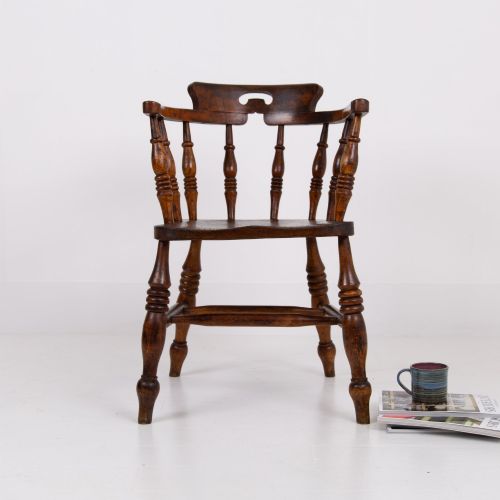
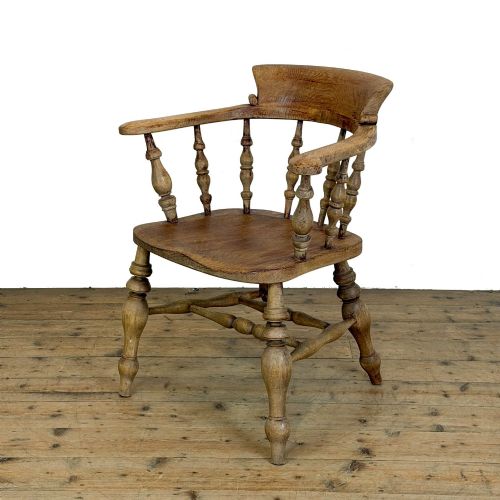
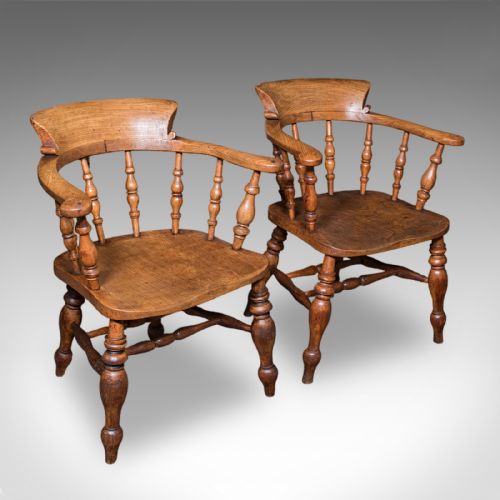

Traditional Oak Captain Chair
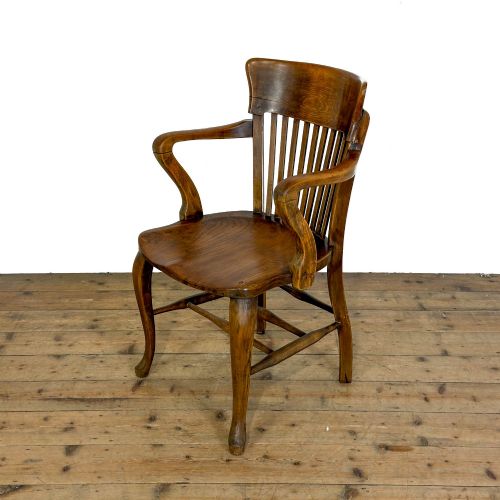
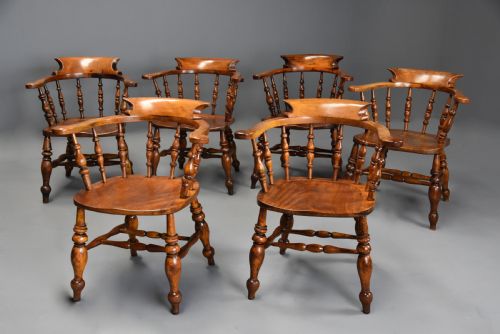
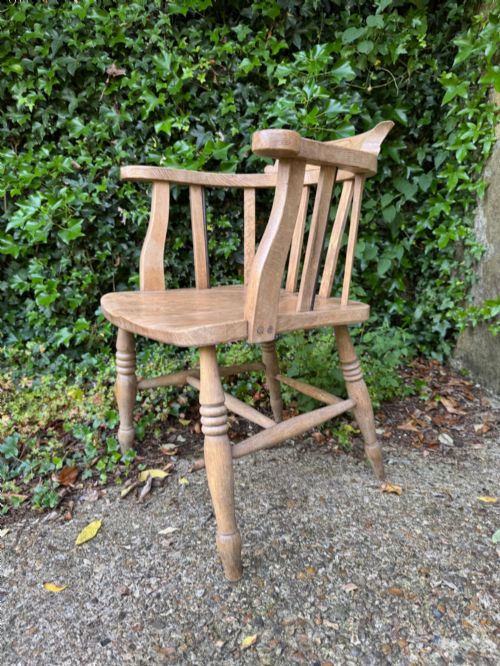
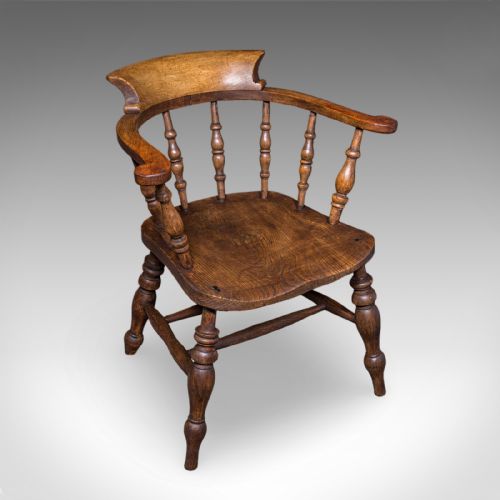
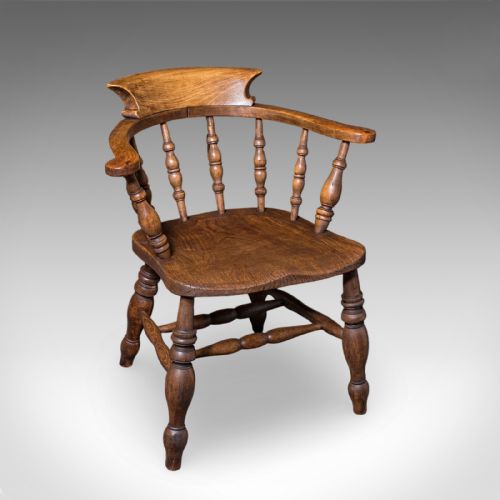
A traditional oak captain chair brings solid country house character and sturdy support to a study, combining low-slung elbow rests with robust timber construction.
Traditional Oak Captain Chair
A traditional oak captain chair encompasses sturdy elbow seats, swivel desk chairs, and low-backed Windsor variations originating from the nineteenth and early twentieth centuries. Buyers seeking this form encounter Victorian and Edwardian examples built for libraries, offices, and country houses.
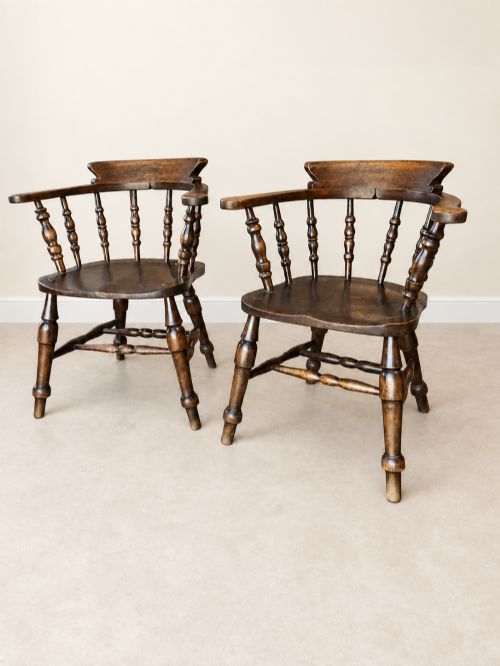
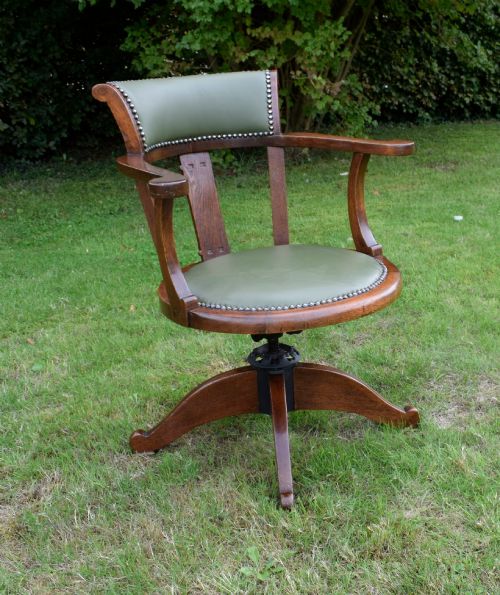
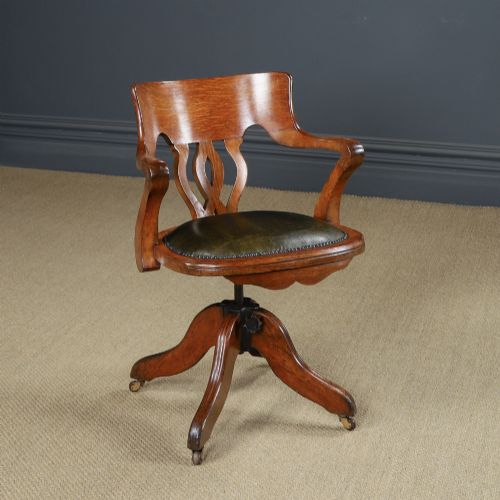
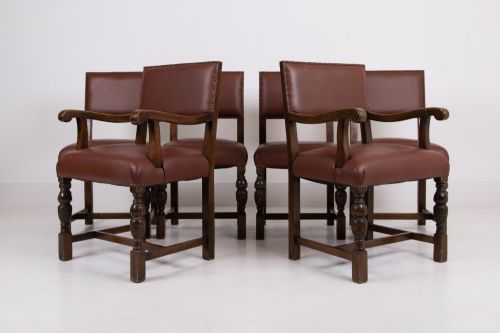
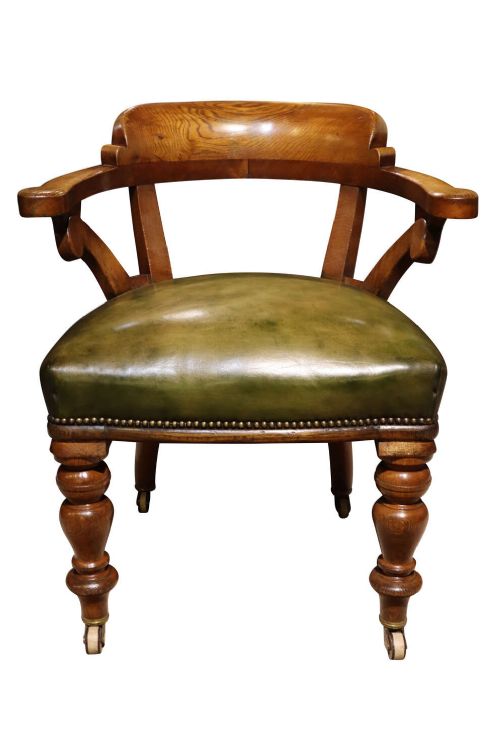
The selections on this page span heavy oak frames, smoker's bows, and revolving office seats fitted with leather or hide pads. These seating options bridge formal library armchairs and vernacular country seating.
Makers and workshops produced these pieces across the Victorian and Edwardian eras, utilising durable timbers suited to daily sitting and heavy use. The design relies on curved backrails and spindle supports to deliver a low, enclosed posture.
Gradations in Quality
Quality in a traditional oak captain chair rests upon the selection of timber, such as golden oak or figured grain, and the integrity of the steam-bent backrail. Superior examples exhibit smooth joinery, well-turned spindles, and substantial proportions without excessive repairs.
Revolving and tilting office variants depend on the original metal and cast iron mechanisms operating smoothly beneath the seat. Upholstered versions differ according to the grade of leather or hide and the traditional fastening methods applied to the seat pad.
Many nineteenth-century captain chairs show worn elbow rests shaped entirely by decades of resting arms.
Edward William Godwin
The Traditional Oak Captain Chair Glossary
- Smoker's Bow
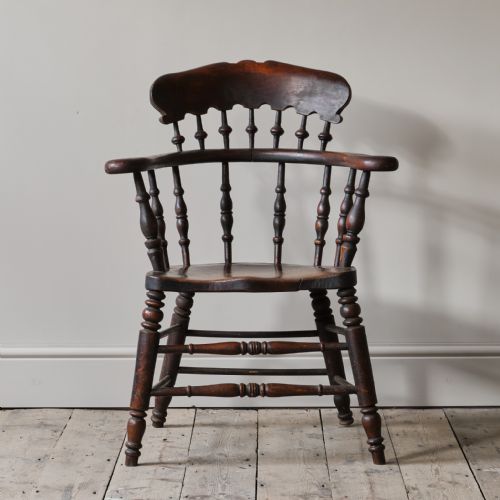
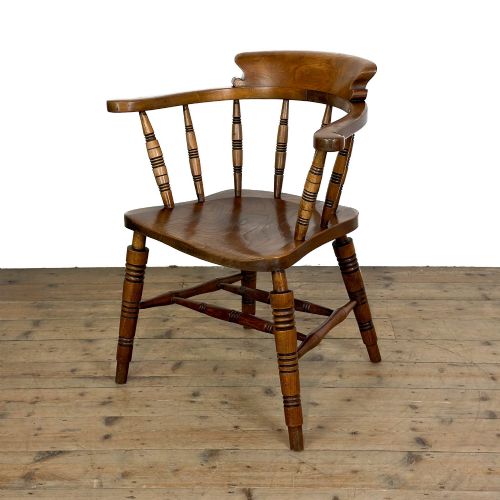
- A sturdy wooden armchair with a low rounded back and thick spindles, commonly associated with nineteenth-century country houses and public rooms. This form serves as a primary template for the traditional oak captain chair.
- Swivel Chair
- An office seating form mounted on a central pivot that allows the seat to turn through a full circle. These chairs often include tilt actions supported by metal and cast iron undercarriages.
- Windsor Chair
- A wooden chair constructed with a solid shaped seat into which the legs and back spindles are directly bored and wedged. Regional variants utilise ash, elm, and oak components.
- Elbow Chair
- An armchair with low supports designed to fit beneath a desk or dining table. This designation frequently appears in nineteenth-century listings for compact seating.
- Carver Armchair
- A traditional term for a wooden armchair matching a set of dining chairs. These pieces provide matching seating at the head of a table.
Traditional Oak Captain Chair: Frequently Asked Questions
How do I date an oak captain chair?
Dating relies on examining the timber grain, construction methods, and hardware such as cast iron swivel mechanisms or brass fixings. Victorian examples often display darker oak finishes and heavy turnings, while Edwardian pieces sometimes incorporate lighter oak or beech components.
Makers active in the late nineteenth and early twentieth centuries produced both fixed country house models and mechanical office chairs, marking a shift toward ergonomic workplace seating.
Where were these chairs used?
Historically, captain chairs served in domestic studies, libraries, law offices, and country house smoking rooms where occupants required sturdy, low-slung seating. Their compact proportions allowed them to slide neatly beneath writing desks and library tables.
Today, buyers place them at partner desks, dining tables, or as accent seating in studies and living spaces.
What is the difference between a smoker's bow and a captain chair?
A smoker's bow is a specific vernacular Windsor armchair featuring a low, continuous steam-bent backrail and thick turned spindles. The term captain chair frequently overlaps with smoker's bow designs, though it can also describe nineteenth-century office and swivel chairs.
Both forms share a low profile and robust wooden construction intended for heavy daily use.
How do I care for leather seats?
Leather and hide seat pads benefit from occasional cleaning with a damp cloth and treatment with suitable leather balms to maintain flexibility. Avoid placing the chair in direct sunlight or near heat sources that can dry out the hide.
Regular maintenance preserves the natural patina developed across the nineteenth and early twentieth centuries.