


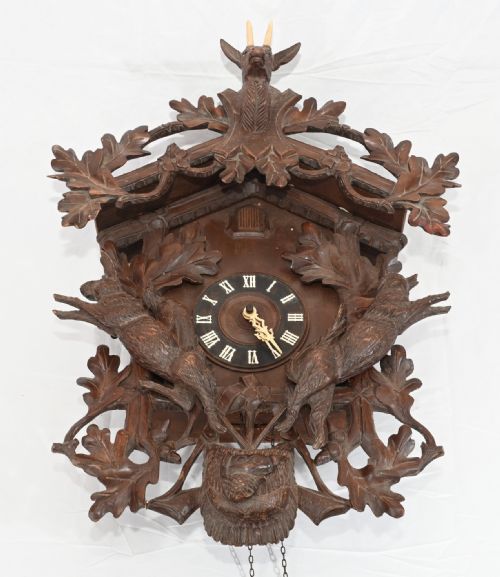


Oak Wooden Wall Clock
An oak wooden wall clock brings practical timekeeping and honest timber grain into a room, spanning styles from Victorian fusee dials to Art Deco cases.
Oak Wooden Wall Clock
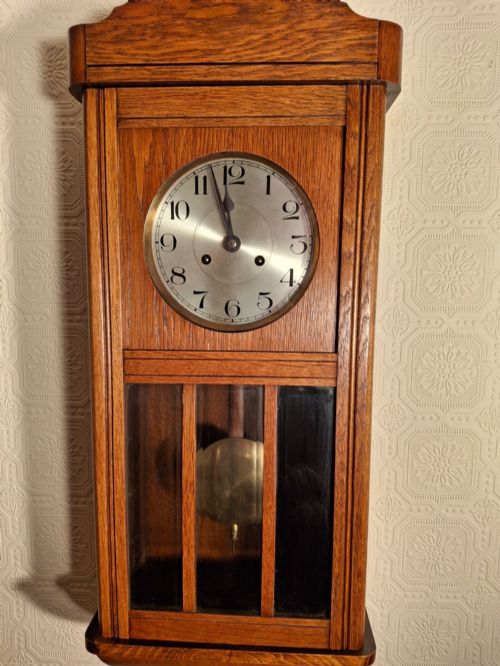
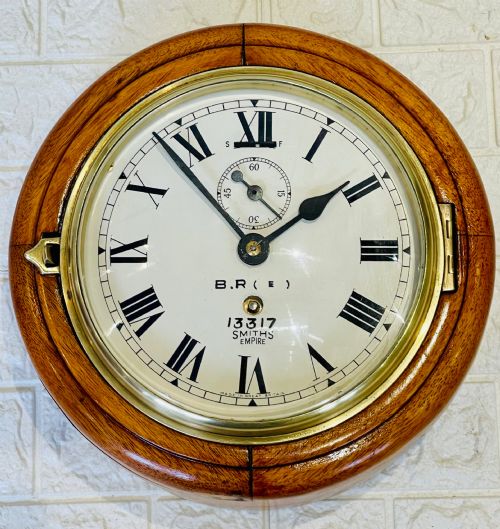
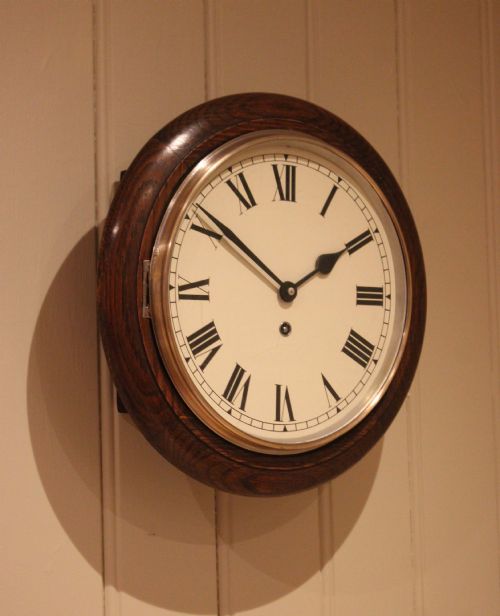
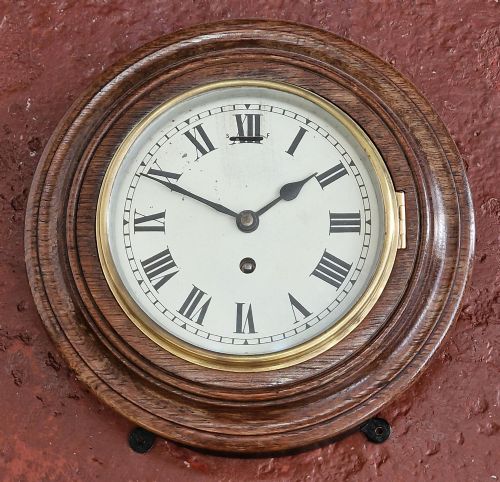
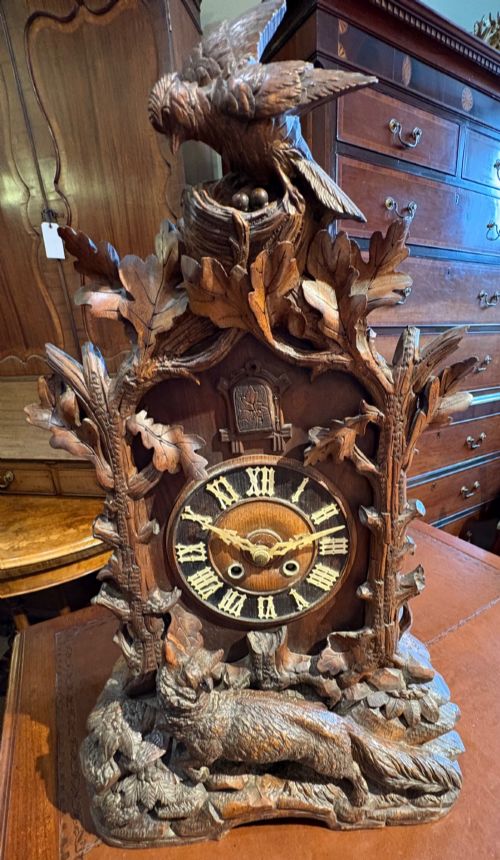
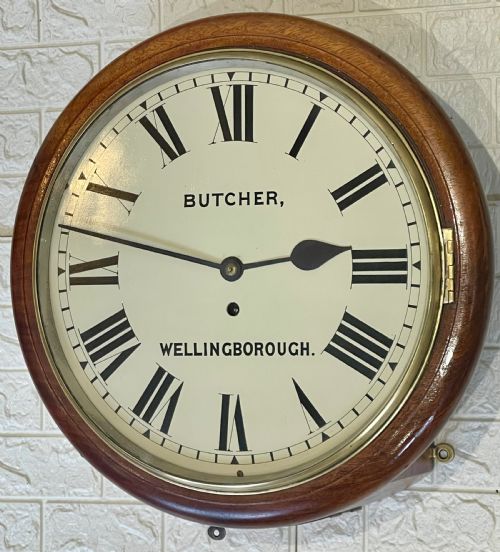
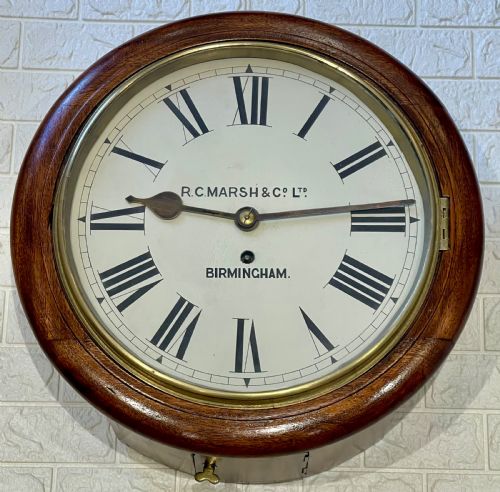
An oak wooden wall clock on this page is typically a dial clock, a Black Forest cuckoo clock, or a striking wall clock. These pieces range from simple school clocks to elaborate Vienna wall clocks and industrial station timepieces.
The selection draws on periods spanning the Victorian era through the early twentieth century, including Edwardian, Art Deco, and mid-century examples. Most pieces reflect utilitarian origins in offices and railways alongside domestic decorative forms.
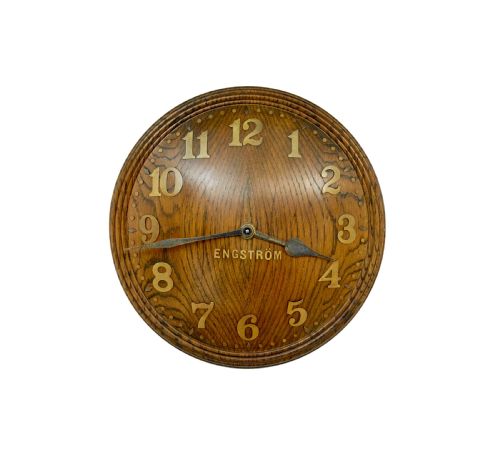
Makers and regional styles represented include English fusee dial clocks, German Black Forest carvings, and French or Swedish modern designs. The timber cases show the heavy grain of golden oak, dark carved walnut, and blond oak.
Quality and Execution
Superior examples demonstrate crisp execution in the timber carving, clean dial lettering, and original movement components that operate in harmony. The depth of the oak grain and the proportion of the case relative to the dial dictate visual balance.
The grade of the internal movement separates utilitarian production from finer workshop output, particularly in fusee and striking mechanisms. Original glass, authentic hands, and untouched patination elevate the standing of a piece.
Some clocks come with ticking so robust it acts as an uninvited family member who insists on having the last word.
Engström by Zenith·Philipp Haas·Henry Deykin·J. Hummel
The Oak Wooden Wall Clock Glossary
- Fusee
- A conical pulley used in mechanical clocks to maintain even force on the gear train as the mainspring unwinds. This mechanism is standard in better quality British dial clocks.
- Dial Clock
- A wall timepiece featuring a prominent circular face protected by glass and a wooden surround. These were widely used in public buildings, stations, and schools.
- Vienna Wall Clock
- A precision timepiece developed in Austria featuring a refined regulator movement and an elongated glazed case. They showcase sophisticated architectural woodwork.
- Cuckoo Clock
- A striking clock, traditionally from the Black Forest region, that uses pipes and bellows to mimic the call of a bird. Cases are typically carved with foliage and animal motifs.
- Striking Movement
- A mechanism within the clock that sounds the hours or quarters on a bell, gong, or wire. Eight-day versions require winding less frequently than thirty-hour variants.
Oak Wooden Wall Clock: Frequently Asked Questions
How do I wind a fusee wall clock?
Use the appropriate key on the winding square located on the dial face, turning it gently until resistance increases. Avoid over-winding to protect the historical mainspring.
Ensure the pendulum hangs freely and the clock is plumbed vertically on the wall before setting the time by moving only the minute hand.
Where should I hang a heavy oak wall clock?
Mount the clock directly into a solid wall stud or use heavy-duty masonry anchors capable of supporting the substantial weight of the oak case and movement. Secure the bottom steadying screws if provided.
Keep the clock away from direct sunlight, damp areas, and extreme temperature fluctuations to protect the timber and internal oils.
How do I tell a Victorian dial clock from a later one?
Victorian fusee dial clocks generally feature cast brass bezels, heavy mahogany or oak backboxes, and hand-painted wooden or iron dials. Later twentieth-century versions often incorporate electric movements or simpler oak frames.
Examining the construction of the interior timber box and the style of the numerals offers further clues to the manufacturing decade.
Why does my mechanical wall clock stop running?
Stoppages often occur if the clock is out of beat, meaning the anchor escapement does not strike the escape wheel evenly. Adjusting the pendulum or leveling the case usually resolves this.
If the movement is dirty or dry from age, professional servicing by a horologist is necessary to clean the pivots and gears.