

Oak Windsor Kitchen Chairs
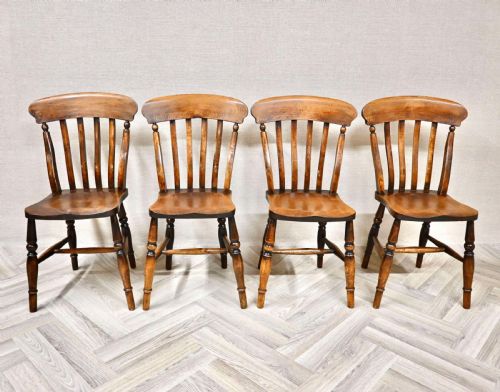
These oak windsor kitchen chairs are sturdy traditional seats built for daily use in farmhouse homes.
Oak Windsor Kitchen Chairs
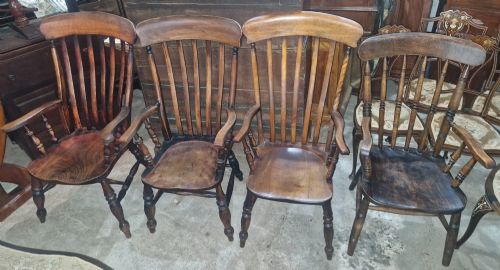
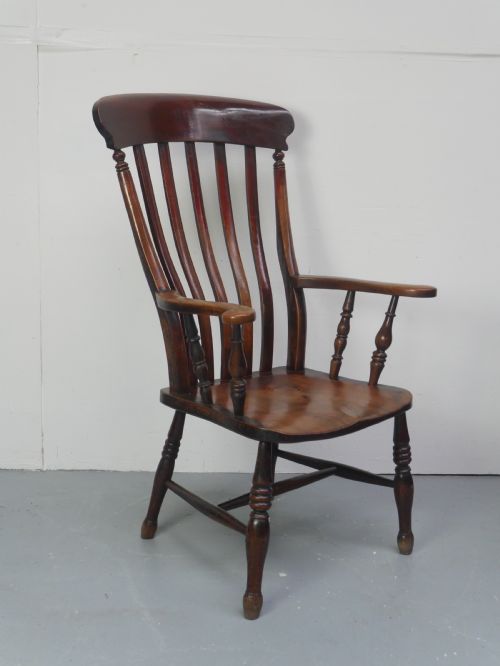
When a buyer searches for oak windsor kitchen chairs, they are looking at robust wooden seating designed for domestic spaces and heavy daily use. The pieces appearing here span the nineteenth century and the Victorian era, taking forms such as dining chairs, armchairs, and rocking chairs.
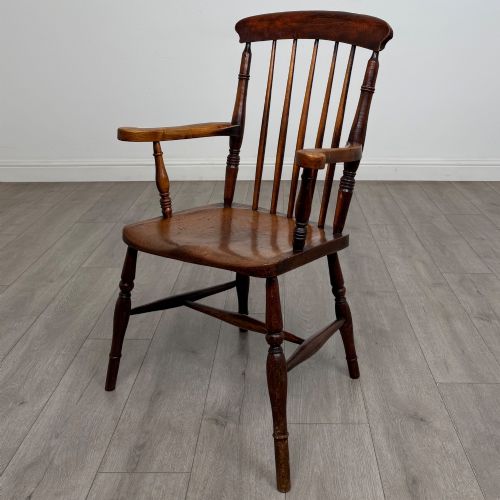
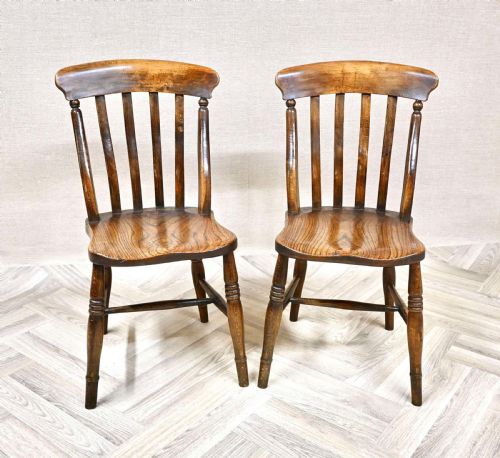
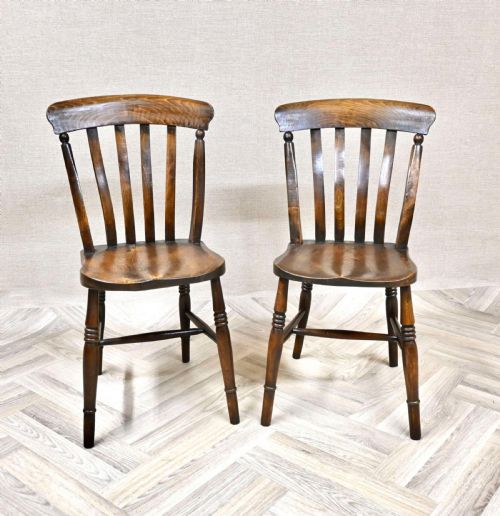
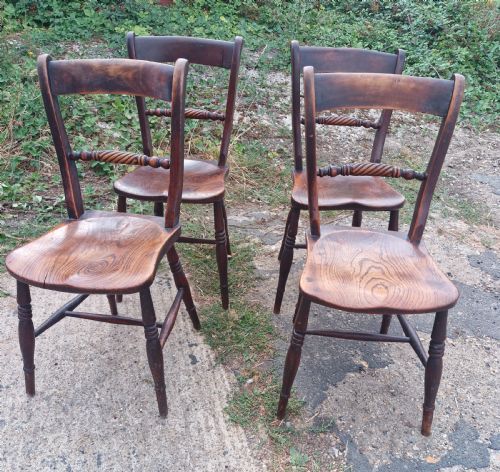
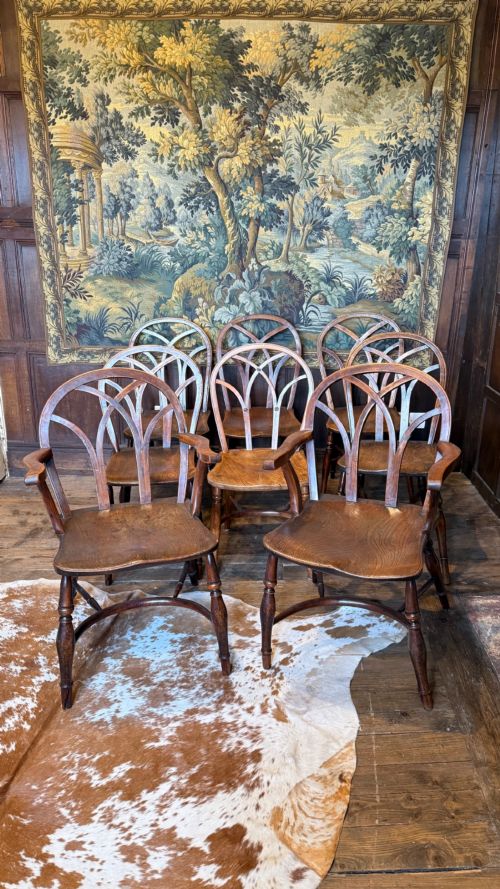
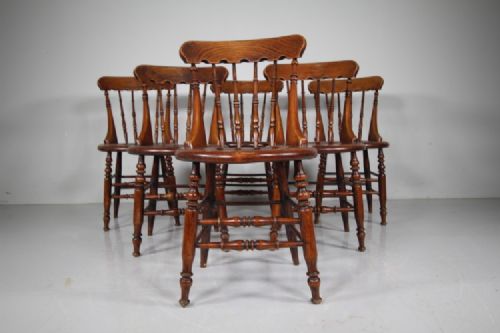
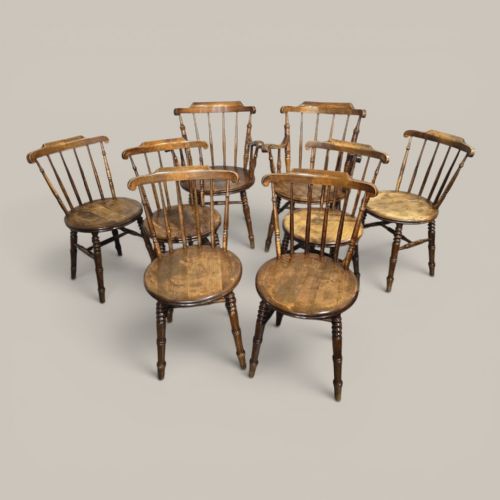
The versions most commonly met on this page are farmhouse and country styles, often found in matching sets of four or six as well as pairs and single armchairs. They emerge from traditions of English and Scottish country furniture making.
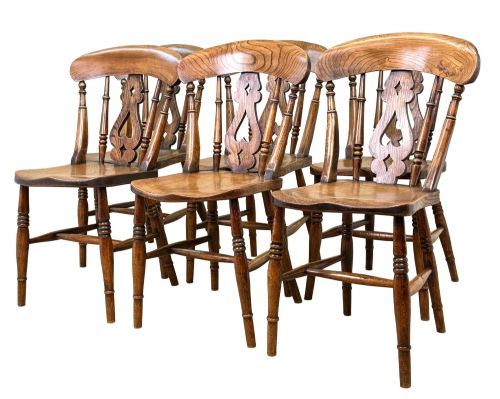
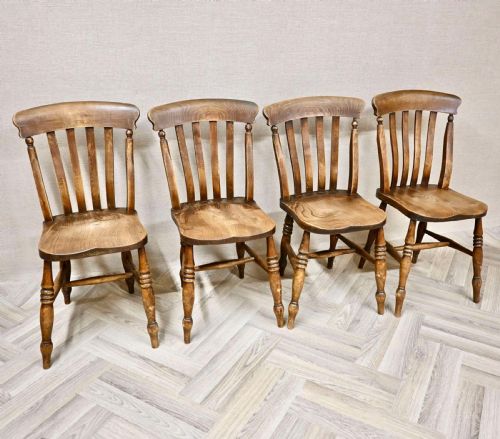
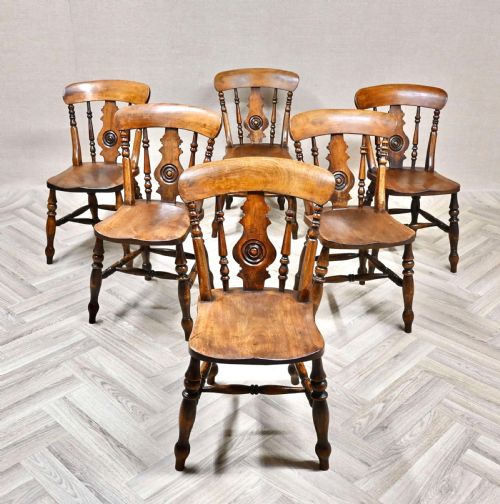
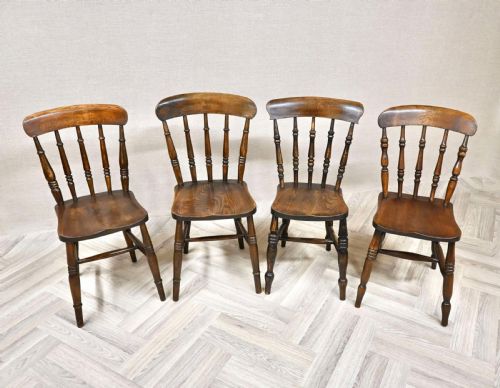
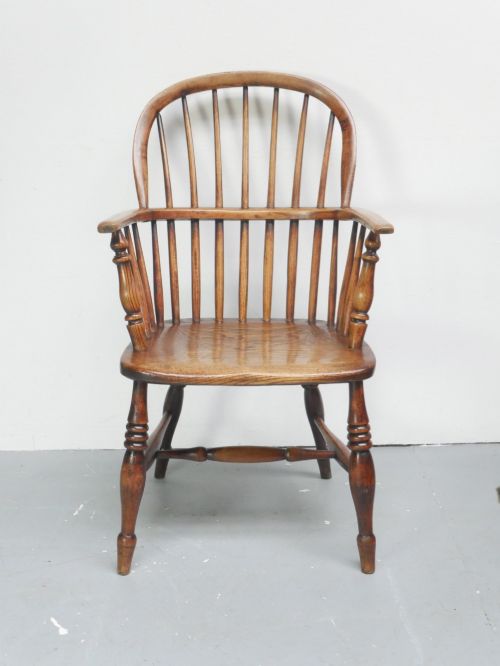
The structural design typically incorporates a solid wooden seat with spindles, sticks, or laths forming the backrest. Makers utilised traditional regional patterns, resulting in variations like wheelbacks, bullseyes, lyrebacks, and stick backs.
How they were made
These chairs rely on a combination of timbers, predominantly oak paired with elm, beech, ash, and yew. Makers selected these woods for specific structural roles, utilising dense timbers for seats and flexible woods for bent components like hoops and armbows.
Construction methods involve turning legs and spindles on a lathe and shaping solid wooden seats, often referred to as penny seats, to create a comfortable contoured depression. The back components and legs are then fitted into drilled holes within the seat using wedged tenon joints.
Listings show oak combined with elm, beech, ash, and yew across nineteenth century dining chairs, armchairs, and rocking chairs.
What varies in quality
The standard of a piece rests largely on the harmony of its timbers and the integrity of its structural joinery. Chairs that retain their original matching sets and exhibit balanced proportions across all legs and spindles stand higher in the range.
Quality also shows in the depth of the timeworn patina and the preservation of the turned details on the legs and arm supports. Examples that maintain their original surface finish without excessive replacement parts represent the better end of surviving examples.
Worksop Allsop·Liberty
The Oak Windsor Kitchen Chairs Glossary
- Penny seat
- A solid wooden seat shaped with an adze or scorper to form a shallow depression resembling a large coin. This carved recess provides a more comfortable surface for the sitter.
- Lathback
- A chair back featuring a central vertical wooden slat, or lath, often shaped or pierced, flanked by traditional spindles. This style became common in nineteenth century farmhouse seating.
- Wheelback
- A Windsor chair back incorporating a pierced wheel motif carved into the central splat. This decorative wooden disc often displays radial spokes.
- Stick back
- A chair back constructed from multiple plain vertical wooden rods inserted directly into the seat and top rail. These simple stems provide sturdy support without complex carving.
- Hoop back
- A continuous curved wooden bow that forms the top rail and arms of a Windsor chair in a single sweeping arc. This bentwood technique adds considerable strength to the upper frame.
Oak Windsor Kitchen Chairs: Frequently Asked Questions
Were these chairs used at dining tables?
These chairs served primarily in farmhouses and country kitchens around large wooden tables for daily family meals. They were built for utility and everyday domestic life rather than formal dining rooms.
Over time, many of these kitchen chairs survived in sets of four or six, indicating their original purpose for seating a household around a central table.
How do I identify a Victorian windsor chair?
Victorian examples often display turned spindles, stick backs, or wheelback motifs combined with solid elm or oak seats. They date from the nineteenth century and reflect rural British country craftsmanship.
Makers during this period utilised mixed timbers within a single chair, such as ash for the bent parts and oak or elm for the heavy seats.
Can I mix different sets of kitchen chairs?
Mixing different styles of country chairs is a traditional way to furnish a rustic kitchen or dining space. Many historical homes gathered seating pieces gradually rather than purchasing large uniform sets.
Matching sets of four or six remain available, but pairs and single armchairs also offer flexibility for a collected interior.