
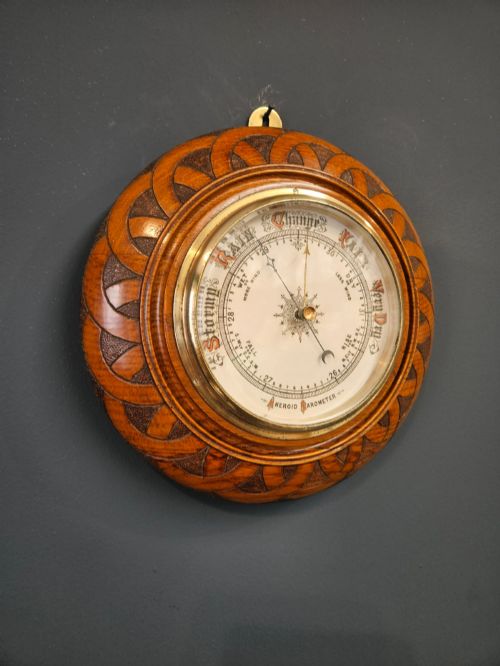
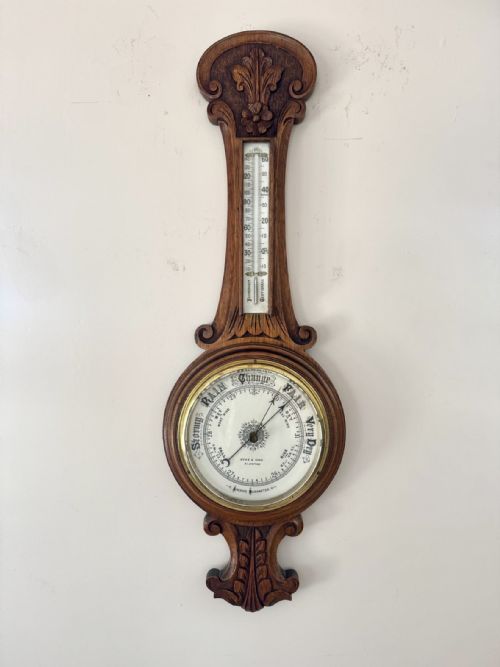
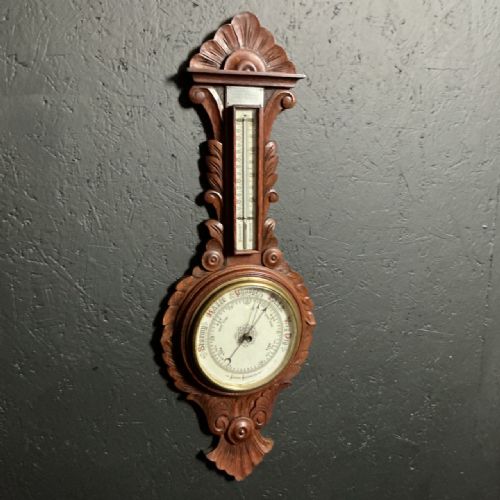
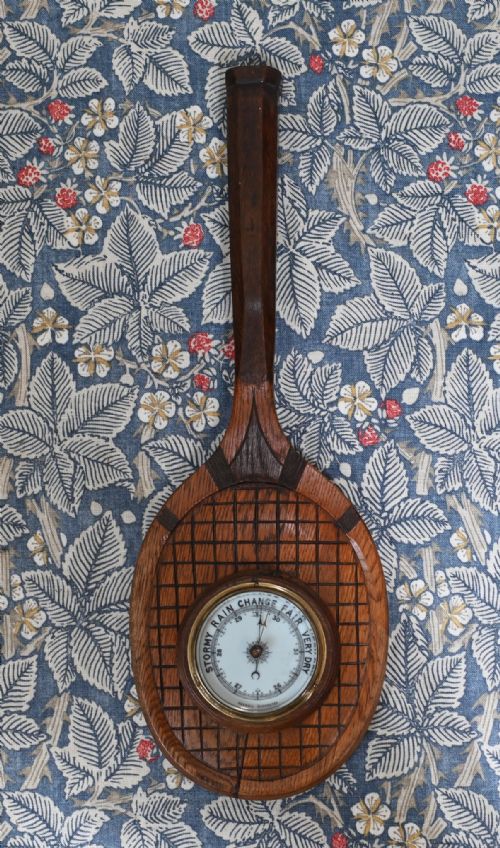

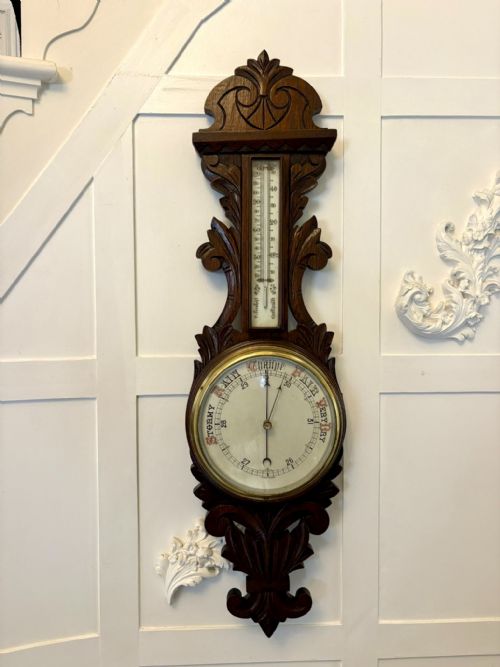


Oak Wall Hanging Barometer
An oak wall hanging barometer brings reliable atmospheric tracking and rich timber character straight to your hallway or study.
Oak Wall Hanging Barometer
An oak wall hanging barometer combines practical weather forecasting with the rich, textured grain of traditional timber. When you search for an oak wall hanging barometer, you encounter pieces that range from compact domestic instruments to large shop displays.
The selections available here span several distinct periods, including Victorian, Edwardian, and Art Deco eras. You will frequently find banjo formats alongside carved architectural frames and ships barometer designs.
Originating predominantly from British and European workshops, these pieces utilise robust hardwoods designed to endure domestic environments for generations. Their primary function remains atmospheric measurement, housed within decorative timber surrounds.
Materials and construction methods
The primary material across these pieces is solid oak, often shaped through detailed carving or turned woodwork. Workshops also incorporated walnut and carved wood elements to add contrast and depth to the frames.
Dials and bezels are typically fashioned from polished brass, framing protective glass plates that shield the delicate aneroid movements inside. Skilled artisans combined joinery and cabinet-making techniques to securely house the sensitive internal barometric mechanisms.
Listings feature oak alongside walnut, brass, and glass across Victorian, Edwardian, and 1930s periods.
What separates exceptional examples
Quality in an oak wall hanging barometer rests primarily on the depth and crispness of the timber carving. Master carvers produced intricate foliate or sporting motifs with sharp relief, whereas lesser pieces feature plain, mechanical moulding.
The presence of secondary instruments, such as integrated thermometers, and the reputation of the maker inscribed on the dial elevate certain pieces above standard domestic models. Robust case construction and well-preserved brass bezels further distinguish superior examples from ordinary production.
Hyde & Sons Sleaford·Maple & Co·Aitchison·James Pitkin London·Negretti & Zambra
The Oak Wall Hanging Barometer Glossary
- Aneroid barometer
- An instrument measuring atmospheric pressure without liquid, using a flexible metal box that expands or contracts. This mechanism allowed barometers to be mounted vertically on walls.
- Banjo barometer
- A domestic barometer shaped like the stringed instrument, featuring a rounded top for the dial and an elongated stem containing a thermometer or tube.
- Bezel
- The metal ring that holds the glass face in position over the barometer dial. Brass is the most common metal used for this component.
- Thermometer
- A temperature-measuring scale frequently mounted alongside the barometer dial to provide supplementary meteorological data. These are often enclosed in the same carved oak case.
Oak Wall Hanging Barometer: Frequently Asked Questions
How do I read an aneroid barometer?
Read the main dial by observing the position of the pointer relative to weather inscriptions such as rain, change, or fair. Tapping the glass gently before reading ensures the needle settles at the true current pressure.
Changes in the pressure over subsequent hours indicate shifting weather patterns. Rising pressure generally points towards improving conditions, while falling pressure suggests approaching wet weather.
Where should I hang a wall barometer?
Choose a stable interior wall away from direct sunlight, radiators, or draughty doorways. Excessive temperature fluctuations can affect the internal mechanism and distort the wooden case.
A domestic hallway or study usually offers the most consistent environment. Ensure the fixing matches the weight of the solid oak frame securely.
How do I date an oak barometer?
Examine the style of the carving, the typography on the dial, and the construction of the timber case. Victorian and Edwardian examples often feature deep relief carving or turned wooden bezels.
Signatures or maker names printed on the paper or metal dial offer a direct link to operational years. Patent dates or address details inscribed on the movement provide further chronological clues.
Can antique barometers be calibrated?
Most aneroid barometers feature a small adjustment screw accessible from the back or through the dial face. This screw alters the position of the internal linkage relative to the pressure capsule.
Calibration should be performed against a reliable local meteorological reading. Adjust the needle gradually to match known atmospheric pressure for your specific altitude.