


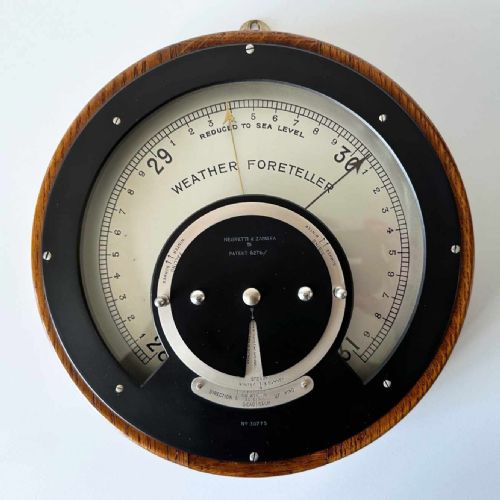
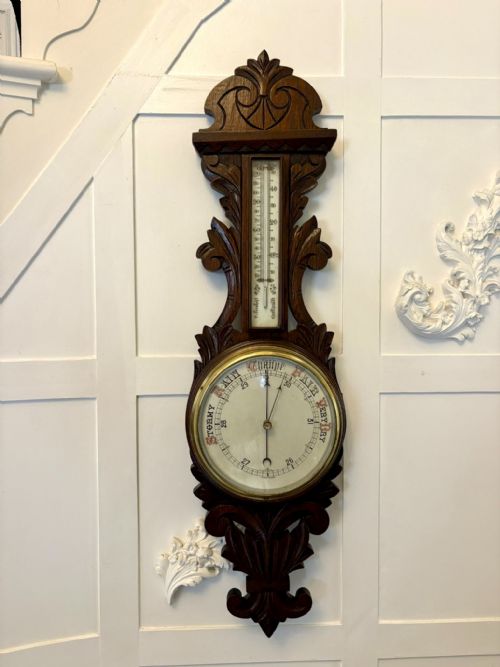


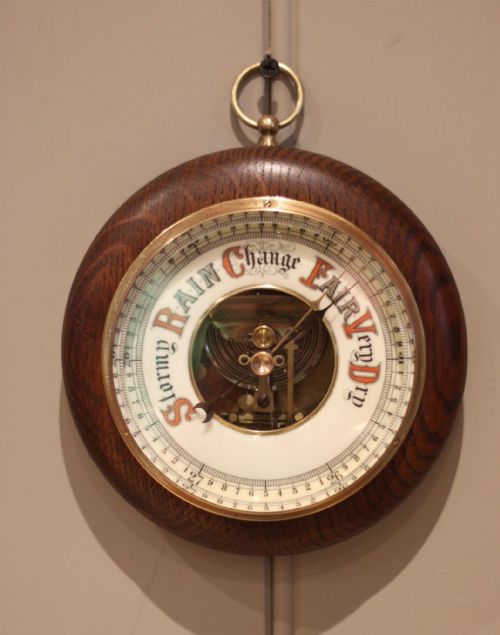
English Oak Wall Barometer
An english oak wall barometer brings rich timber grain and precise Victorian engineering together on the wall, offering a reliable forecast framed in traditional warmth.
English Oak Wall Barometer
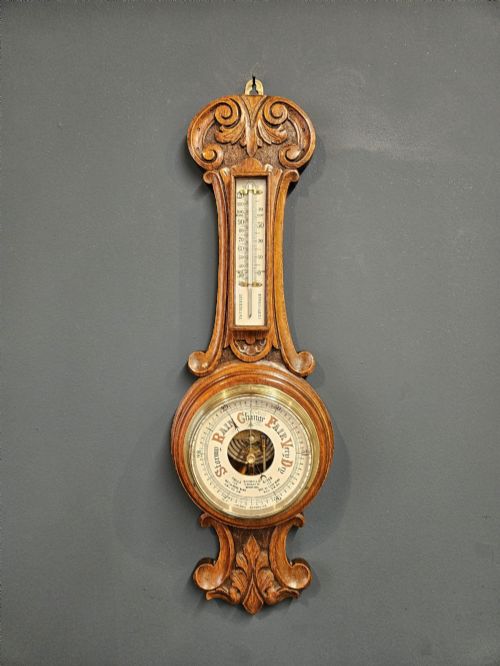
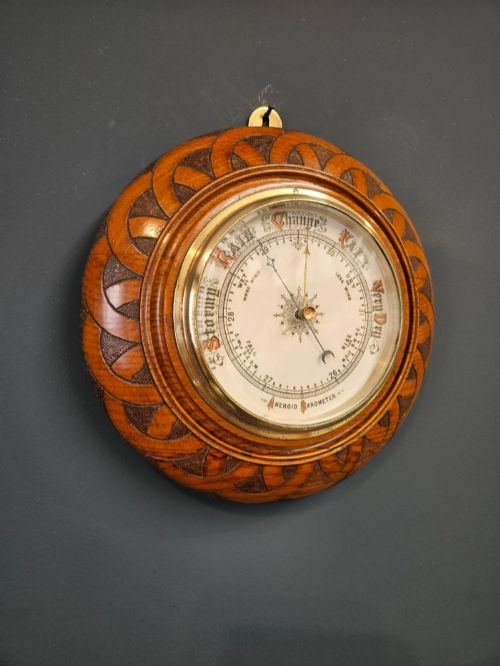
An english oak wall barometer combines practical meteorological tracking with sturdy domestic cabinetry, serving as a dependable focal point in hallways and studies. When searching for an english oak wall barometer, buyers encounter robust examples spanning the Victorian and Edwardian eras, alongside pieces dated broadly to the nineteenth century and the early twentieth century.
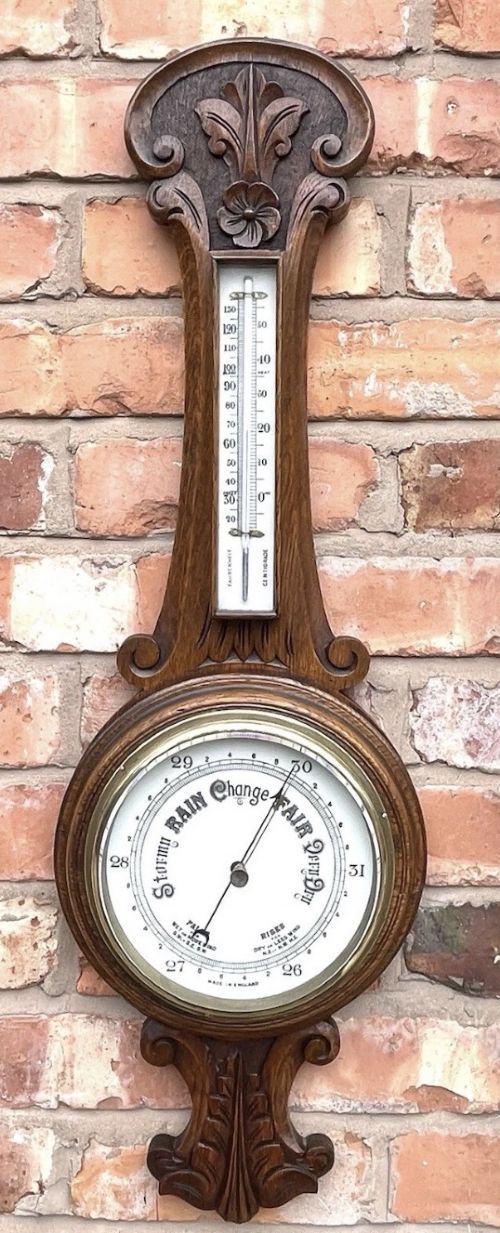
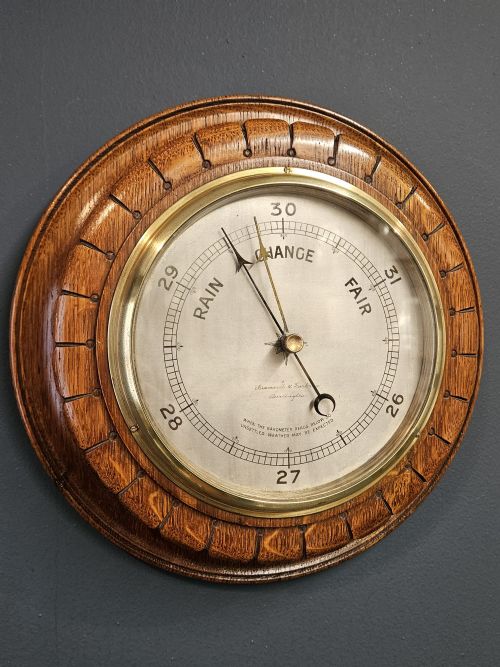
The selection ranges from circular aneroid instruments to tall stick barometers, banjo shapes incorporating thermometers, and marine-inspired ships barometers. Most pieces present rich dark timber cases shaped by turning or carved decoration, housing silvered metal dials behind protective glass.
How they were made
Cabinetmakers utilised solid oak to house delicate internal mechanisms, turning timber into smooth circular surrounds or carving intricate ornamentation along banjo and wall-mounted frames. Workshops fitted brass bezels and protective glass plates to shield the weather dials from dust and damage.
Instrument makers inscribed detailed scales onto silvered metal plates, integrating mercury tubes for stick variants or aneroid capsules for dial instruments. Makers such as Negretti and Zambra, J Hughes London, Bramwell and Harbron of Darlington, and W Watson and Sons applied their expertise to ensure precise barometric readings.
English Oak Wall Barometer Retail Price Guide 2026
Typical asking prices for english oak wall barometer among the pieces listed under this phrase on Sellingantiques today, from the lower quarter to the upper quarter. They describe what is for sale here now, not the wider market.
Listings feature Victorian and Edwardian periods, utilising oak, brass, glass, ceramic, metal, and silvered metal across diverse instrument forms.
What varies in quality
The distinction between standard and superior pieces rests in the depth of the oak carving and the crispness of the engraved silvered metal dial. Finer examples display meticulous turner work, harmonious proportions, and signed movements from recognised makers rather than unsigned dials.
Cabinet construction details, such as the snugness of the glass bezels and the crisp legibility of the weather foreteller scales, elevate the standing of an instrument. Retaining original mercury tubes or well-preserved aneroid mechanisms further distinguishes the more accomplished pieces in this field.
Negretti and Zambra·Bramwell and Harbron·W Watson and Sons·J Hughes London
The English Oak Wall Barometer Glossary
- Aneroid barometer
- An instrument that measures atmospheric pressure using a flexible metal box rather than liquid mercury, allowing for compact wall mounting.
- Banjo barometer
- A domestic wall barometer shaped like a stringed musical instrument, typically featuring a thermometer above the main dial.
- Silvered metal dial
- A metallic face treated to achieve a bright, reflective finish where weather scales and maker signatures are engraved.
- Stick barometer
- A tall, vertical barometer containing a glass tube filled with mercury to show atmospheric changes directly.
- Bezel
- The metal or wood ring that holds the glass face securely in position over the barometer dial.
English Oak Wall Barometer: Frequently Asked Questions
How do aneroid barometers work?
Aneroid barometers measure atmospheric pressure through a sealed, flexible metal capsule that expands or contracts as pressure shifts. This physical movement transfers internally to the pointer visible on the dial face.
Such mechanical systems removed the need for vulnerable liquid mercury columns in domestic settings, making wall-mounted weather instruments safer and easier to position around the home.
Where should I hang a wall barometer?
Hang your barometer on an internal wall away from direct sunlight, radiators, and heavy draughts to ensure accurate atmospheric readings. Rapid temperature fluctuations can interfere with the internal mechanism and distort the forecasting needle.
A sturdy fixing is essential due to the combined weight of the solid oak casing, glass plate, and internal brass components.
How do I date an oak barometer?
Dating relies on stylistic clues, case construction methods, and maker signatures recorded on the silvered metal dial. Victorian examples often feature deep relief carving or traditional banjo silhouettes, while Edwardian pieces lean towards simpler circular frames.
Makers active during the nineteenth and early twentieth centuries frequently stamped or engraved their company names directly onto the face of the instrument.
What is a stick barometer?
A stick barometer is a tall, narrow wall instrument that houses an exposed glass tube filled with mercury to display exact barometric pressure. These vertical designs offer a direct view of the mercury column fluctuating in response to weather changes.
They represent an earlier, traditional approach to weather forecasting before circular aneroid dials became common in domestic interiors.