


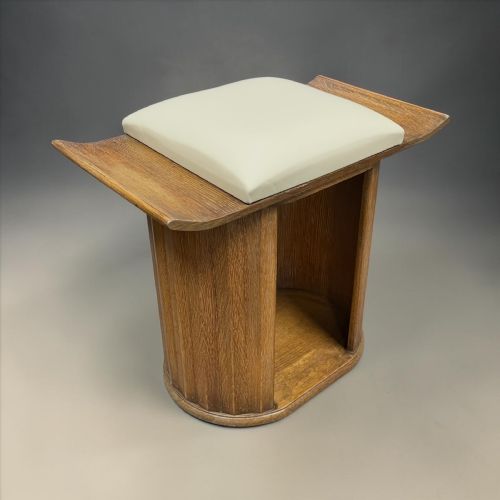


Oak Vanity Stool
An oak vanity stool brings solid timber character and practical seating to a dressing area, spanning revival styles and clean lines.
Oak Vanity Stool
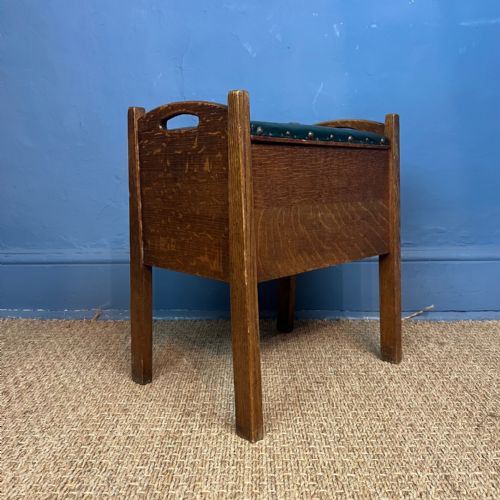
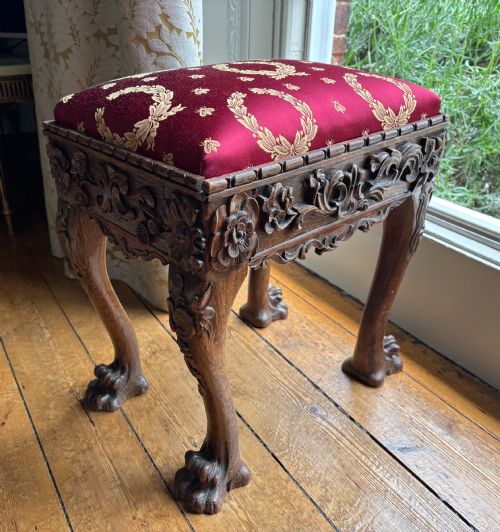
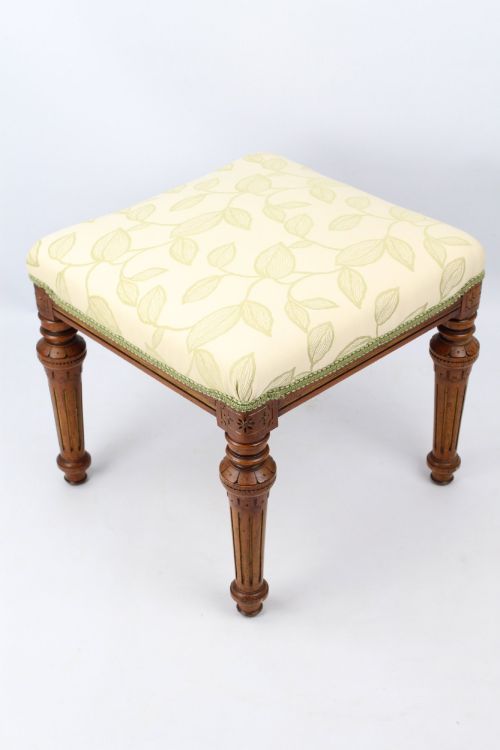
An oak vanity stool is a low seating piece designed for dressing tables and bedrooms, appearing in forms ranging from simple rustic seats to ornate revival designs. When searching for an oak vanity stool, buyers encounter everything from modest early twentieth-century examples to decorative nineteenth-century seating.
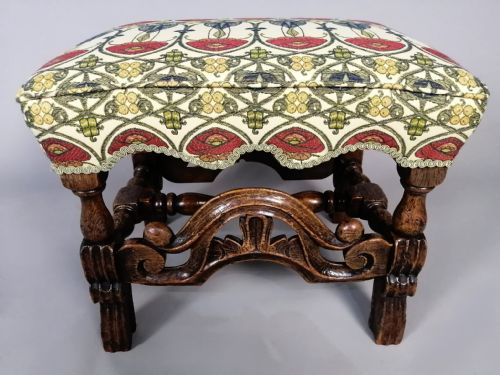
The selection includes Victorian, Art Deco, and revival styles such as Chippendale and Carolean, alongside pieces linked to the Cotswold School and Arts and Crafts movement. These diverse forms reflect changing domestic tastes across the nineteenth and twentieth centuries.
Origins stretch from English workshops to French makers, with storage variations like drum shapes and rush seats appearing among standard dressing stools. Each piece serves as a functional bedroom seat rooted in traditional woodworking.
How they were made
Construction relies heavily on solid oak, frequently paired with secondary timbers like walnut and enhanced with carved details or parcel gilt finishes. Artisans shaped these woods using traditional joinery, incorporating spiral turning and structural framing suited to daily use.
Upholstery forms an essential part of construction, utilising materials such as velvet, leather, tapestry fabric, red damask, and tweed linen to cover padded seats. Rush seating also appears on specific rustic forms, providing a durable woven surface.
Oak Vanity Stool Retail Price Guide 2026
Typical asking prices for oak vanity stool among the pieces listed under this phrase on Sellingantiques today, from the lower quarter to the upper quarter. They describe what is for sale here now, not the wider market.
Listings span from eighteen-fifty to nineteen-thirty, covering Victorian, Edwardian, and Art Deco periods.
What varies in quality
The standard of carving and timber selection dictates much of the distinction between pieces, with crisp hand-carved details and dense oak marking superior examples. Finer stools exhibit balanced proportions and robust frame construction that withstands decades of sitting.
Upholstery materials and execution also differentiate the range, where heavy woven fabrics, damask, or supple leather demonstrate a higher grade of finish. The integrity of the underlying woodwork and the fidelity of revival styles separate everyday utility items from more ambitious workshop productions.
Harry & Lou Epstein·B. North & Son
The Oak Vanity Stool Glossary
- Carolean Revival
- A late nineteenth-century style imitating late seventeenth-century English furniture. It is characterised by rich carving, scrolling motifs, and turned legs.
- Cotswold School
- An early twentieth-century design movement focusing on handcrafted simplicity and honesty of materials. It emphasises the natural grain of oak and visible joinery.
- X-Frame
- A structural form utilising two intersecting legs shaped like the letter X. This classical design offers both stability and architectural presence.
Oak Vanity Stool: Frequently Asked Questions
How do I choose the right height?
Consider the clearance beneath your dressing table to ensure comfortable legroom.
Most vanity stools are scaled lower than standard dining chairs for this exact reason.
Can I reupholster an antique stool?
Replacing worn fabric is a straightforward process that preserves the underlying wooden frame.
Choose textiles that complement both the timber and your existing room decor.
How do I identify a revival piece?
Look at the tool marks, timber ageing, and specific historical motifs borrowed from earlier centuries.
Revival furniture often blends older stylistic elements with construction methods of its actual manufacturing date.
Where should I place a vanity stool?
While designed for dressing tables, these compact seats work well as spare seating in hallways or bedrooms.
Their modest footprint allows them to tuck neatly beneath consoles when not in use.