
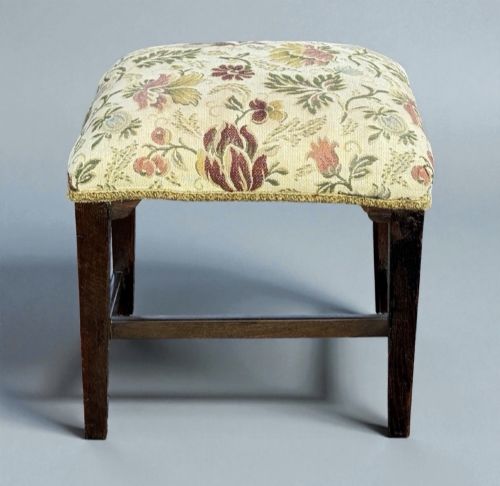


Vintage Floral Dressing Stool
A vintage floral dressing stool brings character and colour to a bedroom, combining practical seating with decorative textile upholstery.
Vintage Floral Dressing Stool
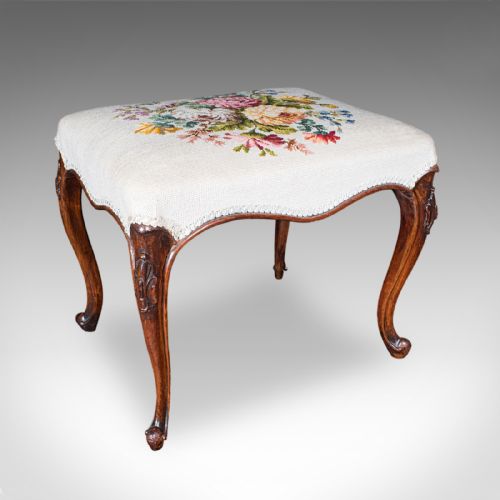
A vintage floral dressing stool is a low seat designed for use at a dressing table, typically featuring an upholstered top with botanical needlework or patterned fabric. These pieces span from the Georgian period through the Victorian era and into the Art Deco style of the 1930s, reflecting changing domestic fashions over centuries.
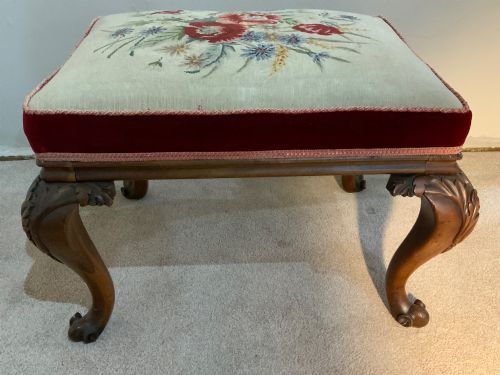
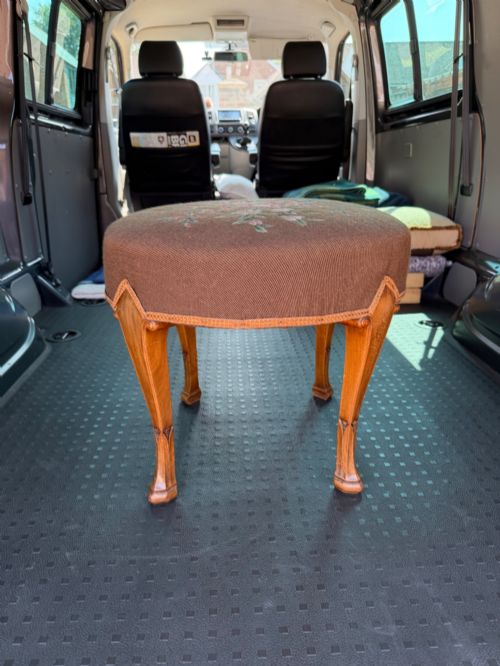
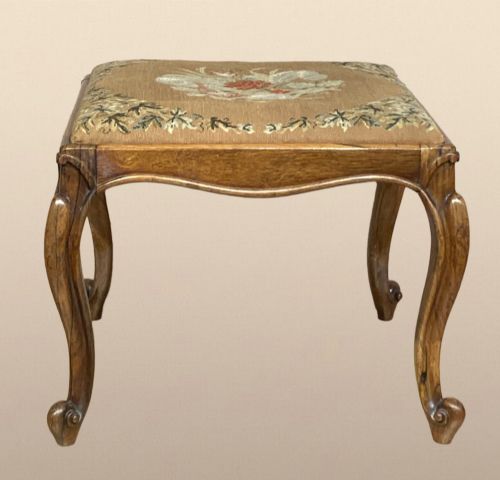
The materials and forms vary considerably, encompassing walnut, mahogany, oak, and painted wood frames supporting needlepoint, wool, velvet, and textile covers. You encounter everything from simple round drum shapes to cabriole leg designs and carved wooden frames.
Most examples found on this page draw on traditional forms such as Queen Anne style, Louis XV revival, and Early Victorian framing. They serve primarily as dressing table seats, footstools, or low benches in bedrooms and living spaces.
How they were made
Makers constructed the wooden frames of these stools using hardwoods like walnut, mahogany, rosewood, oak, and sycamore, often shaping the timber into cabriole legs, twisted rope supports, or simple turned structures. Painted wood and ebonised finishes also appear, particularly on pieces from the later nineteenth and early twentieth centuries.
Upholstery relies on traditional textile techniques, with needlepoint, wool, needlework, and velvet stretched over padded seat bases. Many stools feature floral covers that range from antique needlepoint to newer flowery top covers applied during restoration.
Some Art Deco dressing stools cleverly conceal storage space inside their unusual drum-shaped wooden frames.
What varies in quality
The distinction between standard and superior pieces rests on the craftsmanship of the wooden frame and the finesse of the upholstery. Finely carved walnut or mahogany frames with detailed cabriole legs represent a higher tier of production than simpler turned or painted softwood structures.
The integrity of the textile top also influences the overall character, where hand-stitched needlepoint or period-correct tapestry work elevates an antique stool above examples with replacement modern fabrics.
Whytock and Reid
The Vintage Floral Dressing Stool Glossary
- Cabriole leg
- A furniture leg that curves outward and then tapers inward, mimicking an animal's leg. This design gained prominence during the Queen Anne and Louis XV revival periods.
- Needlepoint
- A type of canvas work embroidery executed with wool or yarn. It forms the floral patterns seen on many traditional stool tops.
- Queen Anne style
- A design aesthetic characterised by graceful curved lines, pad feet, and walnut as a primary timber. It appeared in original 18th-century pieces and later 20th-century revivals.
- Ebonised
- Wood finished with a dark stain or black lacquer to imitate ebony. This treatment was popular on Victorian furniture frames.
Vintage Floral Dressing Stool: Frequently Asked Questions
What is a vintage floral dressing stool used for?
These stools serve primarily as seating at a dressing table or vanity. Their compact size also makes them suitable as footstools or decorative low seats in bedrooms and sitting rooms.
Many examples feature upholstered tops with floral needlework or fabric, combining functional seating with traditional decorative art.
How do I date a wooden dressing stool?
Dating relies on identifying the timber, joinery techniques, and stylistic influences such as Victorian carving, Georgian proportions, or Art Deco geometry. Walnut and mahogany were favoured in earlier periods, while sycamore and painted finishes often point towards the 1930s.
Upholstery fabrics and needlework patterns can also provide clues, though many pieces have received new covers during restoration over the years.
What styles of dressing stools are available?
The selection includes Victorian and Edwardian wooden frames, Georgian-inspired pieces, and 1930s Art Deco designs. You will find Queen Anne style cabriole legs, French painted finishes, and drum-shaped storage stools.
Upholstery varies from antique needlepoint to contemporary floral textiles applied during restoration.
Are these stools comfortable for daily use?
Most pieces provide firm, upright seating suited to short periods at a dressing table. The comfort depends on the padding beneath the textile or needlepoint cover.
Original antique padding may feel firmer than modern upholstery, and some pieces have been restored with new covers and cushioning for everyday comfort.