


Wooden Storage Stool
A wooden storage stool combines a seat with a hidden compartment, offering practical utility in oak, mahogany, and fabric across several centuries.
Wooden Storage Stool
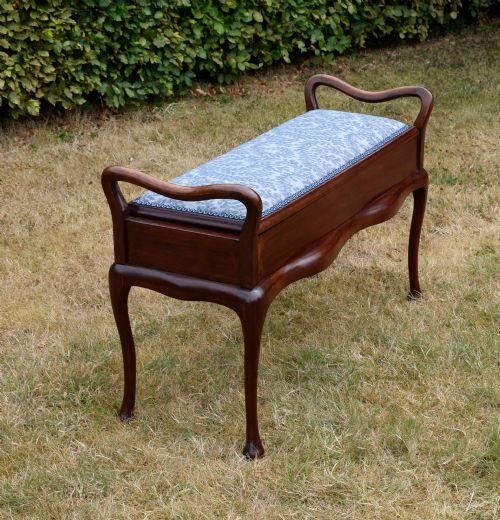
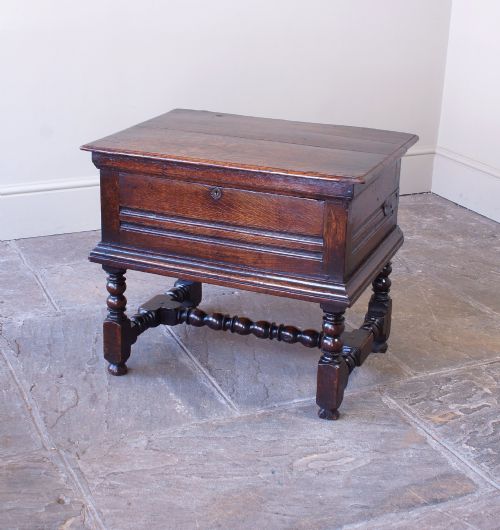
A wooden storage stool serves as a seat while concealing a compartment beneath the lid for domestic items. When searching for a wooden storage stool, buyers encounter formats ranging from early box forms to piano benches and library steps with integrated storage.
The pieces listed on this page span the seventeenth century through to the Art Deco period, incorporating styles such as Regency, Queen Anne Revival, and Elizabethan Revival. Oak and mahogany predominate as the primary timbers used in their construction.
Formations include piano stools, box stools, close stools, and dressing stools. Each type reflects the domestic habits of its period, from music rooms to bedrooms and libraries.
Materials and construction
Carpenters utilised solid oak and mahogany to build the carcasses of these boxes and seats, often employing traditional joinery methods. Surfaces display carved details or inlaid decoration depending on the stylistic preferences of the era.
Seating portions incorporate upholstery fabric, velvet, and plain fabric over padding. Brass and iron hardware appear as hinges, handles, and locking mechanisms on the storage compartments.
Listings feature oak and mahogany timbers alongside fabrics, velvet, brass, and iron across periods spanning the seventeenth century to Art Deco.
Assessing quality and character
Quality rests in the selection of timber and the crispness of the carving or inlay work. Heavier timber frames and tighter joinery distinguish more substantial pieces from simpler domestic utilities.
The condition of the original hinges, timber patination, and the retention of period upholstery fabrics dictate the desirability of an example. Alterations to the interior compartments or replacement hardware alter the historical integrity of the piece.
The Wooden Storage Stool Glossary
- Box stool
- A seat featuring a hinged lid that opens to reveal a storage compartment. These pieces date across multiple centuries and serve various domestic functions.
- Close stool
- An early form of box stool designed to enclose a chamber pot. They frequently feature oak construction and hinged tops.
- Duet stool
- A wider piano stool intended to accommodate two players. They often incorporate lift-up lids for sheet music storage.
- Bedsteps
- A flight of small steps used for climbing into high period beds. Some examples incorporate hinged treads that open for storage.
- Library steps
- Free-standing steps used to reach high bookshelves. Certain Victorian variants include enclosed storage steps.
Wooden Storage Stool: Frequently Asked Questions
What is a wooden storage stool used for?
These pieces provide a dual function as both a seat and a concealed container for household items. Historically, they held items ranging from sheet music to personal linen.
Today, they serve similar organizational purposes in living spaces, hallways, and bedrooms while maintaining period character.
How do I date a wooden storage stool?
Dating relies on identifying the timber, construction methods, and stylistic motifs present on the piece. Seventeenth-century examples typically show heavy oak construction and panel carving.
Later Victorian and Art Deco pieces introduce mahogany, distinct upholstery fabrics, and streamlined drum shapes or inlay patterns.
Are piano stools the same as box stools?
Piano stools are specifically designed for keyboard players and often feature adjustable mechanisms or long rectangular seats. Box stools encompass a broader category of lidded seats built for various rooms.
Many piano stools double as storage stools by incorporating a hinged seat top for holding music books.
How should I care for antique wooden storage stools?
Maintenance involves keeping the timber nourished with appropriate wax and protecting fabric upholstery from direct sunlight. Avoid placing them near intense heat sources that could dry out the old wood.
Regular dusting and gentle cleaning of brass or iron hardware preserve the metal components without damaging the surrounding patina.