


Vintage Oak Vanity Seat
A vintage oak vanity seat brings compact character and period craftsmanship to a dressing space, offering a sturdy frame and practical seating.
Vintage Oak Vanity Seat
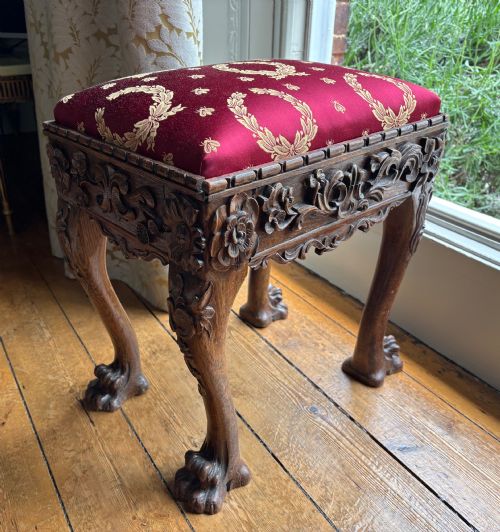
A vintage oak vanity seat encompasses dressing table stools, low chairs, and small piano stools fashioned from solid timber. These pieces range from mid-nineteenth-century examples through to distinct 1930s Art Deco forms.
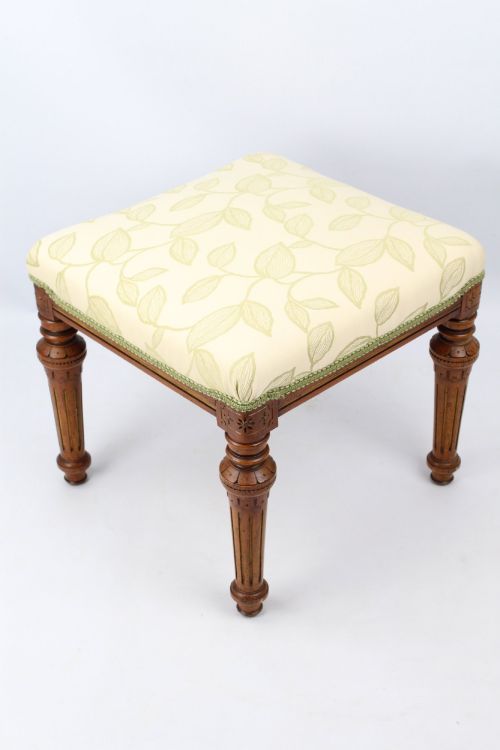
The version most commonly met on this page is the compact oak dressing stool, often featuring upholstered tops in tweed, fabric, or leather, alongside occasional rush seating.
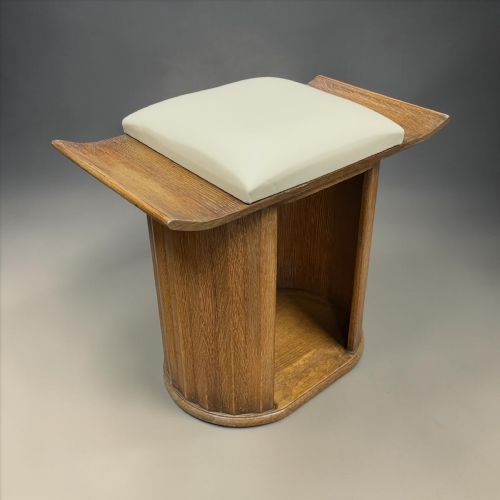
Makers and styles span Victorian and Edwardian interpretations up to geometric Art Deco designs, ensuring a variety of profiles suitable for domestic interiors.
How they were made
Makers constructed these seats using solid oak frames, sometimes incorporating carved details, parcel gilt highlights, or drum-shaped storage compartments.
Seating areas relied on traditional methods, combining drop-in upholstery frames with fabrics such as leather, tweed linen, woven textiles, and natural rush.
Design styles span from mid-nineteenth-century revival forms through Edwardian frames to geometric 1930s Art Deco creations.
What varies in quality
Quality rests in the crispness of the timber carving and the architectural integrity of the frame joints, separating standard workshop output from finer cabinet work.
The grade of the upholstery materials and the execution of details such as parcel gilt accents or fitted storage compartments dictate the upper tier of the range.
Harry & Lou Epstein·B. North & Son
The Vintage Oak Vanity Seat Glossary
- Vanity seat
- A small stool or low chair designed for use at a dressing table. These pieces prioritize a low profile and comfortable padded seating.
- Rush seat
- A seating surface woven from dried marsh rushes, providing a textured and flexible finish often seen on country and simpler period stools.
- Parcel gilt
- Wood or carved decoration partially covered in gold leaf. This technique highlights specific ornamental details against the natural oak ground.
- Slipper chair
- A low-seated upholstered chair traditionally used in a bedroom or dressing room for putting on shoes. The low height makes it practical for private chambers.
Vintage Oak Vanity Seat: Frequently Asked Questions
Where should I put a vanity seat?
These pieces fit naturally in front of a dressing table or vanity desk in a bedroom. Their compact footprint also suits hallways or small corners as a handy spare seat.
Because many examples feature enclosed storage or low profiles, they integrate easily into various room layouts without dominating the floor space.
How do I care for an oak frame?
Keep solid oak timber away from direct heat sources and strong sunlight to prevent the wood from drying out or splitting. Dust the frame regularly with a dry cloth and apply occasional specialist wax to nourish the finish.
Avoid using harsh chemical sprays or excessive moisture, particularly near upholstered or parcel gilt sections.
Can I reupholster a vintage seat?
Traditional drop-in pads and webbed seats can usually be recovered to match modern interior schemes. Using appropriate period fabrics like tweed or linen helps maintain the character of the piece.
Consult a professional restorer if the internal webbing or traditional stuffing requires reinforcement.
How do I date an oak stool?
Dating relies on stylistic clues, construction methods, and timber patination. Victorian and Edwardian pieces often display revival carving, while 1930s examples lean towards cleaner Art Deco geometry.
Examine the underside and joints for hand-cut or early machine marks which indicate the era of manufacture.