


Oak Tripod Milking Stool
These oak tripod milking stool pieces are honest vernacular seats shaped by rural life, offering robust simplicity and rich timber patination to modern interiors.
Oak Tripod Milking Stool
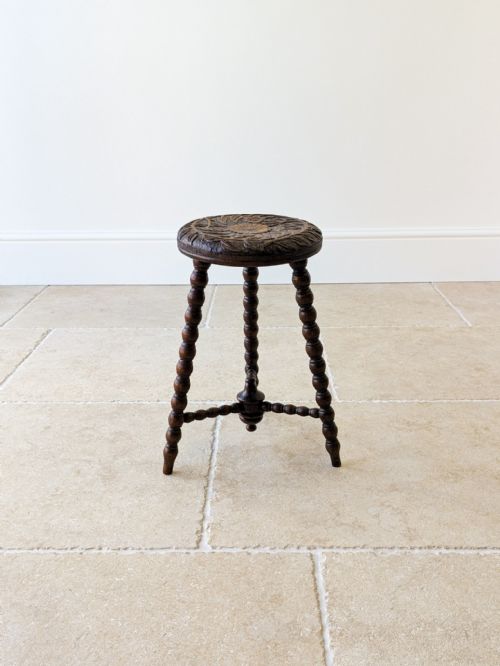
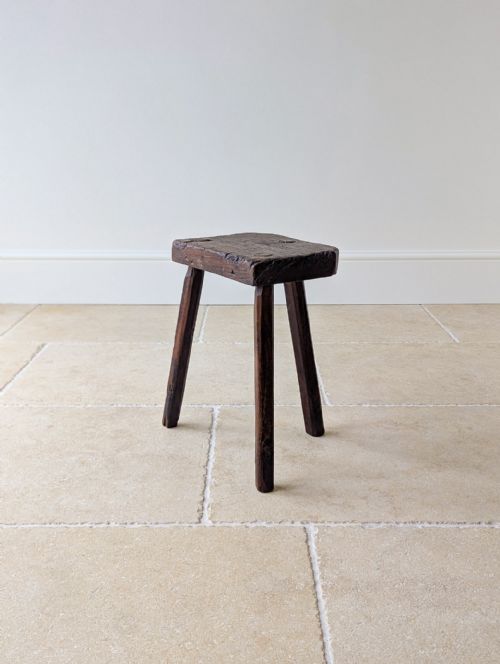
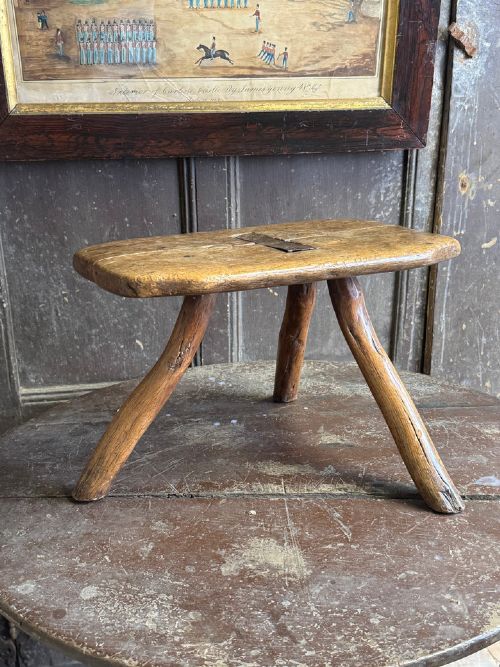
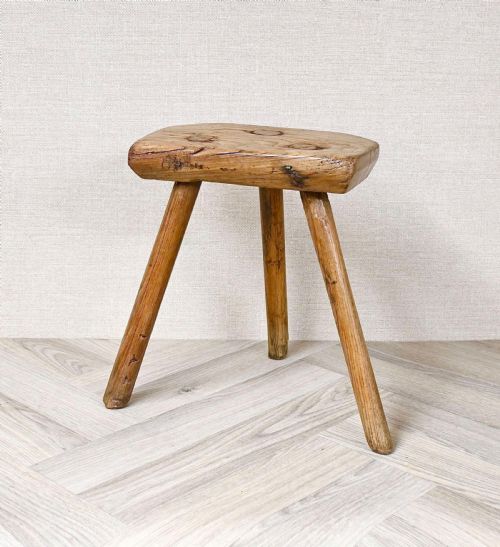
An oak tripod milking stool represents the utilitarian seating of British rural life, built with three splayed legs for stability on uneven floors and round timber tops. The examples found here span the eighteenth, nineteenth, and early twentieth centuries, reflecting diverse regional vernacular traditions across the countryside. Buyers encounter pieces styled in rustic country, Victorian, and Georgian country aesthetics, often serving versatile roles as low side tables or seats.
Most entries combine oak with mixed native timbers such as elm, ash, and beech, demonstrating how makers utilised accessible local woods. Forms range from simple circular tops with plain splayed legs to unusual single-leg variants, cutler's stools, and pokerwork decorated surfaces. These utilitarian objects bridge the gap between agrarian practicality and folk art charm, making them enduring favourites for rustic interiors.
How they were made
The construction of an oak tripod milking stool relies on traditional joinery methods, notably wedged tenons where the leg tenons pierce straight through the seat top. Makers shaped seats using adzes or drawknives on solid timber blocks, creating subtle dishing for comfort. Splayed legs were turned on pole lathes or shaved by hand, then secured firmly into drilled sockets underneath.
Blacksmith-made iron repairs and bracing occasionally appear on older pieces to stabilise splits and heavy working use over generations. Secondary timbers like elm and ash provide tough, resilient surfaces for seats, whilst oak and beech form sturdy underframes.
One Scottish nineteenth-century stool bears the defiant pokerwork inscription 'Touch me wha daur'.
What varies in quality
The quality of an oak tripod milking stool rests in the depth of timber patination, the honesty of historical repairs, and the balance of its proportions. Pieces bearing early blacksmith interventions or distinct regional tool marks hold greater character than later, more sanitised reproductions. Surface wear accumulated through decades of domestic or agrarian use enhances the visual texture of the wood.
Proportional harmony between the thickness of the seat and the rake of the three legs dictates the visual success of the piece. Untouched surfaces displaying deep wax accumulation stand apart from stripped or over-cleaned examples that lose their historical narrative.
The Oak Tripod Milking Stool Glossary
- Vernacular
- Everyday objects made by local craftsmen for practical use rather than following academic design rules. These pieces reflect regional materials and traditional techniques.
- Splayed
- Angled outwards from the centre to provide a wide, stable base on uneven ground. This technique is essential for three-legged seating.
- Dished
- Hollowed out in the centre of the seat top to fit the contours of the body. Makers carved these depressions using hand adzes.
- Patina
- The deep, lustrous surface sheen developed on timber over centuries through handling, waxing, and ageing. It cannot be replicated artificially.
- Pole lathe
- A traditional foot-powered woodturning lathe used by country bodgers and craftsmen to shape round legs and stretchers.
Oak Tripod Milking Stool: Frequently Asked Questions
How do I use a milking stool today?
These low seats function well as small side tables beside armchairs, plant stands in hallways, or occasional perches.
Their compact footprint allows them to fit easily into tight corners while adding warmth and texture to contemporary rooms.
How can I tell an older stool from a newer one?
Examine the underside for hand-tool marks, wedged through-tenons, and the distinct dryness of mature timber.
Genuine older pieces show authentic wear patterns, subtle surface warping, and patination that modern manufacturing fails to duplicate.
Why do these stools have three legs?
Three legs guarantee that a stool sits firmly on uneven stone floors or farmyards without wobbling.
This practical agrarian requirement dictated the tripod design standard across generations of rural furniture makers.
What woods were used to build them?
Makers combined durable hardwoods like oak for stability with tough native timbers such as elm and ash for the seats.
This mixed construction utilised whatever local materials were readily available in the workshop.