
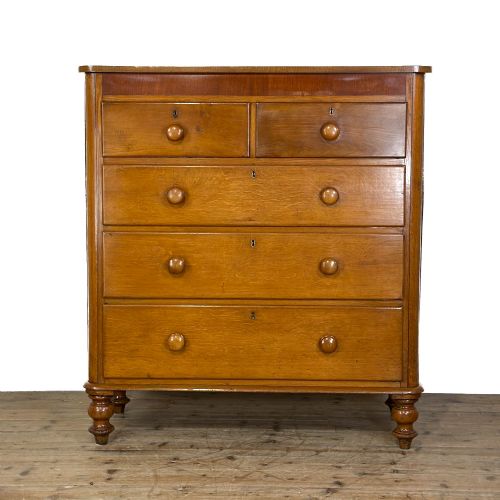
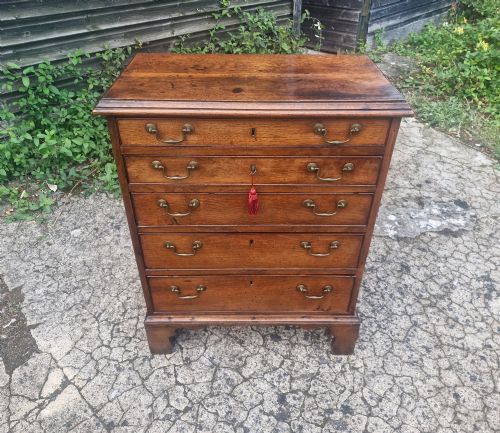
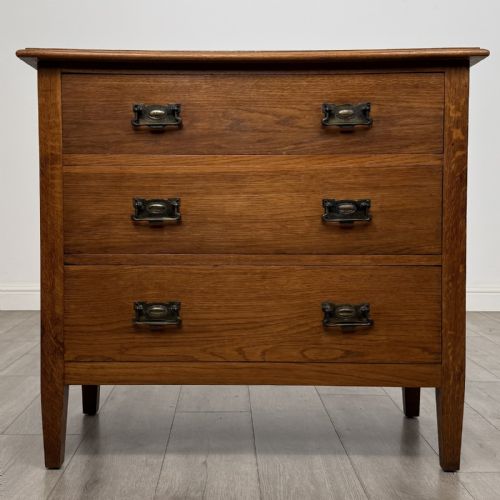
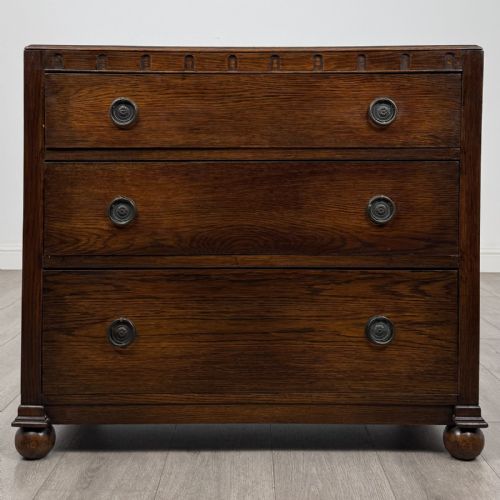
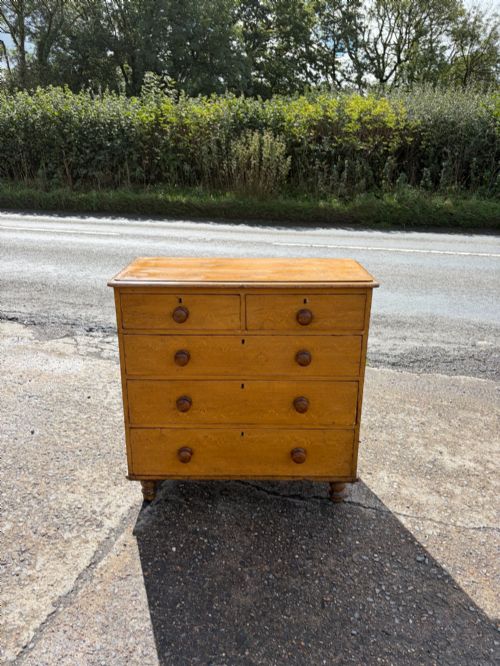
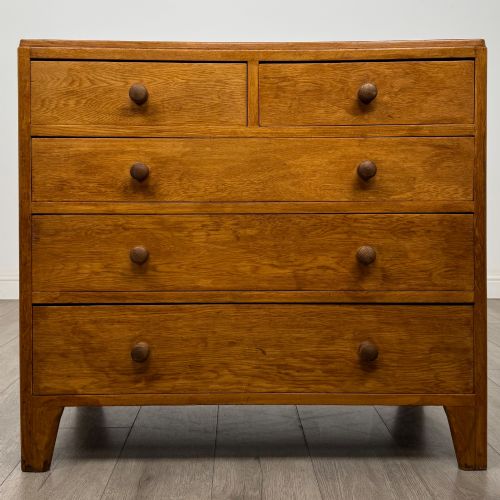
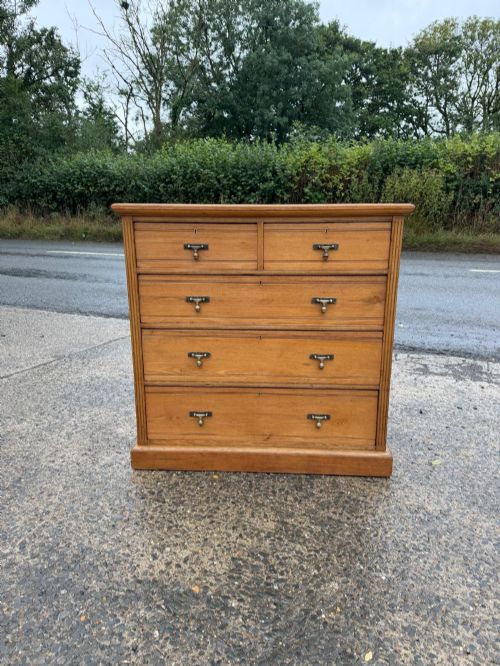
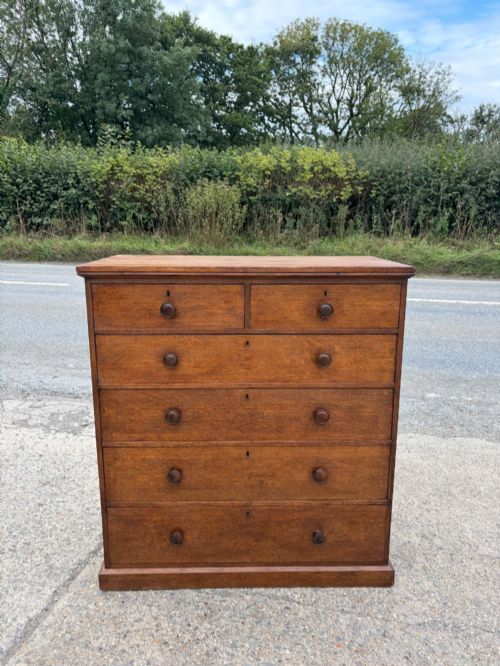
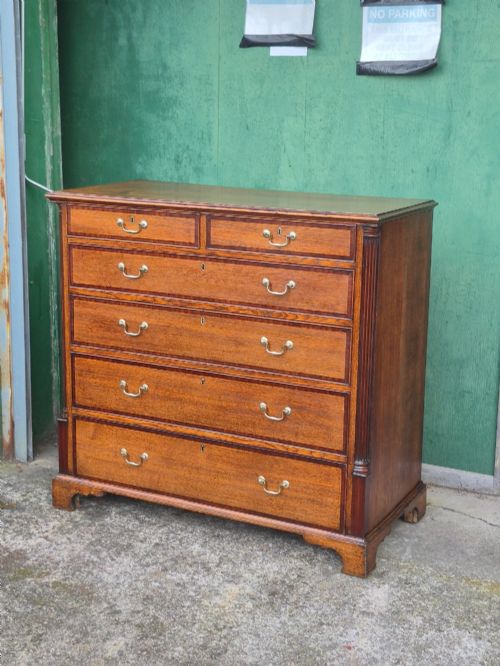
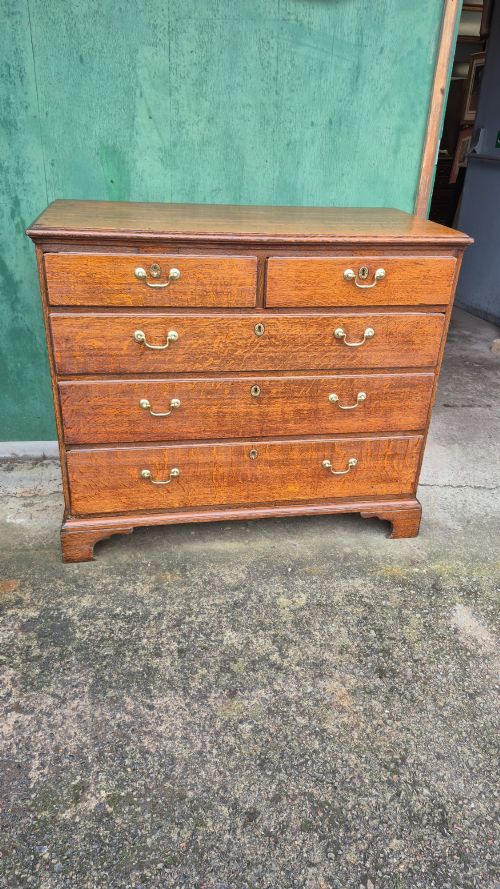
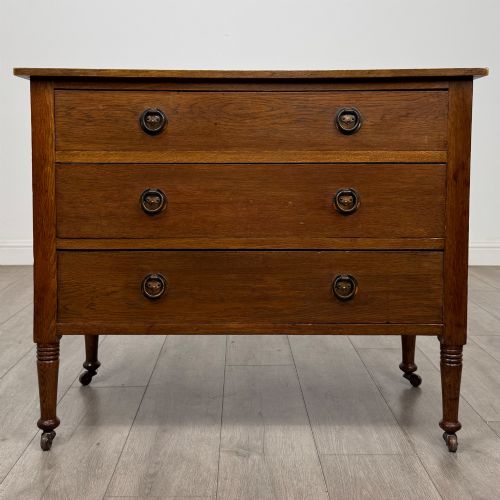
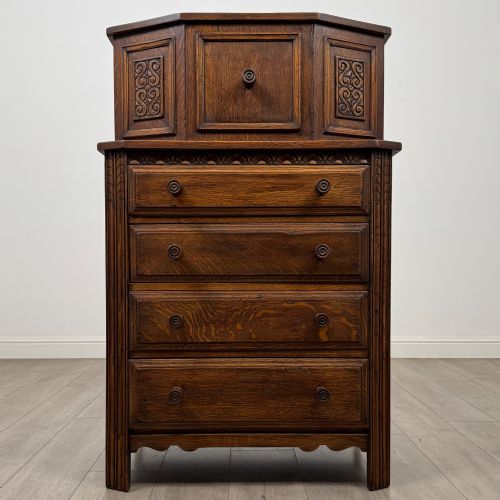
Oak Tallboy Bedroom Storage
These oak tallboy bedroom storage pieces offer generous height and vertical capacity, bringing sturdy timber utility and period character to domestic rooms.
Oak Tallboy Bedroom Storage
When buyers search for oak tallboy bedroom storage, they encounter tall vertical forms designed for clothes organisation without occupying excessive floor space. The selection spans distinct eras, from late 17th Century Charles II examples through Georgian, Victorian, and Edwardian periods, stretching into 1920 and 1930 designs.
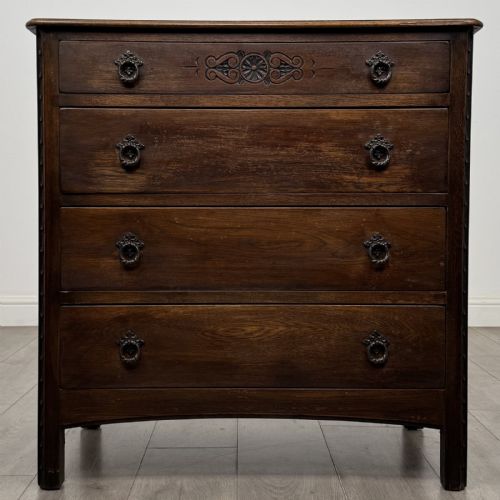
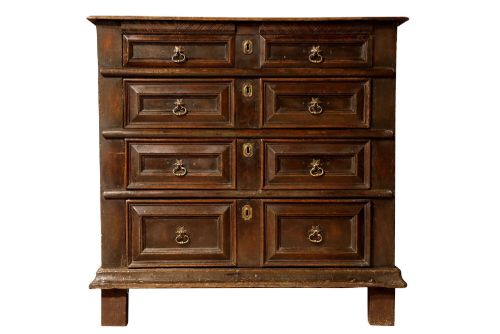
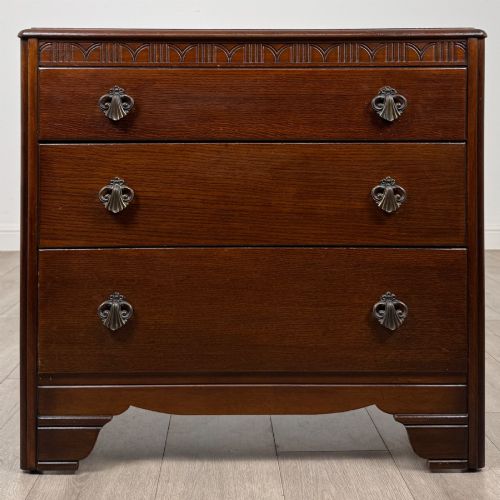
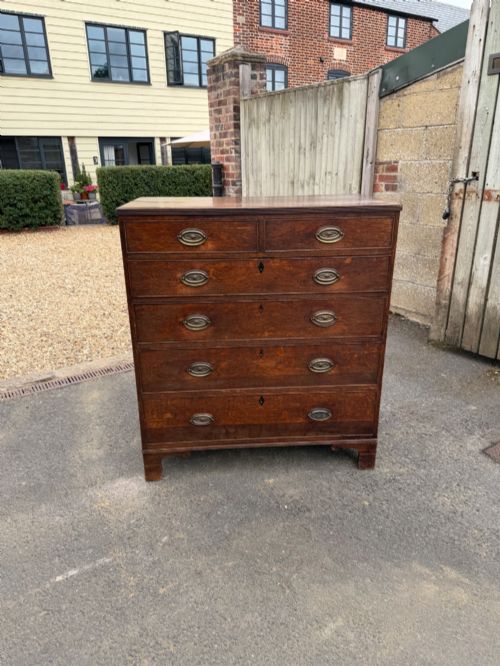
Most entries on this page take the form of chests of drawers, often arranged in multi-drawer configurations such as two-over-three layouts, alongside dedicated tall chests and cupboards. Woods alternate between solid golden or light oak and occasional crossbanded mahogany or walnut highlights.
Stylistic variations range from unadorned utilitarian surfaces to carved top drawers, raised galleries, and bracket feet. Pieces from the Edwardian and Victorian eras sit alongside older 18th Century and William and Mary iterations to form a varied inventory of vertical storage.
How they were made
Construction relies heavily on solid oak timbers, frequently paired with secondary woods like pine, alongside metal, iron, and brass fittings such as original acorn handles or swan neck pulls. Joinery techniques respect the linear grain of the timber, accommodating seasonal movement in domestic environments.
Surface treatments vary by period, showing plain waxed finishes, carved detailing, raised galleries, and limed oak treatments typical of 1930 production. Details like bun feet, turned legs, and crossbanding in mahogany or walnut demonstrate traditional cabinet-making methods.
Listings feature oak alongside walnut, mahogany, pine, brass, and iron across periods stretching from the 17th Century to 1930.
What varies in quality
Quality separates through the integrity of the timber selection, such as rich golden oak versus plainer wood, and the retention of original hardware like brass drop handles and acorn pulls. The sophistication of structural elements, including bracket feet, raised galleries, and carved top edges, marks the distinction between standard utility and finer craftsmanship.
Proportion and the preservation of original surface finishes, such as early graining or patinated wax, define the upper tier of the range. The precision of drawer runners and the survival of secondary woods untouched by later alterations establish the baseline of historical authenticity.
The Oak Tallboy Bedroom Storage Glossary
- Tallboy
- A tall chest of drawers, typically comprising a chest stacked upon another or built as a single high vertical unit. This form maximises vertical storage capacity in bedrooms.
- Crossbanding
- A decorative border of veneer laid with the grain running perpendicular to the surrounding wood. This technique frames drawer fronts on select Georgian pieces.
- Raised Gallery
- A low decorative upstand fixed to the top surface of a chest or cabinet. It prevents items from sliding off the upper ledge.
- Bracket Foot
- A foot supporting a case piece, formed by two mitred pieces of wood shaped in an L-profile. It provides stable elevation at the base corners of Georgian chests.
- Bun Feet
- Rounded, ball-like feet turned from timber, frequently supporting 17th Century and Edwardian furniture. They lift the base clear of damp floors.
Oak Tallboy Bedroom Storage: Frequently Asked Questions
How do I date an oak chest?
Dating relies on observing construction methods, handle types, and stylistic indicators such as bracket feet or carved drawer edges. Earlier pieces from the 17th Century display heavier framing and joined panels.
Later Edwardian and Victorian versions utilise machine-sawn timbers and standard brass hardware. Comparing the secondary woods inside the drawers helps confirm the era of manufacture.
Are tallboys suitable for modern bedrooms?
These tall vertical units fit well in contemporary bedrooms because they offer substantial drawer capacity while requiring minimal floor space. Their height makes efficient use of vertical wall areas.
Oak surfaces blend easily with modern interiors, bringing natural texture and warm tones to domestic spaces.
What is the difference between a tallboy and a standard chest?
A standard chest of drawers is low and broad, often positioned to hold a mirror or decorative objects on its top surface. A tallboy builds upward, stacking multiple drawer tiers to increase storage height.
This vertical format provides significantly more internal volume without enlarging the footprint in the room.
How should I maintain an antique oak finish?
Maintaining antique oak involves applying a traditional beeswax polish occasionally to nourish the timber and protect the surface from drying out. Avoid silicone sprays and modern chemical cleaners.
Keep the piece away from direct heat sources and strong sunlight to prevent timber shrinkage and fading.