
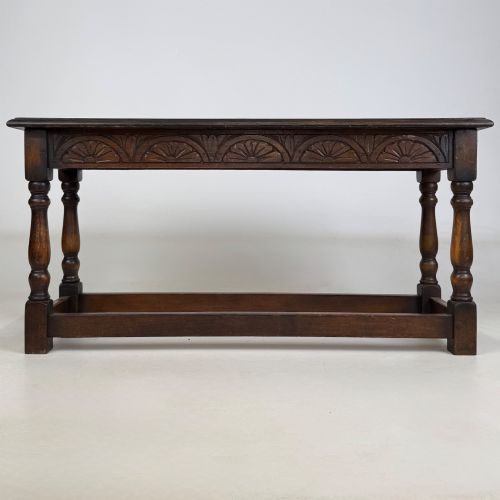


Oak Table Bench Seat
These oak table bench seat pieces combine timber seating with multi-functional surfaces, offering historical charm and practical utility for modern interiors.
Oak Table Bench Seat
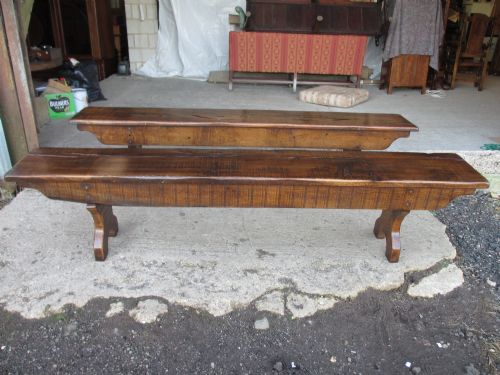
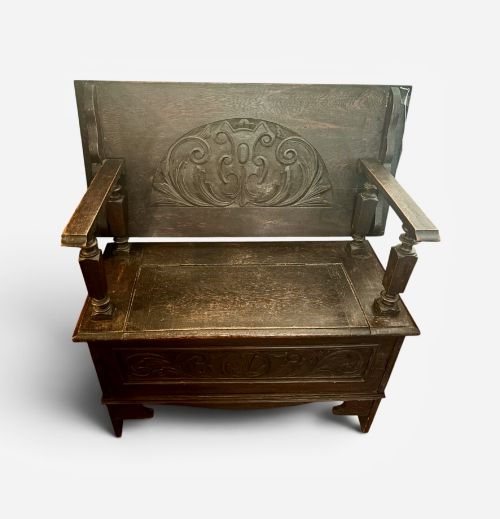
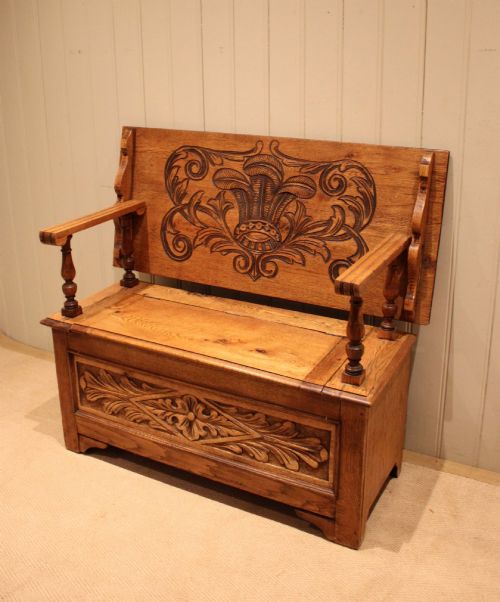
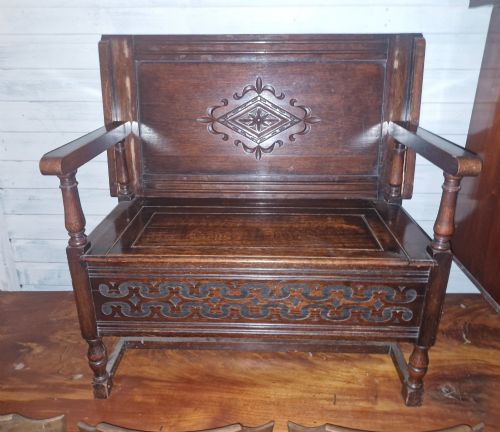
An oak table bench seat encompasses diverse forms designed for seating and surface utility, ranging from monks benches with fold-over tops to long refectory tavern benches and hall seats. Buyers searching for an oak table bench seat will encounter pieces spanning the Victorian and Edwardian eras, alongside early twentieth-century examples.
Origins stretch across the nineteenth and twentieth centuries, incorporating revivalist movements such as Jacobean, Gothic, and Arts and Crafts aesthetics. Solid timber construction dominates the inventory, utilising durable wood alongside occasional fabric or textile elements.
Factors of quality
Quality rests upon the crispness and depth of hand-carving applied to the panels and structural timbers, distinguishing meticulously rendered ornamentation from softer, mechanical secondary work. The integrity of the pivoting or folding mechanisms on convertible items determines structural longevity and mechanical smoothness.
The choice of timber selection, grain consistency, and the proportion of solid oak versus secondary woods influence the visual weight and physical stability of each piece. Surface patination achieved through age and handling separates well-preserved examples from heavily restored or chemically altered surfaces.
Apprentice pieces allowed young woodworkers to prove their skill by building miniature furniture that could sit on a window sill.
The Oak Table Bench Seat Glossary
- Monks bench
- A convertible piece of furniture featuring a hinged back that folds down flat over the armrests to form a table top. This dual-purpose design originated to save space in smaller domestic interiors.
- Trestle
- A structural support consisting of a horizontal beam fixed to two splayed vertical legs. This framework underpins long refectory tables and heavy benches.
- Settle
- A wooden bench with a high back, solid wooden seat, and often enclosed arms and storage beneath. It protects occupants from draughts in traditional hallway settings.
- Jacobean Revival
- A nineteenth-century stylistic movement copying the heavy, geometric carved ornamentation of the early seventeenth century. Furniture in this style utilises dark oak and bold strapwork.
- Apprentice piece
- A small-scale model or miniature item created by a trainee craftsman to demonstrate mastery of joinery techniques. These items display the same structural detail as full-sized furniture.
Oak Table Bench Seat: Frequently Asked Questions
What is a monks bench?
A monks bench is a convertible seat featuring a hinged back that folds down to create a small table surface. This clever design provided dual functionality for historic homes with limited space.
Most examples include a lift-up seat box underneath for storing household items, combining seating, surface area, and storage into one compact unit.
How do I use a hall bench?
Hall benches suit entranceways, corridors, and boot rooms, offering a convenient spot for removing footwear or placing bags upon entering the house. Many incorporate internal storage compartments beneath the hinged seat.
Their narrow profile allows them to fit along hallways without obstructing movement, while their decorative backs provide a strong visual anchor for the space.
How do I date an oak bench?
Dating relies on examining construction methods, tool marks, hardware, and stylistic details such as carving motifs. Victorian and Edwardian pieces often display machine-assisted sawn timber alongside hand-carved revivalist decoration.
Earlier examples from previous centuries show irregular hand-adzed surfaces and forged iron nails. Comparing the patination and wear patterns helps confirm the age of the timber.
Are these benches comfortable?
Solid timber benches provide firm, upright seating without the soft cushioning found in modern armchairs. Many period examples feature sculpted wooden seats designed to contour naturally to the body.
Adding loose fabric cushions or squab pads can easily increase comfort for daily sitting while preserving the original wooden surface underneath.