
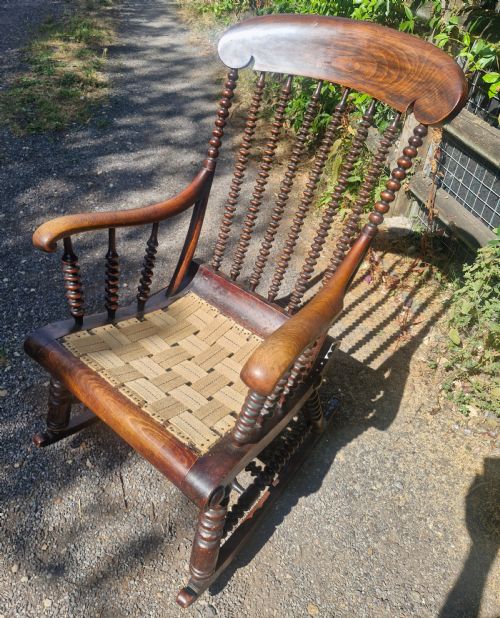
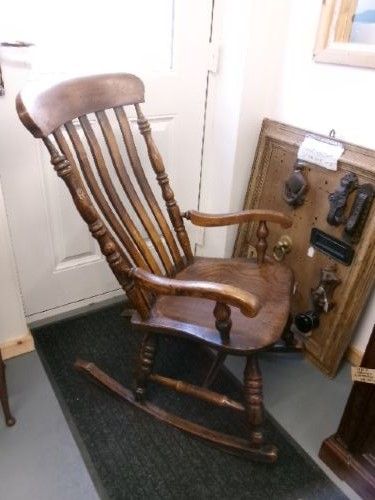


Oak Spindle Back Rocker
An oak spindle back rocker brings satisfying movement and honest joinery into a room, offering the sturdy comfort of nineteenth-century seating.
Oak Spindle Back Rocker
An oak spindle back rocker combines turned wooden uprights with a mobile base designed for gentle movement across the floor. These chairs appear primarily in Victorian and nineteenth-century formats, often reflecting traditional English country or vernacular styles.
The most common examples on this page are Windsor and farmhouse chairs adapted with curved rockers fitted to the base of the legs. Buyers encounter regional variations ranging from Yorkshire farmhouse seating to low nursery rockers designed for fireside use.
Makers utilised resilient timbers to construct these moving seats, incorporating turned spindles that distribute weight evenly along the high backrest. Such pieces function equally well as practical seating or as decorative anchors within a traditional interior.
Materials and construction methods
Cabinet makers combined oak with secondary timbers such as beech, elm, and ash to build a resilient frame capable of enduring constant motion. Turning lathes shaped the slender vertical spindles, while steam-bending techniques formed the curved crest rails and sweeping arm supports.
Seat bases often featured solid moulded elm or panelled oak, sometimes supplemented by woven webbing, cane, or leather pads for added comfort. Traditional joinery secured the vertical members into thick plank seats using wedged tenons that held firm beneath the shifting weight of the sitter.
Rockers sometimes show subtle wear on the feet where generations of sitters pushed off against the floorboards.
Measures of quality and distinction
Superior examples display crisp lathe work on the spindles and substantial timber thickness in the armbows and seat plank. The integrity of the rocker runners determines how smoothly the chair glides, with poorly proportioned replacements diminishing the physical balance of the piece.
Patina and surface preservation separate ordinary utilitarian examples from finer vernacular items that retain their original textured finish. Retaining the original turned components without heavy timber replacement preserves the historical character of a nineteenth-century rocking chair.
The Oak Spindle Back Rocker Glossary
- Spindle back
- A chair back constructed from a series of slender turned wooden rods set between a crest rail and the seat. This design lightens the visual weight of the frame while providing flexible support.
- Windsor
- A traditional chair style featuring a solid wooden seat into which the legs and back spindles are directly socketed. These designs are frequently associated with regional English and American country joinery.
- Elm
- A durable hardwood noted for its interlocking grain, making it highly resistant to splitting when used for solid chair seats. Makers selected this timber for its toughness.
- Crest rail
- The uppermost horizontal member of a chair back, often shaped or curved to fit the contours of the sitter. On spindle chairs, this piece caps the vertical turned elements.
- Vernacular
- Everyday furniture made by local regional makers using traditional local materials rather than following high-style metropolitan fashions. These pieces emphasise utility and local craftsmanship.
Oak Spindle Back Rocker: Frequently Asked Questions
What periods do these rockers date from?
The available pieces span the nineteenth century, including specific dates from eighteen fifty up to the nineteen twenties.
Victorian examples dominate the selection, showing traditional vernacular construction methods from English and American workshops.
Which woods were used to build them?
Makers constructed the primary frames using oak, supplemented by beech, elm, and ash for structural turned components.
Elm frequently appears in the solid carved seats because its interlocking grain resists splitting under daily movement.
How do I care for an antique wooden rocker?
Keep the timber away from direct heat sources and sudden temperature shifts to prevent the wood from drying and cracking.
Apply traditional wax polish occasionally to nourish the surface and maintain the natural patina of the aged timber.
What is a nursing rocking chair?
A nursing rocker is a lower-slung seating variant traditionally built without arms to allow a mother to hold an infant easily.
These compact chairs were designed for fireside use in bedrooms and nurseries during the Victorian period.
Are these chairs comfortable for daily use?
The ergonomic curved spindles and supportive high backs offer a surprisingly comfortable sit for modern users.
Some examples include padded leather inserts or woven webbing to provide additional cushioning on the seat.