




Antique Cane Rocking Chair
An antique cane rocking chair brings genuine nineteenth and early twentieth-century movement and texture into a room.
Antique Cane Rocking Chair
When you search for an antique cane rocking chair, you encounter seating designed for gentle motion, produced across the nineteenth and early twentieth centuries. These pieces combine traditional woodwork with woven seats and backs, serving as functional furniture and decorative statements.
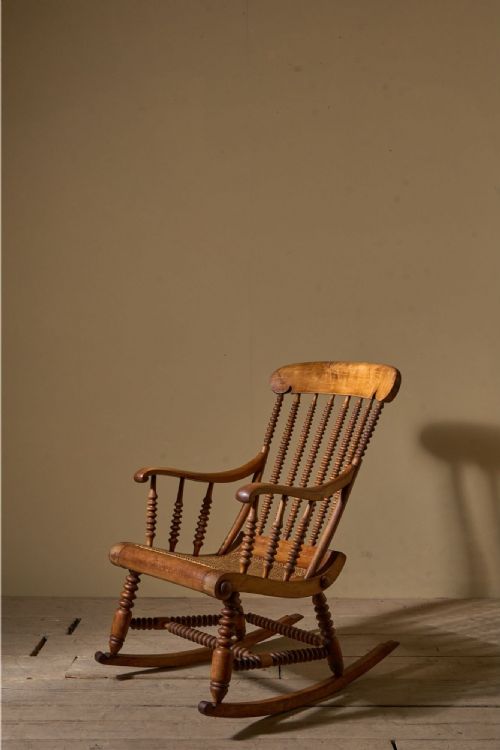
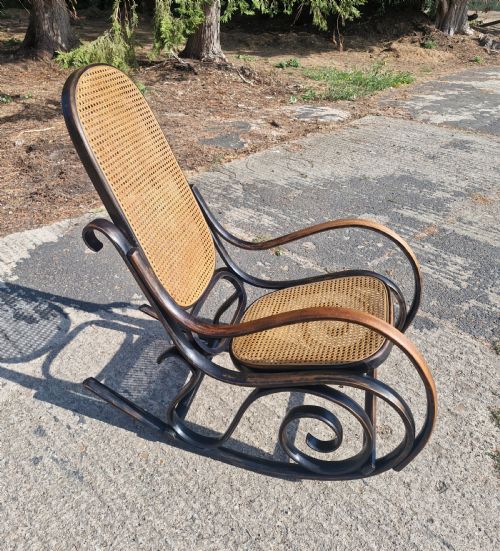
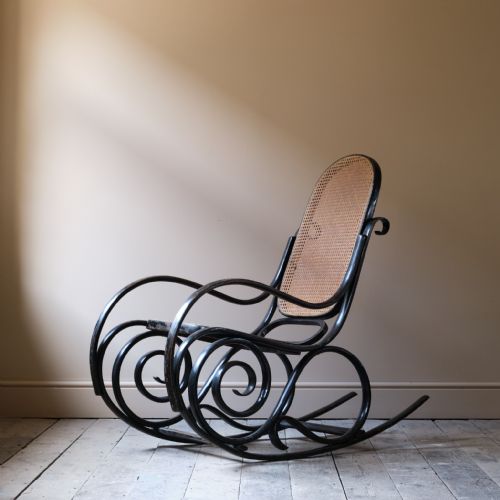
The versions you meet most frequently on this page belong to the Victorian and Edwardian eras, including English country interpretations and continental bentwood designs. They range from full-sized armchairs to smaller child's rockers.
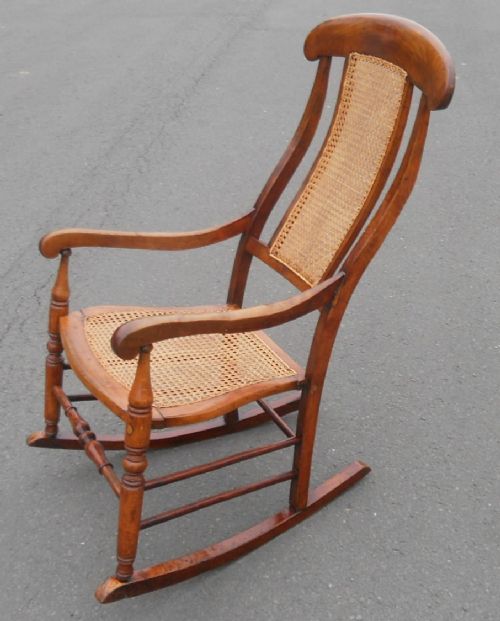
Makers utilised timber frames to support woven rattan surfaces, creating seats that offer both structural firmness and flexible comfort. Such chairs bridge the gap between formal parlour seating and relaxed domestic utility.
How they were made
Craftsmen built these rocking chairs using timbers such as beech, oak, and general hardwoods, often turning the wood on a lathe to create bobbin or spindle components. Bentwood techniques also appear, steaming timber to form smooth, curving structural frames without traditional joinery.
The seating and back panels utilise rattan cane, threaded by hand through drilled holes in the wooden frames to form supportive, resilient mesh surfaces. This combination of turned or bent solid wood and woven plant fibre gives the chairs their characteristic lightness and strength.
Current listings feature pieces spanning the nineteenth century through to nineteen twenty, incorporating beech, oak, and rattan cane.
What varies in quality
Quality in these rocking chairs rests primarily on the integrity of the wooden frame and the tightness of the turned or bent elements. Firmer joinery and thicker timbers distinguish sturdier examples from lighter, more decorative pieces.
The condition and execution of the cane work also separate standard examples from finer ones. Hand-woven rattan that remains intact and evenly tensioned demonstrates superior craftsmanship compared to loose or hastily replaced webbing.
Thonet
The Antique Cane Rocking Chair Glossary
- Cane
- A material derived from the rattan palm, split and woven to form flexible seats and backs. It provides breathable comfort.
- Bentwood
- Wood shaped by exposure to steam, allowing manufacturers to create curved structural frames. This technique defines many twentieth-century designs.
- Spindle back
- A chair back constructed with thin, turned wooden rods arranged vertically. It offers lightweight support.
- Bobbin turned
- Wood turned on a lathe to resemble a string of spools or bobbins. This decorative turning method appears on nineteenth-century frames.
Antique Cane Rocking Chair: Frequently Asked Questions
How do I date an antique cane rocking chair?
Dating relies on observing construction methods, turned details, and timber choices across different periods. Victorian examples often feature heavy turned spindles, whereas later pieces utilise steam-bent framing.
Examining the weave of the cane and any maker stamps helps narrow down the decade of production.
Are these rocking chairs comfortable for daily use?
Most of these chairs offer a gentle motion and supportive woven seating designed for relaxation. Their ergonomic qualities depend on the rake of the rockers and the height of the arms.
Adding a small cushion can improve comfort for extended periods of sitting.
How should I care for the cane seating?
Cane requires moderate humidity to prevent the natural fibres from becoming brittle and snapping. Cleaning should involve only a damp cloth without harsh chemical treatments.
Occasional conditioning with a light oil keeps the rattan flexible.
What is the difference between Victorian and Edwardian rockers?
Victorian rocking chairs tend to feature heavier turned woodwork, intricate spindle backs, and darker hardwoods. They reflect a more ornate approach to domestic seating.
Edwardian and later bentwood designs favour cleaner curved lines, lighter frames, and simplified forms.