






Oak Sloping Desk Tidy
These oak sloping desk tidy pieces organise correspondence with robust timber build quality, bringing Victorian and Edwardian writing organisation straight to the modern desk.
Oak Sloping Desk Tidy
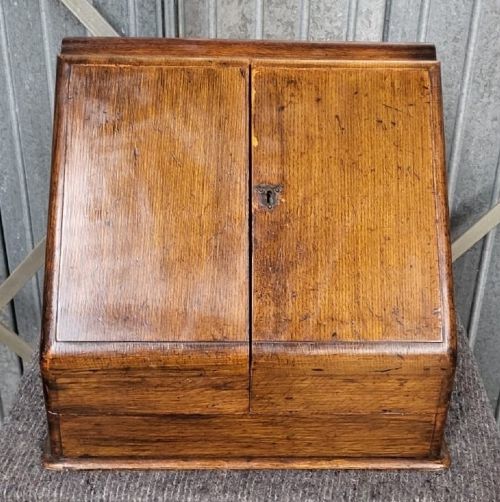
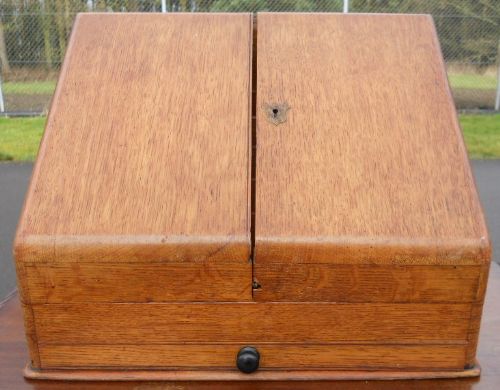
An oak sloping desk tidy provides a practical wooden station for holding letters, papers and writing implements on a desktop. These items typically emerge from Victorian and Edwardian periods, taking forms such as stationery cabinets, desk accessories, stationery boxes, inkstands and writing boxes.
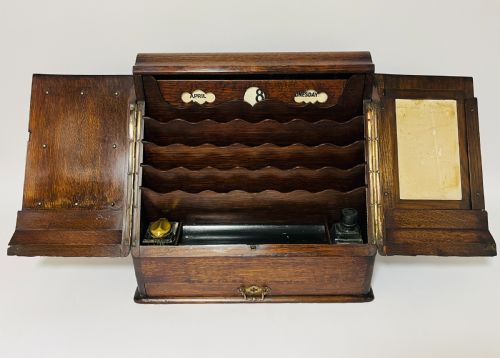
The most common forms on this page combine fall fronts and sloping lids with internal compartments for stationery. They range from simple letter racks to fitted cabinets with glass ink bottles and brass hardware.
How they were made
Joiners built these pieces using solid oak, often featuring fall fronts, sloping lids and fitted interior compartments. Brass hardware and metal accents reinforced corners and provided functional hinges for lids and doors.
Makers incorporated cut glass ink bottles and glass wells directly into the timber stands. Leather inserts and fabric linings occasionally appeared inside writing boxes and stationery compartments to cushion paper and pens.
Oak Sloping Desk Tidy Retail Price Guide 2026
Typical asking prices for oak sloping desk tidy among the pieces listed under this phrase on Sellingantiques today, from the lower quarter to the upper quarter. They describe what is for sale here now, not the wider market.
Listings feature oak combined with brass, glass, metal, leather, cut glass and fabric across Victorian and Edwardian periods.
What varies in quality
The sophistication of the internal fittings and the choice of timber figure heavily in the overall quality. Pieces featuring integrated cut glass ink bottles alongside fitted stationery dividers demonstrate higher workshop ambition.
Hardware execution and decorative style separate standard items from superior examples. Finely finished brass mounts and distinct Arts and Crafts or Victorian Gothic details elevate a piece above basic utilitarian boxes.
The Oak Sloping Desk Tidy Glossary
- Fall Front
- A hinged panel that folds downward to reveal writing surfaces or internal compartments. This feature allows easy access to stacked papers inside a cabinet.
- Inkstand
- A desktop tray or stand holding one or more ink bottles alongside pen troughs. These accessories kept writing fluids stable and close to hand during correspondence.
- Stationery Cabinet
- An upright wooden box designed to hold envelopes, paper and letters vertically or in stepped slots. They often include doors or sloping lids to keep contents enclosed.
- Letter Rack
- A desk accessory featuring upright wooden dividers to hold mail in separate partitions. They frequently accompany ink bottles on desk tidy stands.
- Writing Box
- A portable box with a sloping lid or folding writing slope used to store correspondence materials. Victorian examples often incorporate hidden drawers and lockable compartments.
Oak Sloping Desk Tidy: Frequently Asked Questions
What is an oak sloping desk tidy used for?
An oak sloping desk tidy holds letters, envelopes and writing accessories in organised compartments on a desktop. These pieces kept correspondence and ink supplies orderly in Victorian and Edwardian studies.
Today, they serve a similar function for sorting mail, stationery or modern desk items. Their traditional compartments suit anyone wanting to organise paper clutter with period timber accessories.
How do I date an oak stationery box?
Dating relies on observing construction methods, timber choice, and period design traits such as Arts and Crafts details or Victorian Gothic motifs. Labels or registration marks occasionally provide clues to the exact decade of manufacture.
Cabinet hardware, such as brass handles and hinges, also helps distinguish mid-nineteenth-century pieces from later Edwardian examples. Comparing the overall form to dated pieces in the same style clarifies the timeline.
Are ink bottles original to these stands?
Many inkstands retain their original cut glass ink bottles, fitted securely into dedicated wooden recesses. Matching glass styles and period wear patterns help confirm their authenticity to the stand.
Replacement bottles do occur due to breakage over decades of use. Checking whether the base of the bottle fits the timber aperture snugly indicates if it belongs to the piece.
How do I care for antique oak desk accessories?
Care involves keeping wooden surfaces away from direct heat sources and sudden humidity changes to prevent timber splitting. Regular dusting with a dry cloth maintains the finish of the oak.
Applying a suitable wax polish occasionally nourishes the grain without building up heavy residues. Brass fittings benefit from careful cleaning only when necessary to preserve their natural age.