
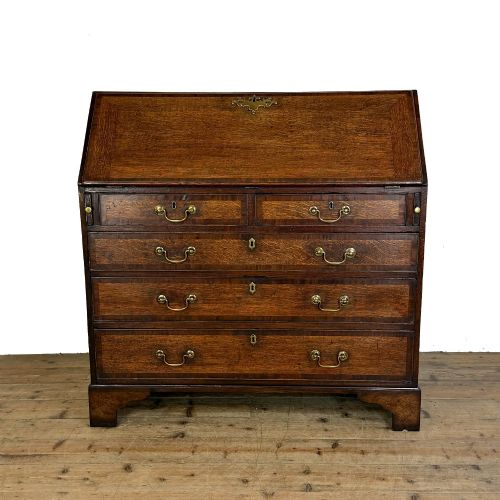

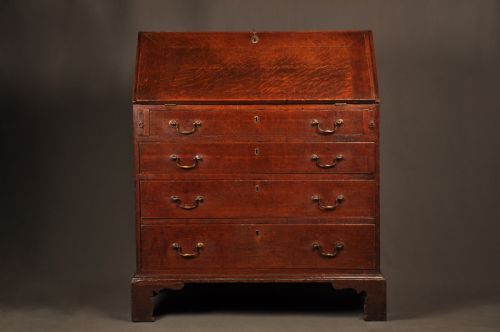

Oak Slope Front Bureau
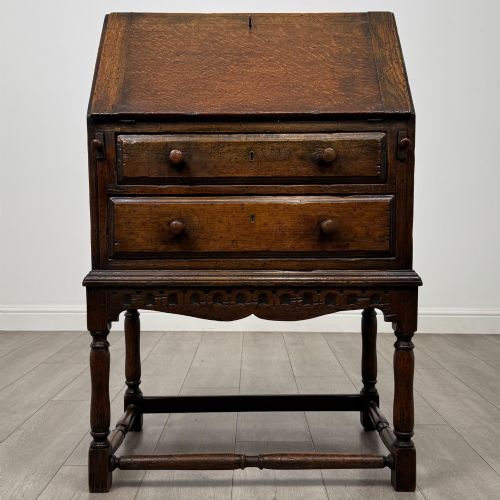
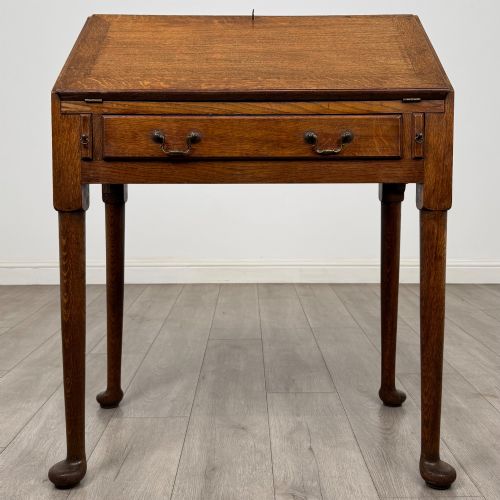
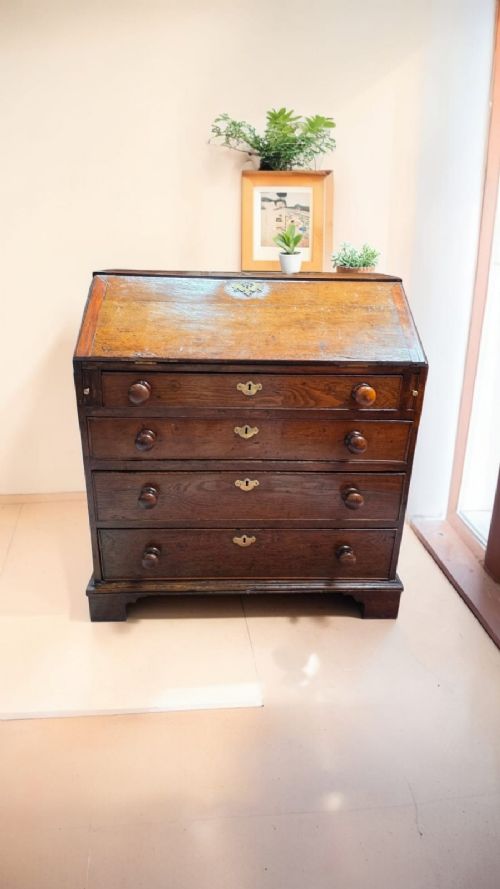
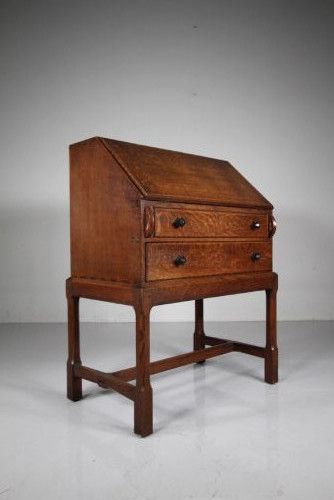
An oak slope front bureau offers a solid writing surface that folds down to hide compartments and papers.
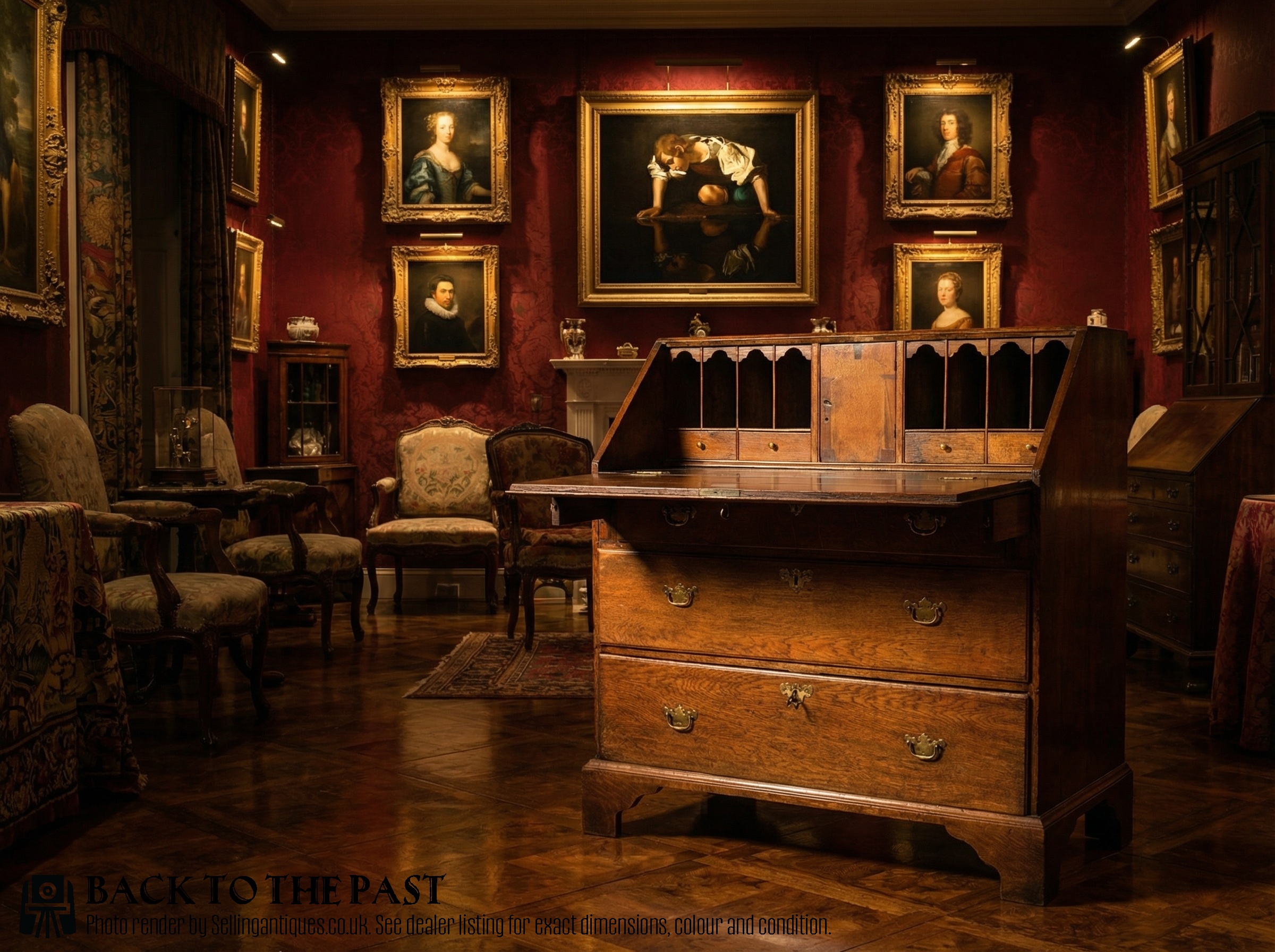
Oak Slope Front Bureau
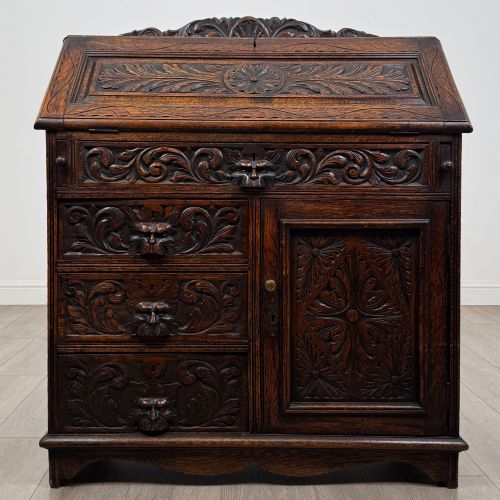
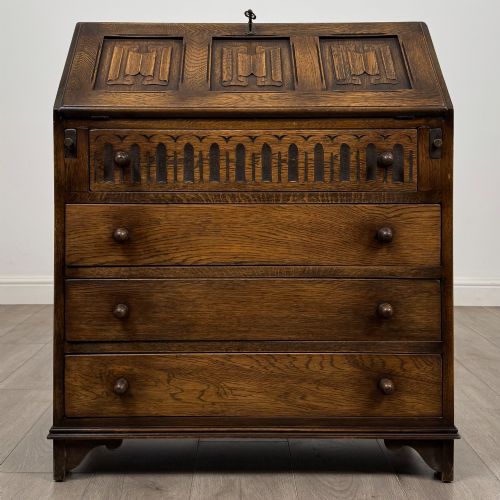
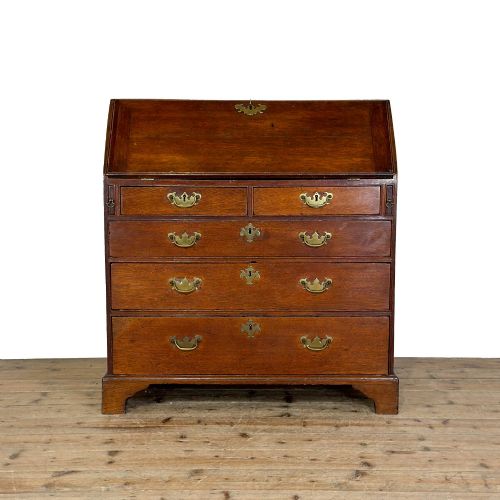
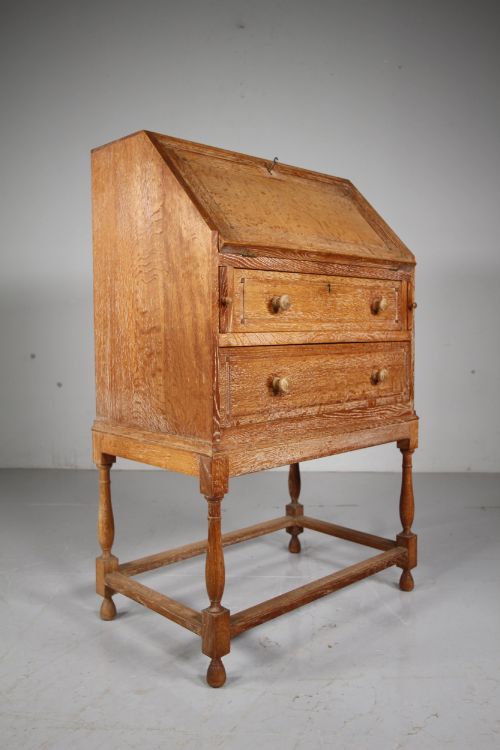
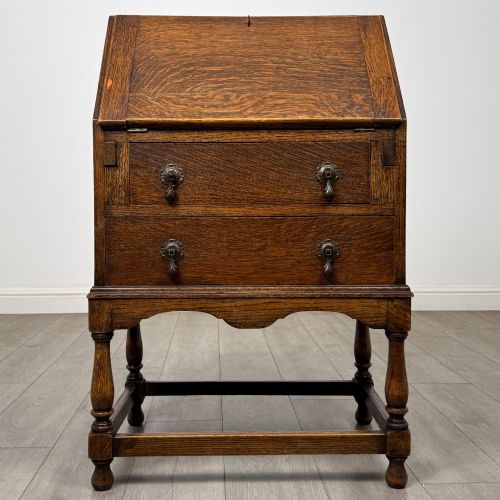
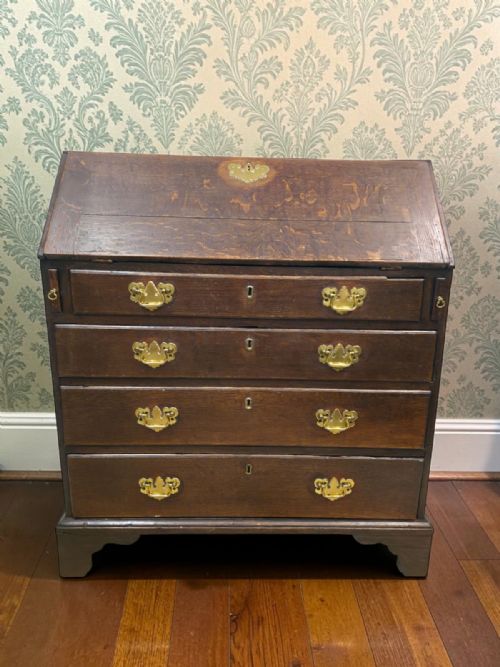
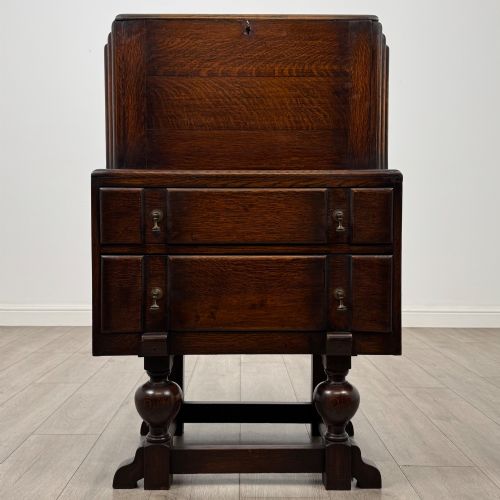
An oak slope front bureau provides a practical writing surface that conceals fitted interiors, pigeonholes and small drawers behind a hinged flap. Buyers searching this phrase will find a range of forms spanning several centuries, originating from periods such as the seventeenth, eighteenth, and nineteenth centuries, alongside Edwardian and later twentieth-century iterations.
The pieces on this page include standard freestanding desks as well as smaller table-top formats and narrow writing bureaux. Construction materials predominantly feature solid oak, sometimes accompanied by walnut, mahogany, or pollard oak veneers, set with brass and iron hardware.
Materials and construction
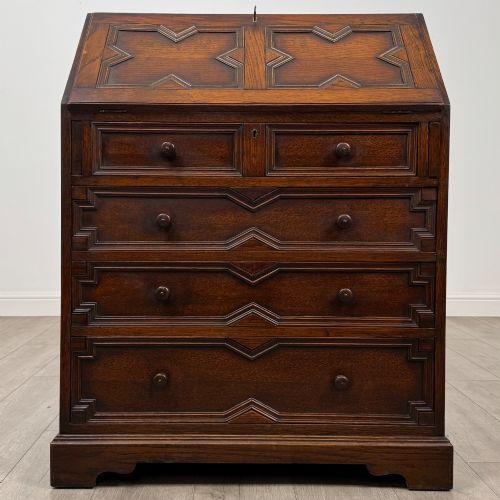
Cabinet makers constructed these pieces primarily using solid oak, often incorporating crossbanding or parquetry detailing on the writing flap and drawer fronts. Interior compartments required meticulous joinery to form stepped drawers and secret compartments within the confined space behind the slope.
Hardware such as brass handles, escutcheons, and iron hinges were fitted to secure drawers and support the fall front when lowered. Surface treatments preserved the timber grain, ranging from golden oak finishes to deeper patinas developed over centuries.
Secret drawers wait behind miniature doors, ready to guard love letters or misplaced spare keys.
Distinctions in quality
The refinement of the interior arrangement often separates standard pieces from finer examples, with stepped drawers and concealed compartments representing superior craftsmanship. The choice of timber grain, such as figured or golden oak, alongside precise crossbanding and parquetry, indicates greater skill in the workshop.
Structural integrity and the retention of original brass hardware and working locks contribute significantly to the standard of a piece. Earlier examples from the seventeenth and eighteenth centuries display distinct vernacular joinery that differs markedly from later revival styles.
Heals of London·Stanley Webb Davies
The Oak Slope Front Bureau Glossary
- Fall front
- The hinged sloping panel that pulls down to create a writing surface on a bureau. This flap conceals the interior compartments when closed.
- Stepped interior
- An arrangement of small drawers and pigeonholes built in tiers inside the bureau. This feature provides organised storage for letters and documents.
- Crossbanding
- A narrow strip of veneer applied to the borders of a drawer front or writing flap. The grain runs perpendicular to the surrounding wood for a decorative contrast.
- Parquetry
- Geometric patterns formed by small pieces of wood fitted together on a surface. This technique appears on select bureau panels.
- Vernacular
- Furniture produced by local craftsmen using regional traditions and readily available timber rather than following metropolitan fashions. These pieces often display robust, straightforward construction.
Oak Slope Front Bureau: Frequently Asked Questions
What is an oak slope front bureau?
An oak slope front bureau is a writing desk featuring a hinged angled flap that opens to reveal internal compartments and small drawers.
These pieces provide a concealed workspace that folds away to keep writing materials tidy when not in use.
How do I date an oak bureau?
Dating relies on observing construction methods, timber characteristics, and stylistic details such as brass hardware or carved ornamentation. Seventeenth-century pieces often show vernacular joinery, while Georgian and Edwardian examples reflect the proportions and decorative tastes of their respective eras.
Interior layouts and drawer construction also shift across periods, moving from solid timber linings to later veneered surfaces.
Where should I place a bureau?
A bureau fits well in a study, living room, or hallway where the depth of the piece allows the slope to fold down comfortably. Consider the clearance needed for a chair when the writing flap is open.
Positioning the desk away from direct sunlight protects the oak finish and any internal leather writing inserts.
How do I care for antique oak furniture?
Maintain the timber by dusting regularly with a dry cloth and applying natural wax polish occasionally to nourish the grain. Avoid placing the bureau near heat sources that might dry out the wood and cause splitting.
Ensure brass fittings are cleaned gently without abrasive agents to preserve their finish.