



Oak Slant Top Bureau
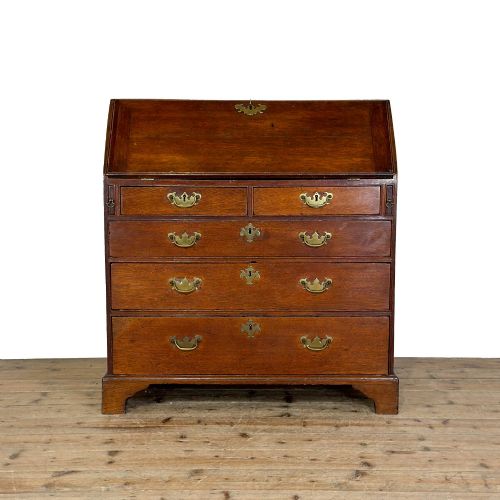
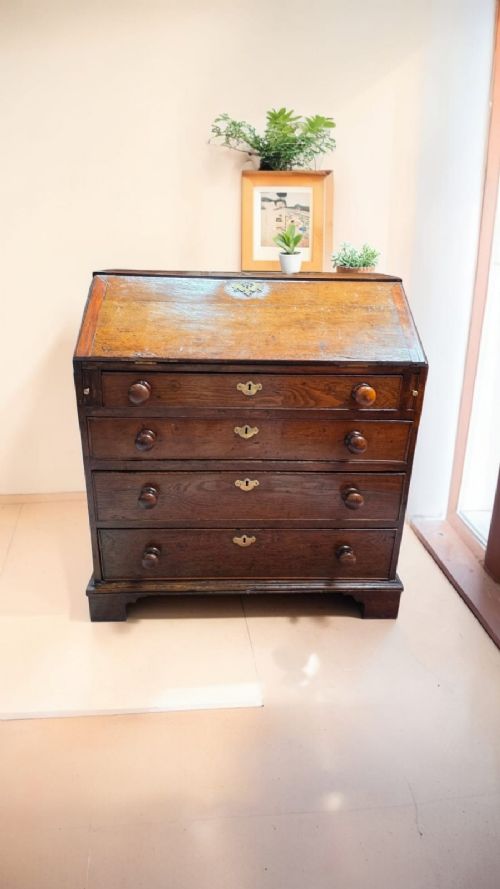
An oak slant top bureau is a working piece of furniture offering a sloping fall-front that opens to reveal fitted pigeonholes and drawers.
Oak Slant Top Bureau
An oak slant top bureau provides a dedicated writing surface that conceals correspondence and ledgers when closed. You will encounter pieces ranging from seventeenth century vernacular examples to twentieth century revival desks.
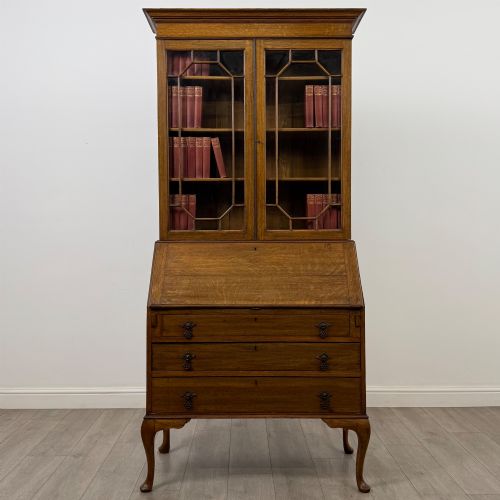
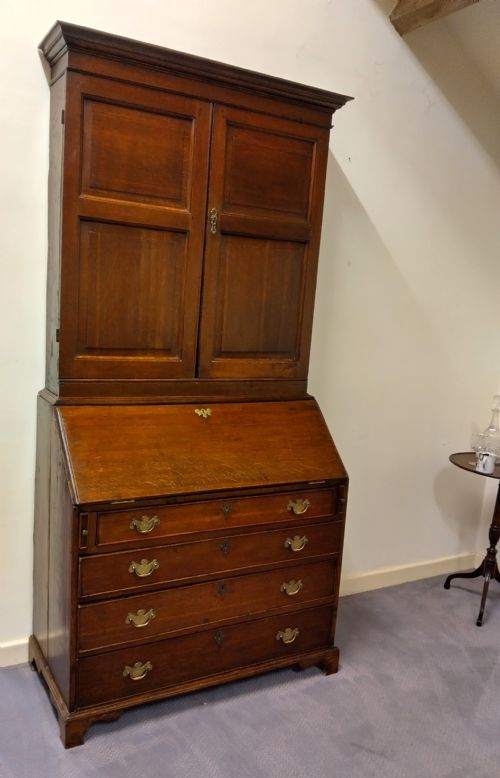
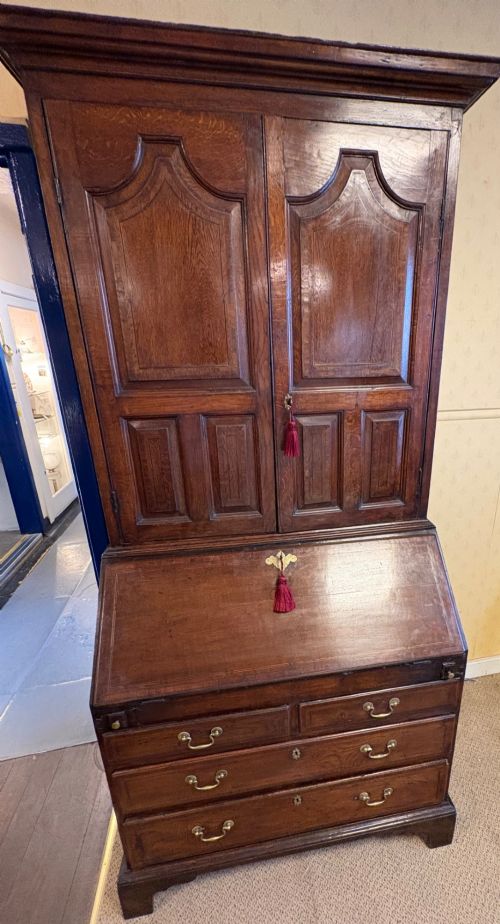
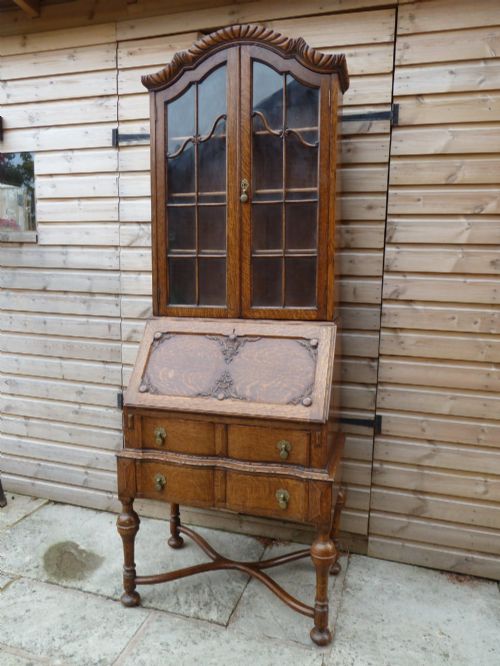
The form often includes a fitted interior with small drawers and pigeonholes hidden behind the fall-front flap. Bureau bookcases combine this writing compartment with upper shelving enclosed by glazed or solid doors.
Georgian and eighteenth century pieces appear frequently alongside later Edwardian and 1920s interpretations. Table top versions and full-height cabinets represent the diverse scales available in oak.
Materials and construction
Makers utilised solid oak alongside specialised timber cuts such as pollard oak and burr oak for decorative surfaces. Crossbanding in mahogany frequently frames drawer fronts and writing flaps on eighteenth century examples.
Brass handles, escutcheons and hinges secure the fall-fronts and drawers. Leather writing inserts occasionally line the interior flap where correspondence took place.
Listings span from the 17th century through the Georgian and Victorian eras up to 1920.
Distinguishing quality in construction
Quality reveals itself in the complexity of the interior joinery and the selection of timber figures. Stepped drawers and secret compartments within the pigeonhole section indicate higher workshop ambition.
Proportion and timber matching separate standard production from superior cabinet work. Grain continuity across the fall-front and drawer fascias demonstrates careful planning by the maker.
The Oak Slant Top Bureau Glossary
- Fall-front
- The sloping hinged panel that folds down to create a writing surface. It conceals the interior drawers when locked upright.
- Pigeonhole
- A small open compartment inside the bureau designed for sorting letters and papers. These compartments often sit above concealed secret drawers.
- Crossbanding
- A narrow strip of veneer applied to the border of a drawer or flap with the grain running perpendicular to the surrounding wood. This technique provides a neat decorative frame.
- Bureau bookcase
- A dual-purpose piece featuring a writing bureau base beneath an upper shelving cabinet. The upper section typically has glazed doors.
- Vernacular
- Furniture made by regional craftsmen following local traditions rather than metropolitan high styles. These pieces often display simpler lines and robust construction.
Oak Slant Top Bureau: Frequently Asked Questions
How do I use an oak bureau?
Lower the sloping front flap to access the writing surface and interior compartments. The flat interior provides a stable area for modern correspondence or display.
Keep the fall-front closed when not in use to protect papers and conceal the fitted interior. The internal drawers organise stationery while the main drawers hold larger items.
How do I date an oak bureau?
Examine the construction of the drawer linings and the style of the brass hardware. Eighteenth century pieces often show hand-cut dovetails and pegged frame joints.
Revival pieces from the Edwardian period or the 1920s employ machine-cut joints and different interior layouts. Secondary woods inside the drawers also help confirm the period of manufacture.
What is a bureau bookcase?
A bureau bookcase combines a slant top writing desk with an upper shelving unit enclosed by doors. This tall form maximises vertical storage space in a room.
The upper cabinet traditionally held books while the lower bureau handled writing tasks. Glazed doors protect the contents from dust while displaying them clearly.
Where should I place a bureau?
Position your bureau against a sturdy wall with enough clearance in front to lower the fall-front flap fully. Ensure the writing surface receives adequate natural or task lighting.
Avoid placing the piece directly next to heat sources that could dry out the oak timber. Allow sufficient room to pull out a chair or stool comfortably.