


Oak Silver Chest
When you search for an oak silver chest, you enter a utilitarian world of heavy storage trunks built to protect family plate.
Oak Silver Chest
An oak silver chest is a sturdy storage trunk specifically built to house and transport valuable domestic silverware safely across country houses and estates. The pieces appearing most frequently across these records are heavy, iron-bound or metal-strapped trunks dating from the Victorian and nineteenth-century periods.
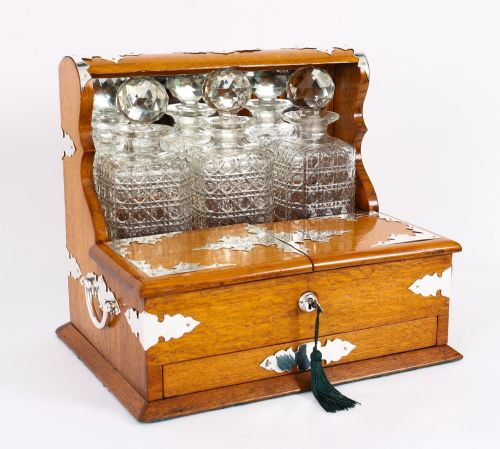
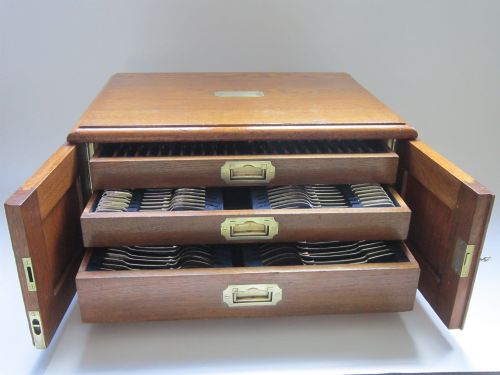
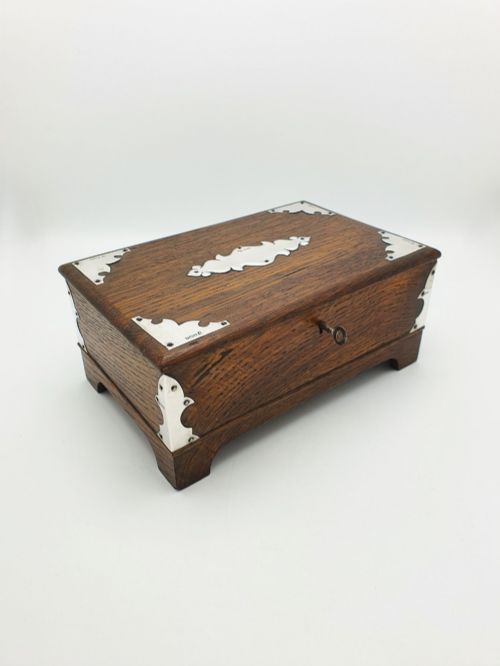
Beyond traditional travel trunks, the term also encompasses fitted cutlery canteens, tantalus sets and cigar boxes sharing the same robust timber construction. These functional containers range from modest campaign boxes to large country house storage receptacles bearing the original owner's brass nameplate.
Georgian and Edwardian examples likewise surface, demonstrating continuity in heavy timber utility and secure metal reinforcing over successive generations. Buyers encounter pieces equipped with recessed drop handles and internal baize lining designed to prevent tarnishing.
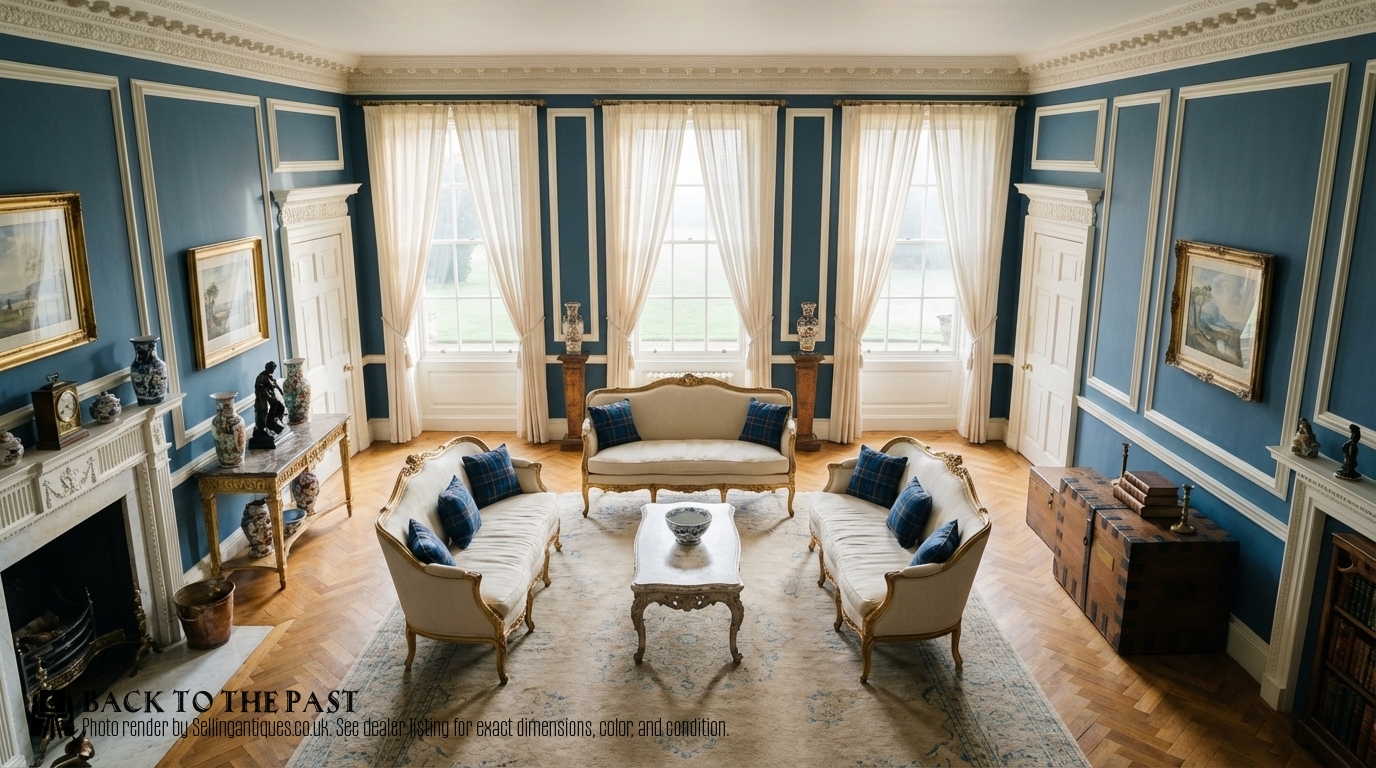
How they were made
Makers constructed these storage pieces from dense, durable oak, framing them with heavy iron, steel or brass strapping to withstand arduous travel and secure the contents. Corner brackets and sturdy banded reinforcement protected the heavy wooden joints from impact during transit by ship or carriage.
Internal layouts frequently featured bespoke fitted compartments, lift-out trays and velvet or fabric linings tailored for specific flatware patterns or glassware. Robust brass locks, drop handles and engraved nameplates completed the construction of these substantial receptacles.
Oak Silver Chest Retail Price Guide 2026
Typical asking prices for oak silver chest among the pieces listed under this phrase on Sellingantiques today, from the lower quarter to the upper quarter. They describe what is for sale here now, not the wider market.
Listings feature oak silver chests spanning the Georgian, Victorian and Edwardian eras, incorporating iron, brass and steel banding.
What varies in quality
Quality in these storage chests rests upon the weight and density of the oak timber, the calibre of the metal banding, and the sophistication of the internal fittings. Superior examples display hand-dovetailed joints, heavy forged iron straps, and original working locks signed by notable retailers or silversmiths.
The presence of untouched provenance, such as engraved brass name plaques detailing aristocratic or military owners, elevates the historical interest of a piece. Finer items retain their original fitted interior trays and lining materials in sound condition.
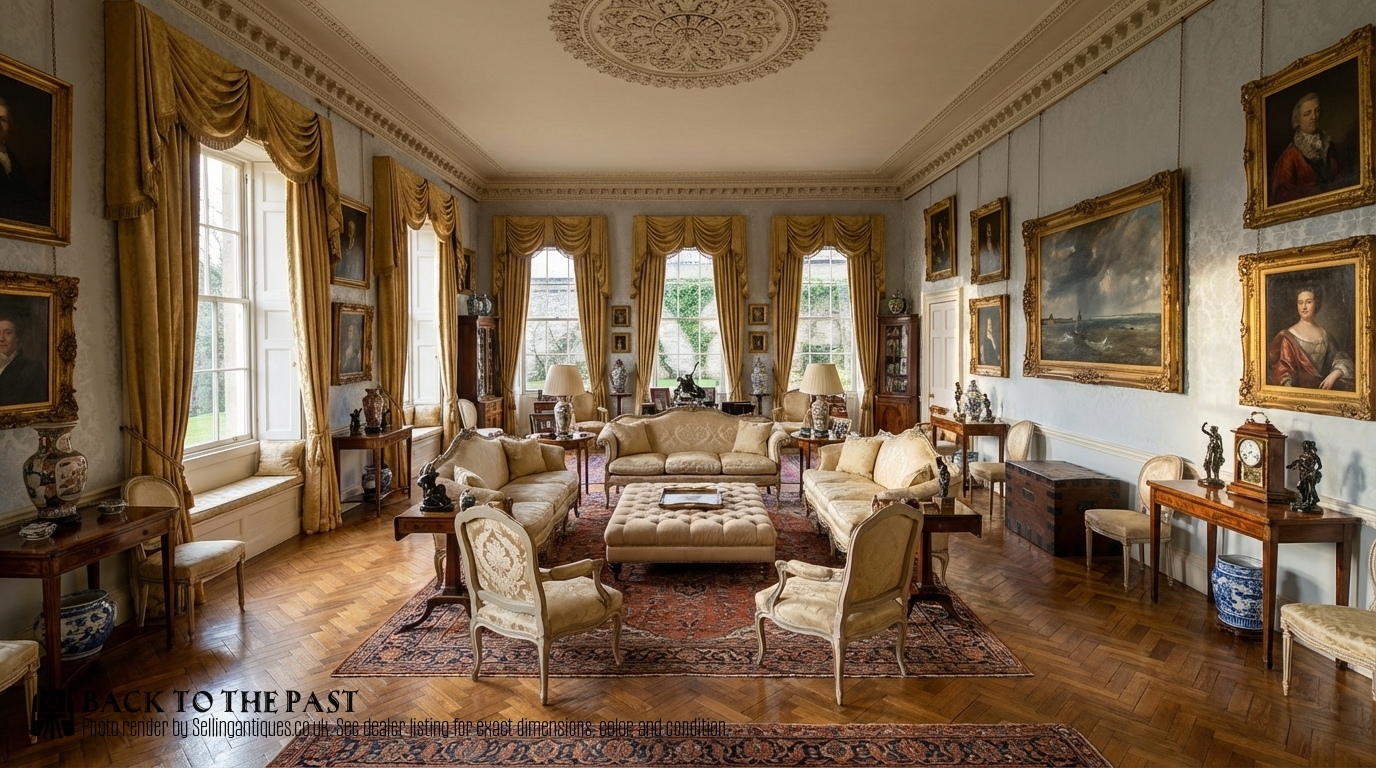
Elkington and Company·Walker and Hall·Mappin and Webb·Carrington and Co
The Oak Silver Chest Glossary
- Silver chest
- A heavy timber storage trunk reinforced with metal banding, designed explicitly for safeguarding household plate. These boxes often include reinforced carrying handles for travel.
- Campaign chest
- A portable storage trunk built in sections or fitted for military use in the field. These pieces prioritise structural durability and secure transport.
- Tantalus
- A locked wooden drinks cabinet holding decanters visible yet physically inaccessible without a key. This form frequently pairs oak housing with glass and metal hardware.
- Canteen
- A fitted box or cabinet containing a complete set of matching cutlery or flatware. These interiors are meticulously organised with slots and tiers.
- Strapwork
- Metal bands or plates fixed across the exterior of a trunk to reinforce corners and joints. This iron or brass reinforcement is a defining feature of heavy silver storage.
- Compendium
- A multi-purpose box combining games equipment with storage for drinks or smoking accessories. These fitted pieces reflect Victorian and Edwardian leisure habits.
Oak Silver Chest: Frequently Asked Questions
What were oak silver chests originally used for?
Wealthy households utilised these heavy oak trunks to store, lock and transport valuable sterling silver flatware and holloware securely. They served as strongboxes during transit between town mansions and country estates.
Servants also used them within the home to keep silver plate polished and protected from tarnishing atmospheric conditions when not in active use on the dining table.
How do I identify a Victorian silver chest?
Victorian examples typically feature dense oak construction heavily reinforced with iron or steel straps, heavy cast iron corner brackets, and robust drop handles. Many bear the marks of nineteenth-century silversmith retailers or original owner brass nameplates.
Internal configurations often reveal fitted wooden lift-out trays lined with baize or velvet designed to separate individual flatware pieces.
Can I use an antique silver chest as a coffee table?
The flat top, substantial proportions and robust timber construction make these chests suitable for alternative domestic placement such as a coffee table or blanket box. Their industrial metal strapping and rich oak patination complement various interior styles.
Ensure the surface timber is adequately protected from moisture rings and heavy daily wear if repurposed for living room furniture.
What is the difference between a silver chest and a campaign chest?
A silver chest prioritises secure, heavy-duty storage for domestic plate with thick iron banding and robust lock mechanisms. A campaign chest is specifically engineered for military officers on the move, frequently built in modular sections for ease of packing.
Both utilise durable oak and brass hardware, but campaign furniture emphasises portability over stationary heavy-plate security.