



Oak Silver Caddy
An oak silver caddy brings together sturdy timber and bright metal mounts, offering a practical container for biscuits, tea, or decanters.
Oak Silver Caddy
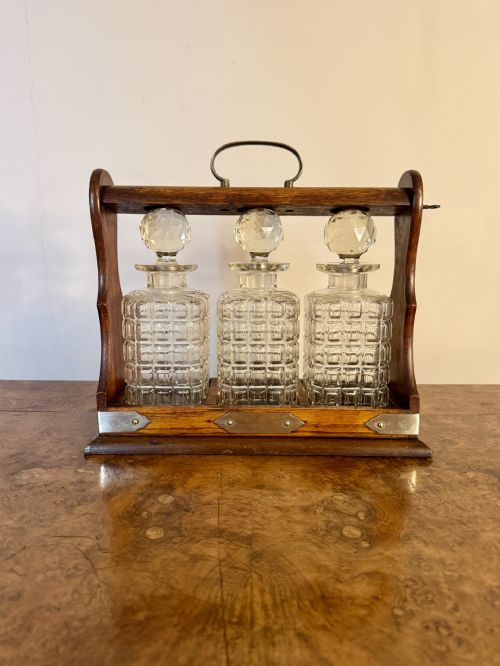
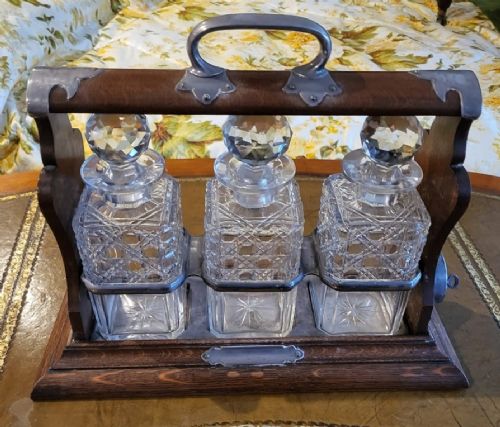
When you search for an oak silver caddy, you are looking at nineteenth and early twentieth-century containers built from solid oak and finished with silver plate or sterling silver mounts. The selection ranges from Victorian tea caddies and double compartment tea caddies to drum form biscuit boxes, humidor boxes, and multiple bottle tantalus decanters.
The version you are most likely to meet on this page is a Victorian or Edwardian tea caddy or biscuit barrel, often featuring hinged lids, butterfly openings, or cut glass inserts. These pieces originate from periods spanning the 1880s through to the 1930s, reflecting domestic storage habits of the era.
Makers such as John Grinsell and Sons and Henry Bourne produced notable examples, sometimes incorporating engraved plaques, registration diamonds, or specific institutional connections like Cambridge University. Forms vary from simple rectangular double compartment boxes to elaborate revolving or locking barware sets.
Materials and construction
The primary structure relies on oak, a dense and durable timber selected for its prominent grain and resilience. This wood body is joined to metal elements using traditional carpentry and hardware methods.
Mounts, handles, hinges, and decorative shields consist of silver plate or sterling silver, often combined with cut glass or brass details. Silversmiths applied these metal fittings to reinforce corners, secure lids, and provide decorative contrast against the dark timber.
Oak Silver Caddy Retail Price Guide 2026
Typical asking prices for oak silver caddy among the pieces listed under this phrase on Sellingantiques today, from the lower quarter to the upper quarter. They describe what is for sale here now, not the wider market.
Listings in this category span the Victorian, Edwardian, and Art Deco periods, featuring materials such as oak, silver plate, sterling silver, cut glass, and brass.
Distinctions in craftsmanship
Quality rests in the precision of the joinery and the weight of the metal mounts applied to the oak body. Finer pieces demonstrate tight corner joints, well-fitted lids that close flush, and substantial silver plating or solid sterling silver elements rather than thin washes of metal.
The sophistication of the mechanism also separates standard items from superior works, such as smooth butterfly opening hinges, functional locks with original keys, and heavy cut glass or crystal inserts that fit securely within their wooden housings.
John Grinsell and Sons·Henry Bourne
The Oak Silver Caddy Glossary
- Tantalus
- A locking wooden frame that holds decanters securely without a key, originally designed to prevent unauthorized access to spirits by servants. The design displays the bottles while keeping the stoppers locked in place.
- Biscuit barrel
- A lidded container used for storing dry biscuits on the dining table or sideboard. These often take a cylindrical drum form with a ceramic or glass liner enclosed by an oak body and silver plated mounts.
- Butterfly opening
- A lid construction split down the centre that opens outward in two symmetrical halves when a catch is released. This mechanism is frequently found on Victorian double tea caddies.
- Registration diamond
- A British statutory mark used between 1842 and 1883 that indicates the exact date a design was registered for copyright protection. It appears as a diamond-shaped stamp with coded letters and numbers.
- Humidor
- A specialised box designed to store tobacco products while maintaining internal humidity. In these listings, they combine an oak exterior with metal or silver fittings suited for desk use.
Oak Silver Caddy: Frequently Asked Questions
What is an oak silver caddy used for?
These boxes served primarily as secure storage for dry goods, tea leaves, biscuits, or bottled spirits in Victorian and Edwardian households. They sat upon sideboards or dining tables as both functional containers and decorative household items.
Over time, their domestic roles shifted as packaging changed, but they remained popular for holding dry foods or beverages. Today, collectors utilise them for display or as practical storage boxes in living spaces.
How do I date an oak and silver caddy?
Dating relies on examining the style of the mounts, the construction techniques of the oak body, and any stamped registration marks or hallmarks present on the silver parts. Pieces from the 1880s often display elaborate Victorian decorative motifs, while later Edwardian examples lean toward simpler lines.
Registration diamonds stamped on nineteenth-century pieces can pinpoint the exact year and month a design was registered. Comparing the hardware style and wood finish against known period examples helps narrow down the decade of manufacture.
Are the silver parts solid or plated?
Most pieces utilise silver plate over a base metal rather than solid sterling silver, though occasional pieces feature full sterling mounts. Silver plating became widespread during the Victorian era as a cost-effective way to achieve a bright finish.
Maker marks and hallmarks stamped onto the metal indicate whether the fittings are silver plated or solid sterling silver. Examining these stamps reveals the specific standard of metal used by the maker.
How should I clean the oak and silver?
Maintenance requires gentle dusting of the oak wood with a dry cloth and avoiding harsh chemical polishes that can strip the finish. Natural beeswax helps preserve the condition of the timber over time.
Silver mounts benefit from careful cleaning with a specialised silver cloth to remove tarnish without touching the surrounding wood. Keeping the pieces away from direct sunlight and damp environments prevents the oak from warping.