



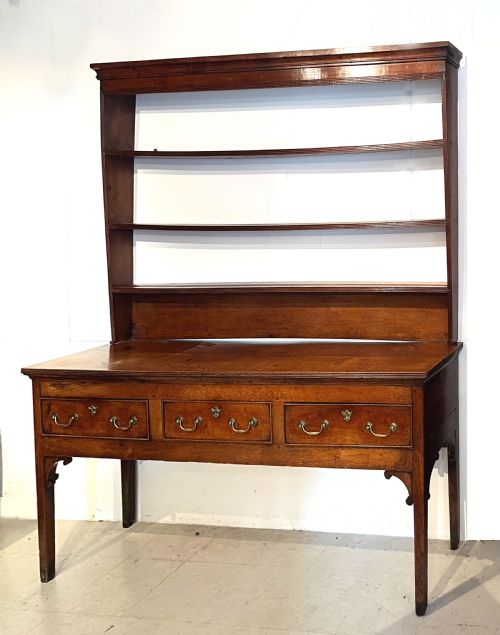
Oak Sideboard with Hutch
An oak sideboard with hutch brings sturdy timber and practical display shelving together, offering substantial storage for everyday dining rooms and kitchens.
Oak Sideboard with Hutch
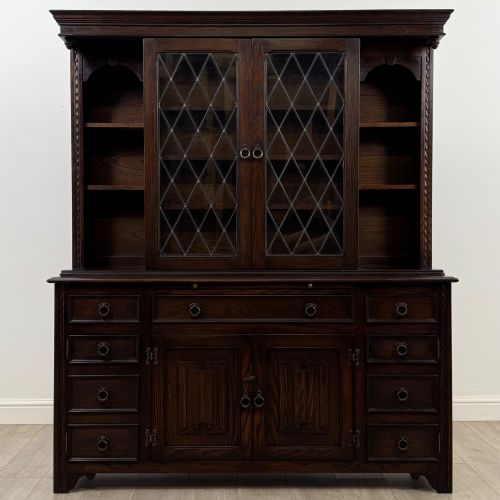
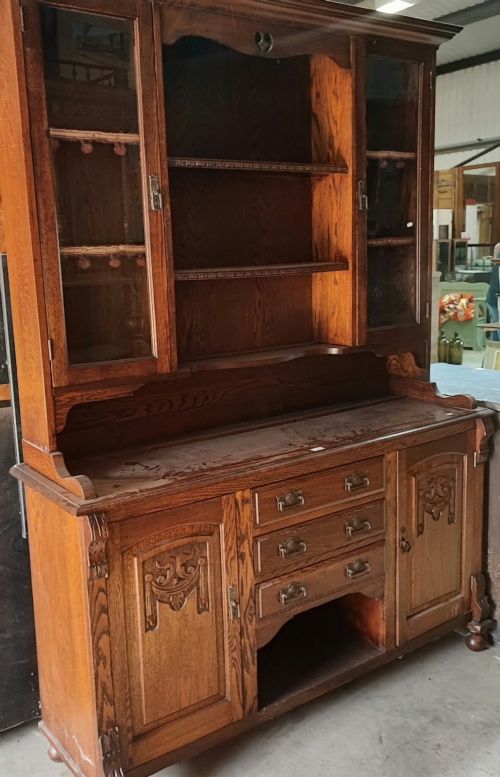
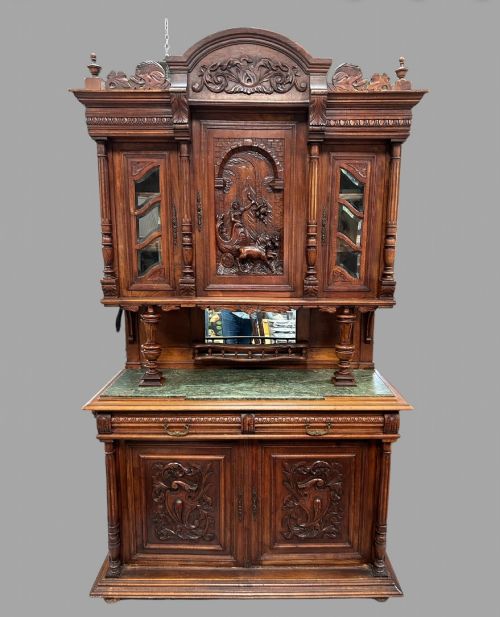
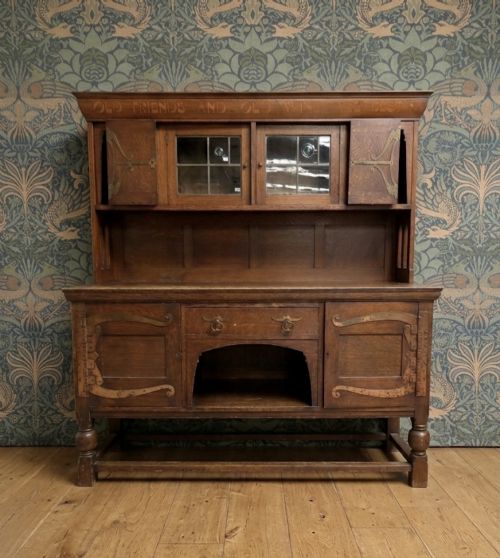
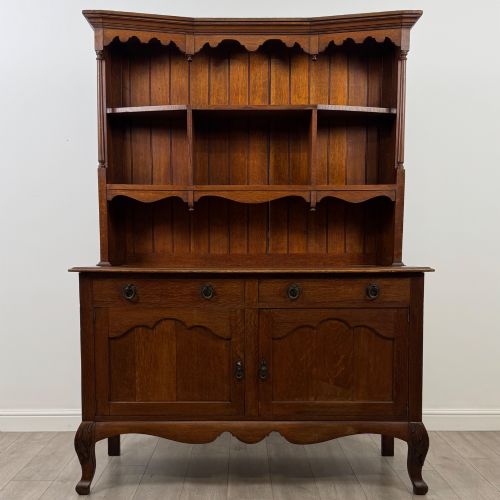
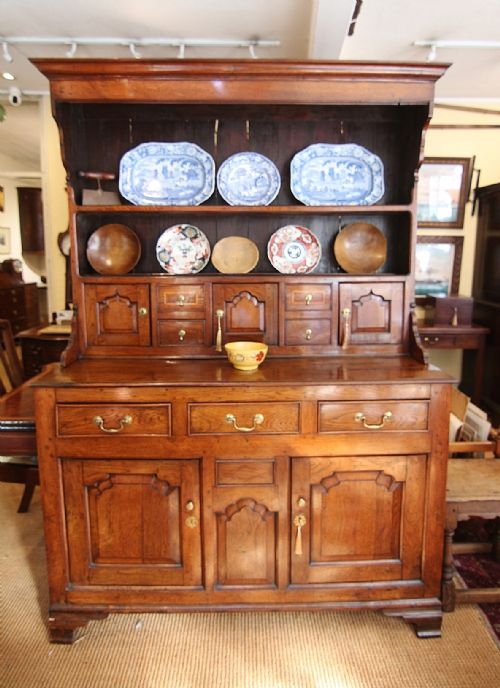
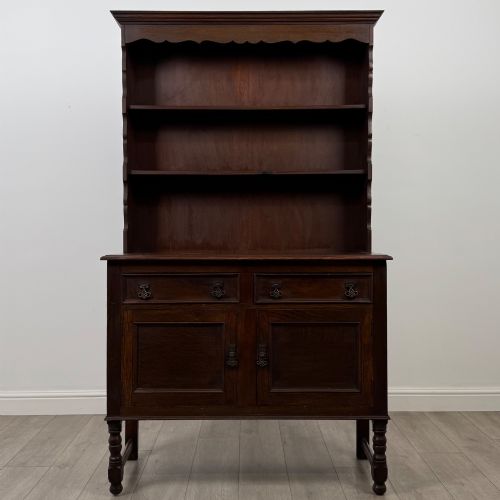
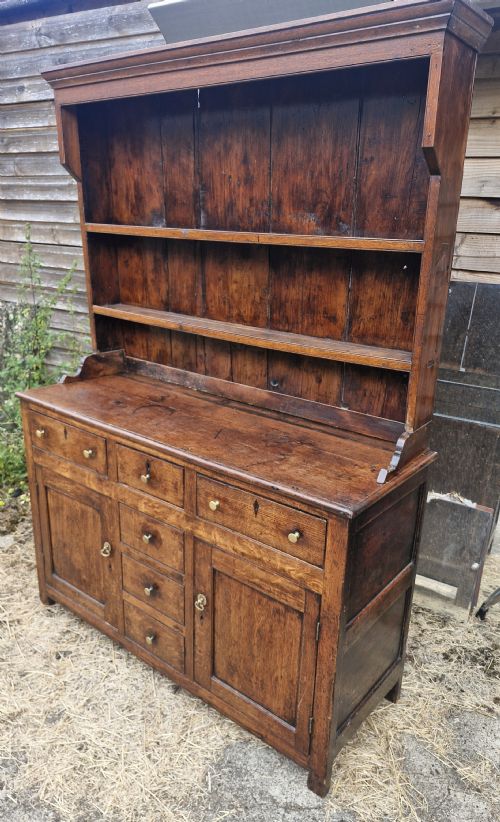
An oak sideboard with hutch combines a lower base unit of drawers and cupboards with an upper plate rack or cabinet, creating a functional dual-purpose furniture piece. These items trace their lineage through centuries of domestic life, appearing across Georgian, Victorian, and Edwardian periods.
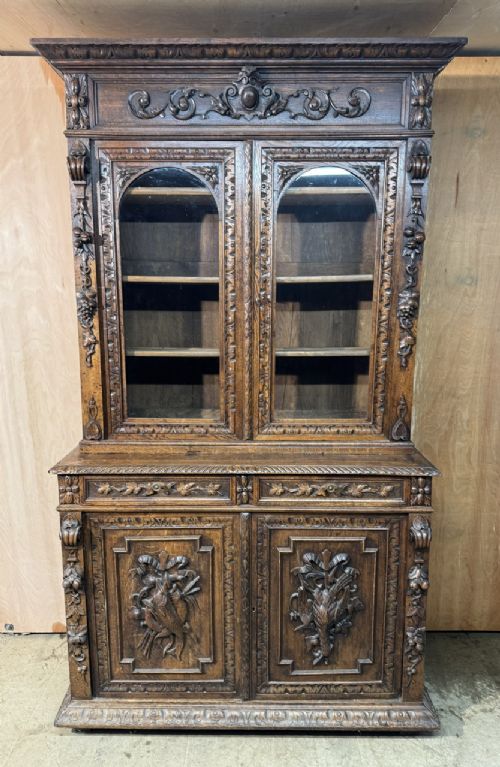
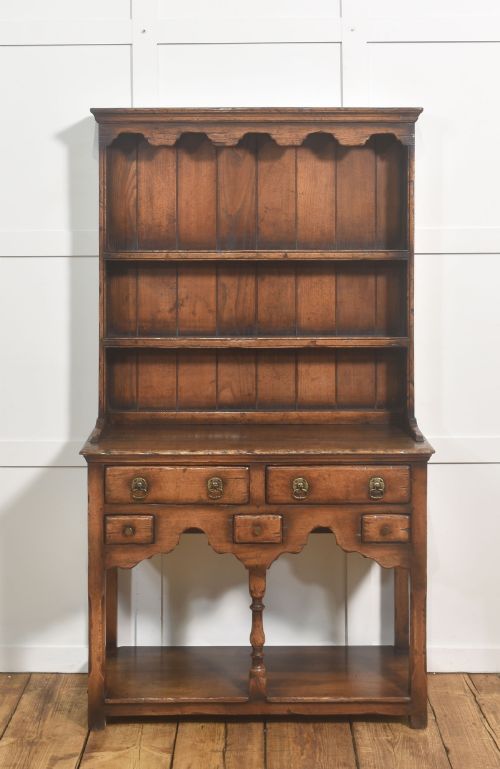
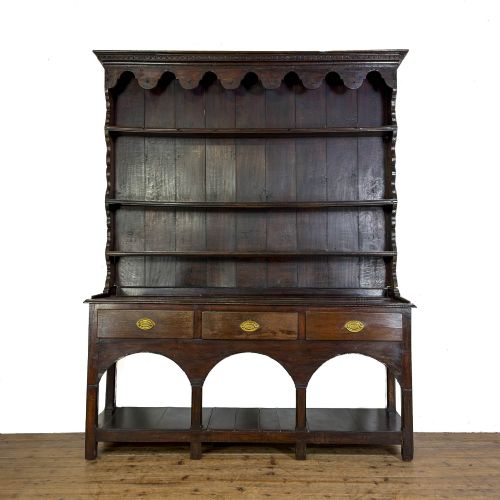
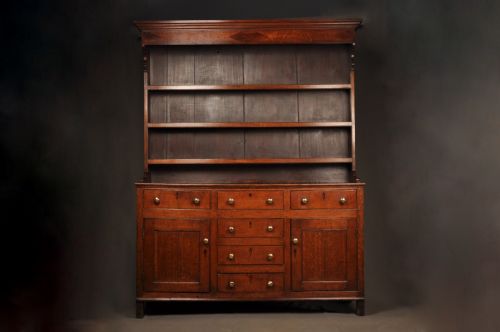
Makers utilised local timbers and regional building methods, resulting in pieces with potboard bases, breakfront drawers, or enclosed cupboards. Buyers encounter everything from austere 18th-century joined construction to decorative late-period interpretations with geometric carvings.
Materials and construction methods
Cabinetmakers built these pieces primarily using solid oak, frequently supplemented by secondary woods like pine or fruitwood, and occasionally accented with mahogany or walnut inlays. Joinery relied on traditional pegged mortise and tenon joints to ensure the heavy frames could support loaded plate racks.
Hardware typically consists of brass drop handles, iron hinges, and occasionally leaded or plain glass panes for upper cabinet doors. Surfaces show the marks of hand planning and shaping, with carved geometric patterns or panelled doors adding depth to the timber.
Materials extend beyond standard oak to include walnut, mahogany, fruitwood, and pine across various regional styles.
Determining quality and character
The standard of a piece rests on the integration between the lower sideboard and the upper hutch, where superior examples display unified timber selection and proportional balance. Earlier items often show the telltale signs of joined construction by hand, whereas later revival pieces rely on more standardised factory methods.
Surface patination dictates much of the visual appeal, separating dry, stripped timber from pieces retaining deep, polished wax finishes built up over generations. The presence of original brass hardware, uncompromised potboards, and crisp hand-carved details elevate certain examples above utility-grade furniture.
Ambrose Heal for Heal & Son·Shapland and Petter
The Oak Sideboard with Hutch Glossary
- Potboard
- An open slatted lower shelf beneath the base cupboards used historically for storing pots and pans. This feature is particularly prized on Georgian and earlier country pieces.
- Plate rack
- The upper shelving section mounted to the back of the sideboard, designed to display ceramic plates upright. It frequently incorporates small hooks or grooves.
- Welsh dresser
- A traditional two-part form combining a base of drawers and cupboards with an upper plate rack. The term is widely applied to British regional dressers regardless of exact county origin.
- Joined oak
- Furniture constructed using mortise and tenon joints secured by wooden pegs before the widespread adoption of metal screws. This technique indicates earlier cabinetmaking traditions.
- Breakfront
- A cabinet design where the central section projects forward from the flanking outer sections. This architectural arrangement adds depth and visual interest to the sideboard base.
Oak Sideboard with Hutch: Frequently Asked Questions
How do I date an antique oak dresser?
Dating relies on observing construction methods, timber choice, and hardware styles across the piece. Earlier examples utilise hand-pegged joinery and native oak boards, while later Victorian and Edwardian iterations show machine-sawn timber and different backing materials.
Secondary woods and drawer construction also offer clues, as hand-cut dovetails generally precede mass-produced joints. Style revivals from the early twentieth century often mimic earlier periods, requiring careful inspection of the wood's internal ageing.
Are the upper hutch and lower base always original to each other?
Many older dressers are two-part pieces where the top and bottom were constructed together, but marrying unattached racks to older bases occurred frequently over the centuries. Examining the timber grain, colour, and fixing points helps determine if the two sections share a common origin.
Evidence of earlier shelf brackets or mismatched wear patterns can indicate a later pairing. However, many married pieces still represent historically functional combinations assembled long ago.
How should I care for antique oak furniture?
Maintaining antique oak requires keeping the timber away from direct heat sources and extreme humidity fluctuations to prevent splitting. Regular application of a traditional beeswax feed helps nourish the grain and preserve the surface patina.
Avoiding modern silicone polishes ensures the wood can breathe and develop further depth over time. Gentle dusting with a dry lint-free cloth remains the best daily maintenance for carved and panelled surfaces.
What is the difference between a Welsh dresser and a sideboard?
A traditional Welsh dresser incorporates an integrated upper plate rack or hutch for displaying ceramics above the lower storage base. A standard sideboard consists solely of the lower cabinet and drawer unit without upper shelving.
Both forms serve similar storage functions in dining rooms and kitchens, but the hutch version provides prominent vertical display space. Regional British variants often blur these lines depending on whether the upper section was built as an open rack or enclosed cabinet.