

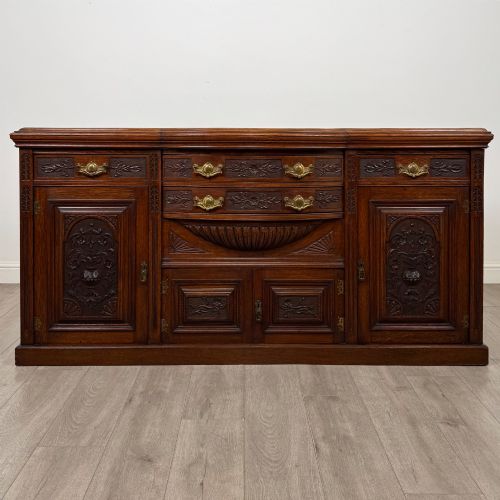
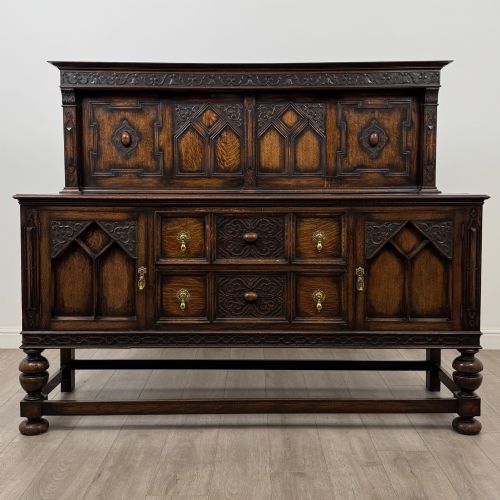
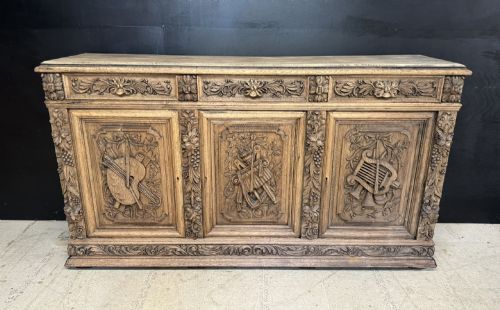
Oak Sideboard with Cupboard
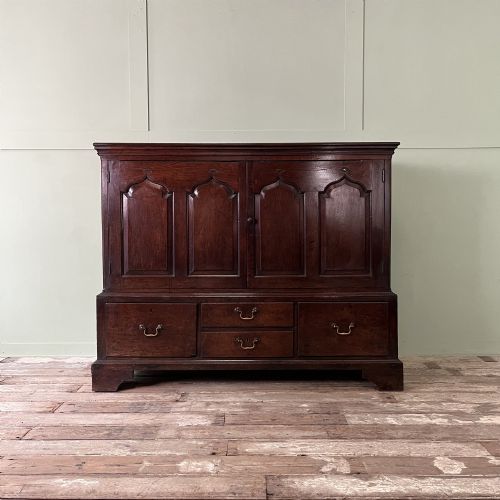
An oak sideboard with cupboard provides robust storage and enduring presence, uniting utility with the rich grain of native timber.
Materials and Construction
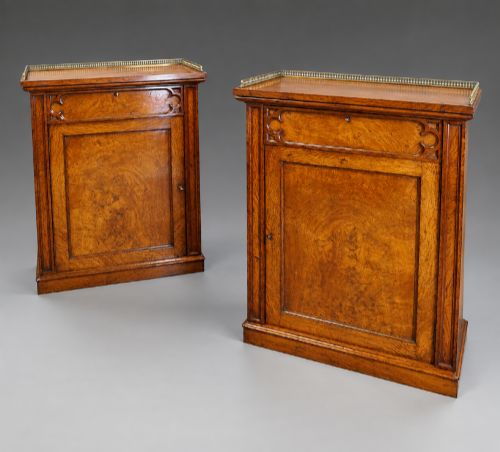
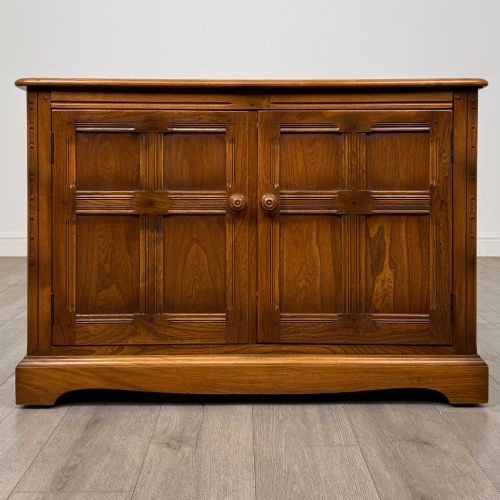
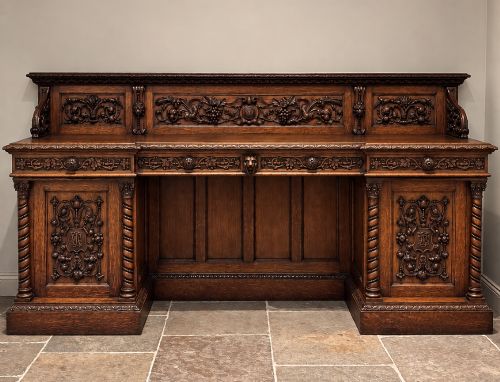
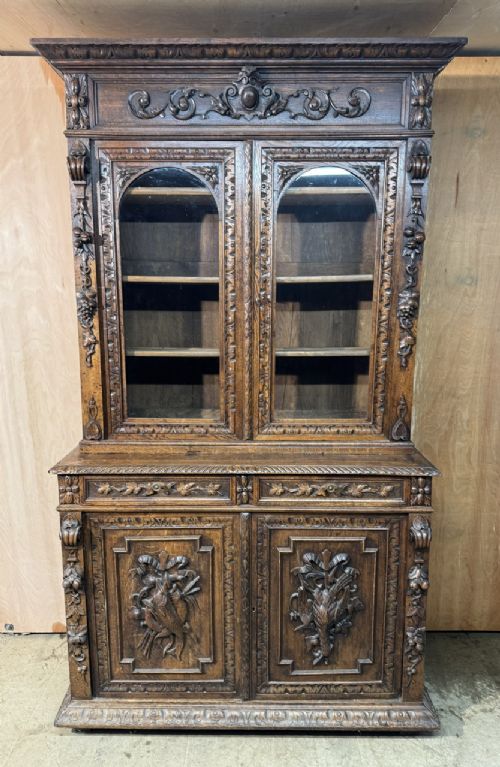
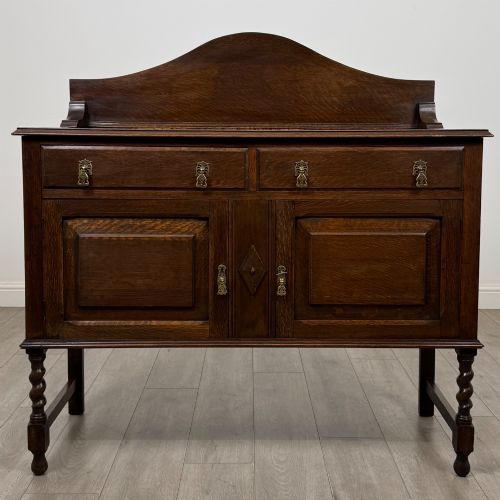
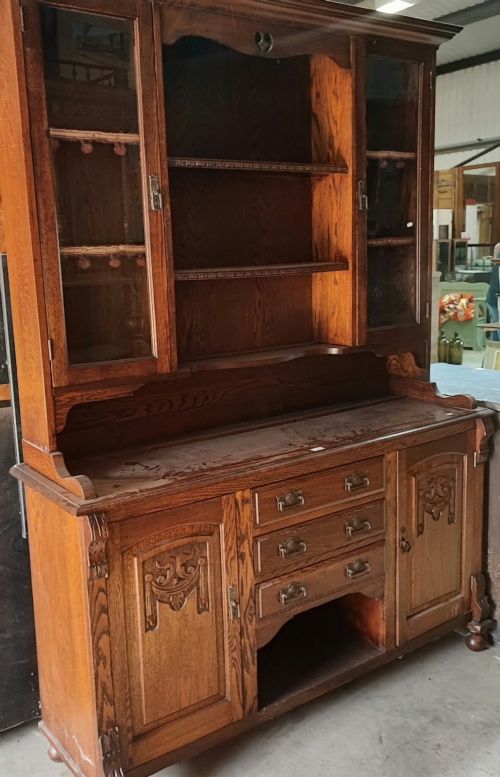
Cabinet-makers relied primarily on solid oak, frequently augmented with secondary timbers such as pine, elm, and mahogany for internal linings or drawer construction. Joinery techniques combined pegged mortise and tenon joints with hand-cut dovetails to ensure structural rigidity in heavily loaded cupboards.
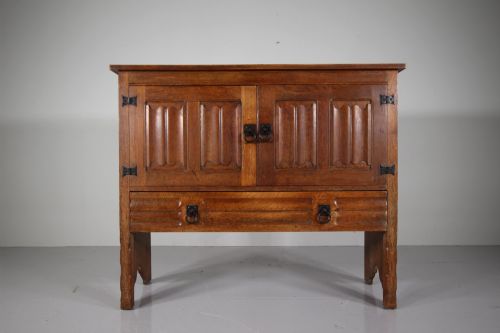
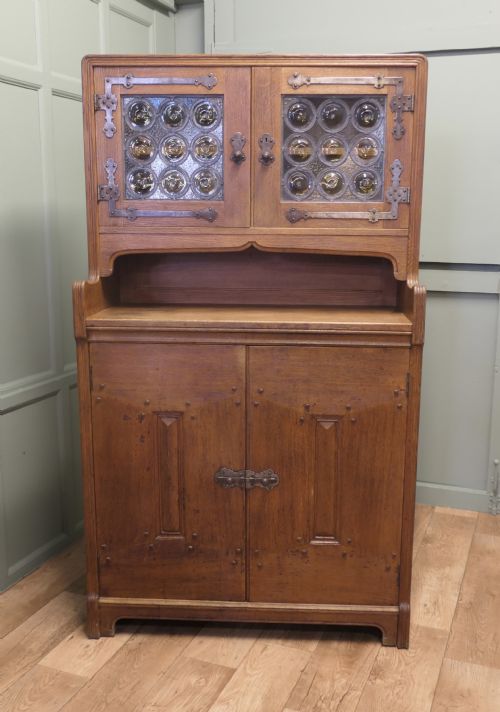
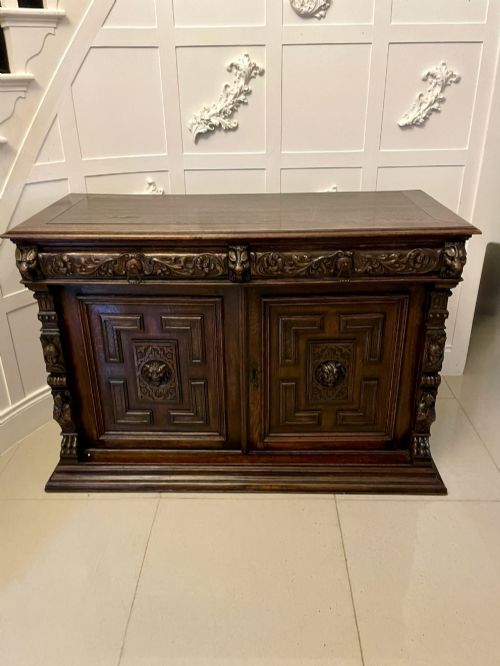
Surface embellishments included geometric mouldings, chip carving, and relief work executed directly into the timber, occasionally enhanced with brass hardware or iron hinges. Certain pieces integrate glass panels, leaded lights, or decorative inlays using fruitwood and snakewood alongside bone details.
Distinctions in Execution
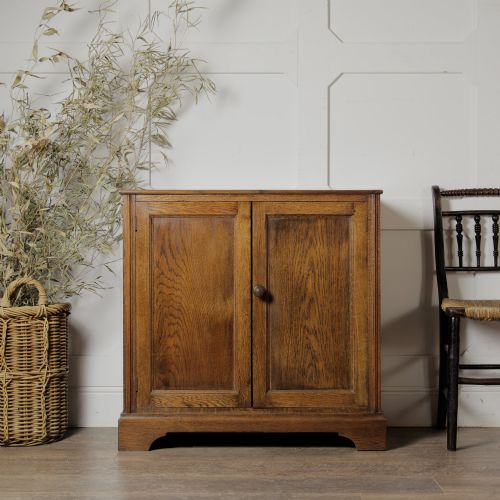
Quality rests upon the selection of timber figures, the crispness of hand-carved detailing, and the retention of original surface patination developed through decades of domestic use. Superior examples display harmonious proportions where the grain patterns of the oak have been deliberately aligned across drawer fronts and cupboard doors.
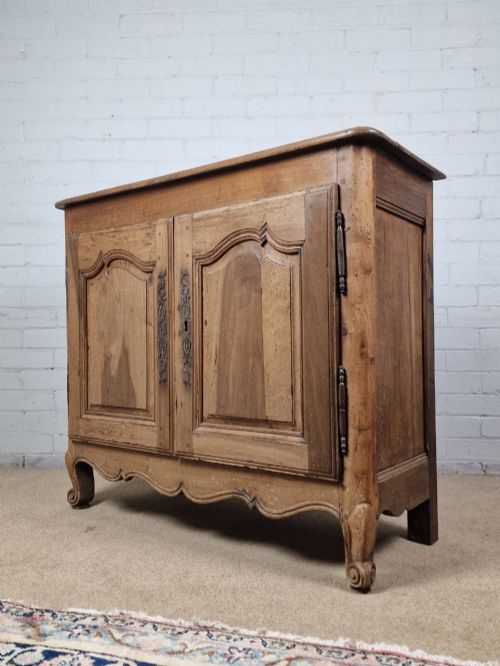
The integrity of the construction, visible in the tightness of the joints and the survival of original brass or iron fittings, separates standard utilitarian pieces from exceptional vernacular works. Subtle regional variations in the moulded cornices and stile configurations further distinguish bespoke local commissions from mass-produced provincial outputs.
Certain early cupboards carry the faint ghost marks of long-vanished pewter spoons once slotted into the plate racks for daily family meals.
The Oak Sideboard with Cupboard Glossary
- Court cupboard
- A heavy enclosed storage piece featuring upper and lower sections, typically supported by turned columns or posts. These substantial items served both display and secure storage functions in early households.
- Pot board
- An open slatted lower shelf integrated into the base of a dresser or sideboard, traditionally utilised for storing heavy pots and culinary utensils. This feature remains characteristic of Welsh and English country vernacular furniture.
- Breakfront
- A cabinetry configuration where the central section projects forward from the flanking cupboards or drawers. This design creates visual depth and rhythmic variation across the front elevation.
- Patina
- The deep surface sheen and mellow colour acquired by timber over generations of handling, polishing, and natural oxidation. Untouched surfaces retain this historical evidence without modern chemical stripping.
- Stile
- The vertical upright member forming the outer edge of a cabinet door frame or panelled side. Traditional joinery fixes these members using tightly fitted pegged joints.
Oak Sideboard with Cupboard: Frequently Asked Questions
How do I date an oak cupboard?
Dating relies upon examining the construction methods, tool marks left by hand planes, and the configuration of the drawer joints. Early pieces display hand-split boards and pegged joinery rather than machine-cut screws.
Stylistic indicators such as geometric mouldings or carved panels also align pieces to specific periods like the 17th or 18th Century, though regional makers often retained traditional styles long after metropolitan fashions shifted.
What is a court cupboard?
A court cupboard is an enclosed storage piece featuring recessed upper cabinets supported by heavy columns above a larger base compartment. Historically utilised for displaying plate and storing dry goods, they represent some of the most substantial vernacular case furniture.
In domestic settings, these pieces served as focal points in great halls or dining parlours before evolving into the standard sideboard configurations seen in later centuries.
How do I care for antique oak?
Maintaining antique oak involves keeping the timber away from direct heat sources and rapid humidity fluctuations that cause wood to split. Regular dusting with a soft, dry cloth preserves the finish without requiring heavy chemical polishes.
Applying a traditional beeswax sparingly helps nourish the grain and protects the historic surface patination accumulated over centuries of domestic use.
What is a pot board base?
A pot board base refers to the open slatted lower platform situated beneath the main counter of a country dresser. This practical staging area allowed households to store heavy earthenware pots, bowls, and culinary equipment off damp stone floors.
Today, this structural element defines the rustic aesthetic of English and Welsh vernacular furniture, separating utility pieces from formal urban cabinetry.