




Oak Religious Wall Carving
These oak religious wall carvings are devotional panels and sculptures created to bring sacred narrative into domestic and ecclesiastical spaces.
Oak Religious Wall Carving
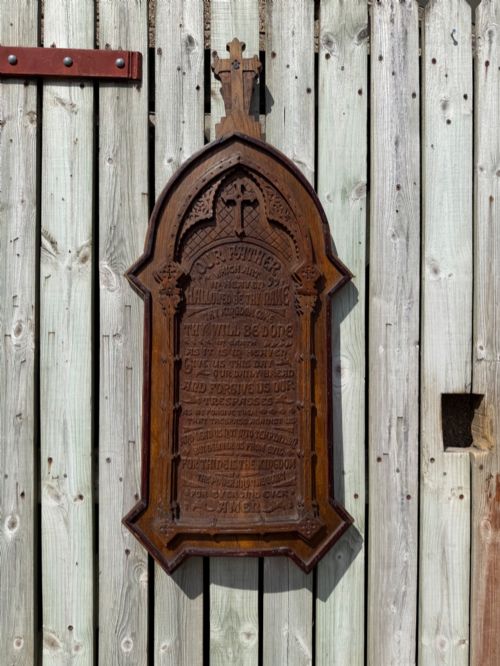
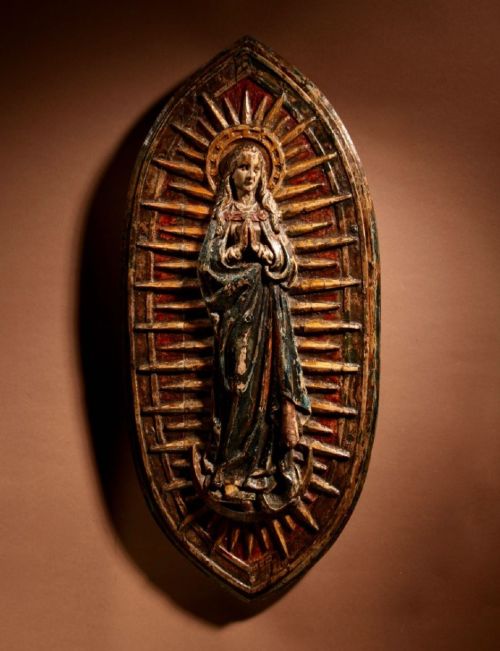
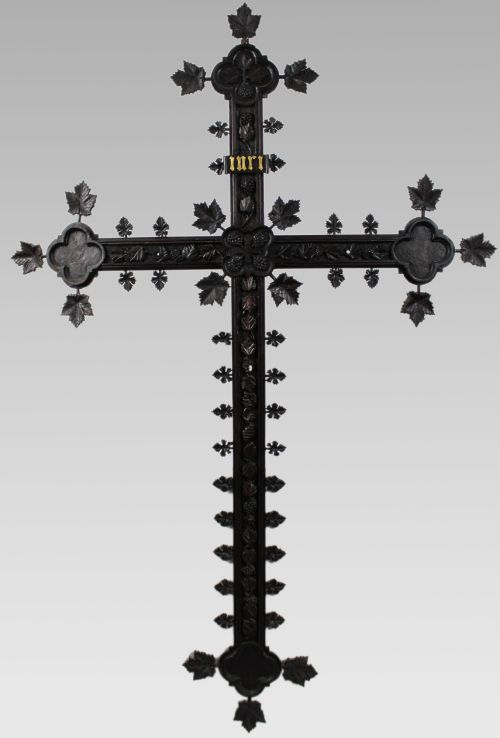
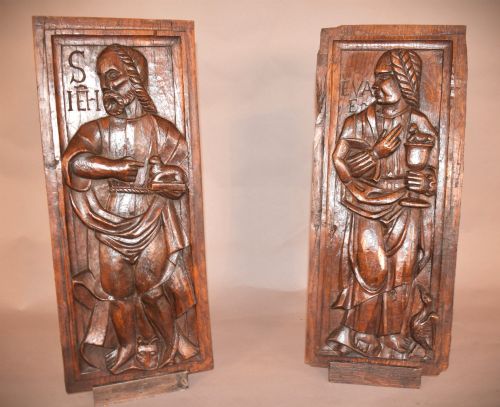
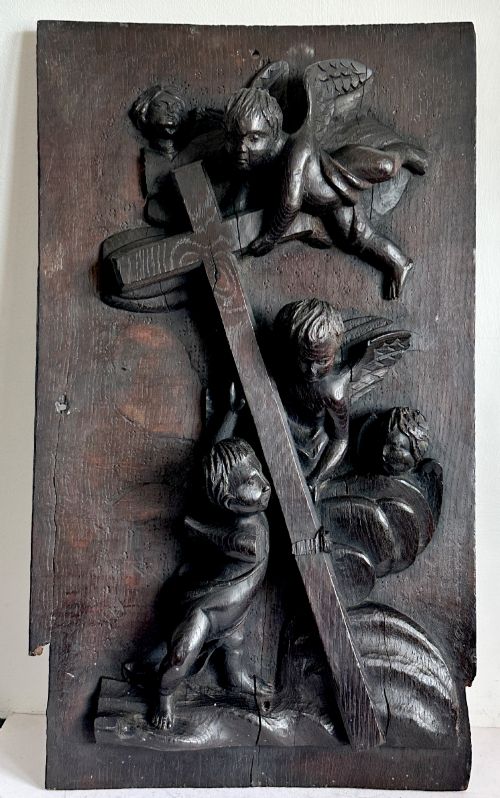
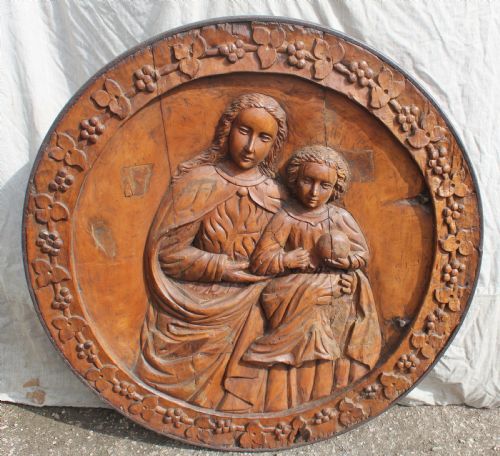
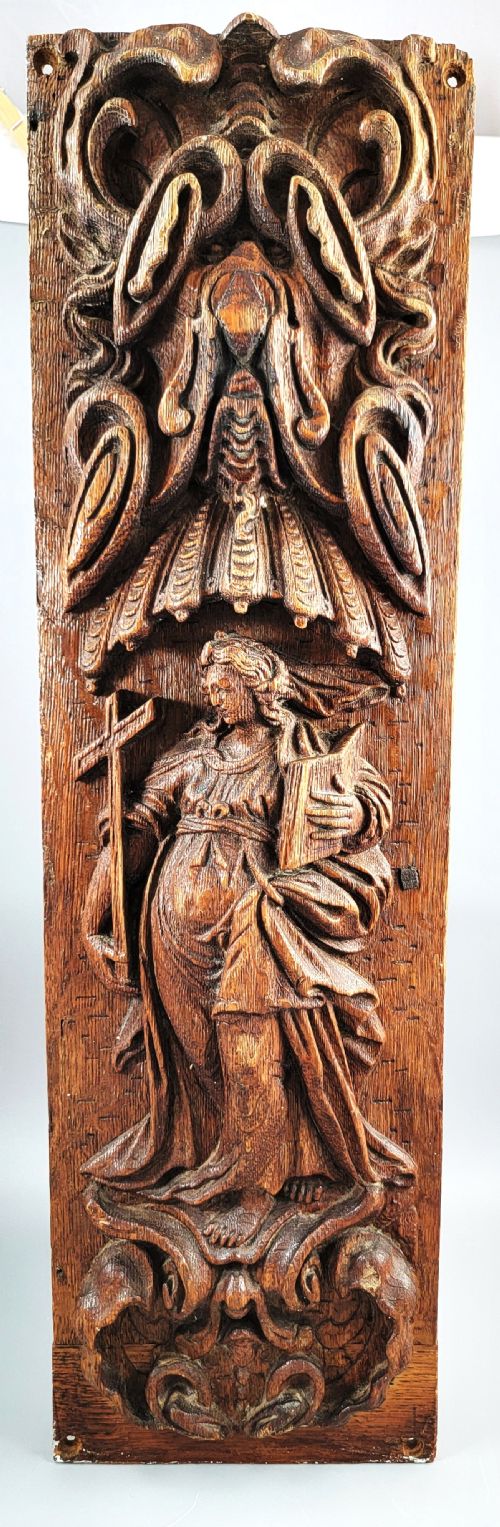
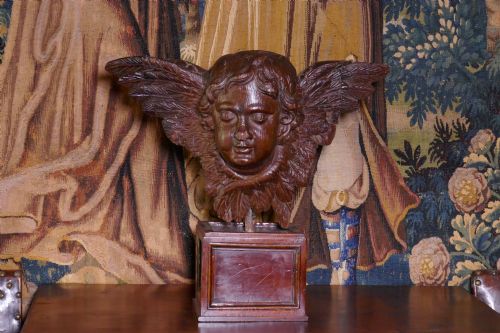
When you search for oak religious wall carving, you encounter devotional panels, wall reliefs, and sculptures depicting biblical scenes and sacred figures. These pieces range from medieval church fragments to later folk art interpretations designed for hanging.
The most common examples on this page are carved oak panels and reliefs dating from the sixteenth and seventeenth centuries, alongside nineteenth-century Gothic Revival and folk pieces. Formats vary from flat wall plaques to deep sculptural panels showing figures such as the Virgin and Child, angels, and scenes from the Passion.
Materials and construction
The primary material across these pieces is solid oak, worked by hand using chisels and gouges to create low and high relief carvings. Some surfaces retain traces of polychrome paint, gesso, or gilding applied originally to enhance the visual impact of the sacred figures.
Joinery techniques on the panels typically involve pegged mortise and tenon frames holding the carved central boards. Sculptural elements and crucifixes are often carved from single blocks of dark wood or oak, showing tool marks from the maker's bench.
The listings here span from pre-sixteenth-century medieval pieces up to twentieth-century Gothic Revival works.
Assessing quality
The preservation of original surface finishes, such as early polychrome paint or untouched dark oak patina, elevates a piece. Structural integrity of the original panel timbers and frames also separates standard decorative fragments from significant sculptural survivals.
The Oak Religious Wall Carving Glossary
- Polychrome
- Painted in several colours. This finish was commonly applied to wood carvings to bring realism to religious figures.
- Gesso
- A plaster mix applied to wood surfaces as a base for painting or gilding. It provides a smooth ground for decorative details.
- Relief
- Sculpture carved from a flat background plane. High relief projects boldly from the surface, creating strong shadow lines.
- Altarpiece
- A structured artwork placed behind an altar. Central panels from these large structures often survive as independent wall carvings.
- Gothic Revival
- An architectural and decorative style drawing on medieval forms. This aesthetic influenced nineteenth-century carvers producing religious wall plaques.
Oak Religious Wall Carving: Frequently Asked Questions
How do I hang a heavy oak carving?
Heavy oak panels require secure wall fixings screwed directly into masonry or internal wall studs. Use concealed heavy-duty mirror plates or steel brackets attached to the back frame.
Ensure the weight is evenly distributed so the antique timber frame does not warp or strain under its own mass.
Where were these carvings originally displayed?
These carvings originated inside churches, abbeys, and private domestic chapels as focal points for prayer and contemplation. Altarpieces, screens, and wall panels surrounded worshippers with sacred imagery.
Later nineteenth-century pieces were often produced specifically for domestic religious display in European homes.
How do I clean an antique oak carving?
Dust the carved surfaces gently using a soft, dry natural bristle brush to clear debris from deep recesses. Avoid water, damp cloths, and modern chemical polishes which can damage dry historic timber.
Preserving the accumulated dry patina is essential for maintaining the visual character of old oak.
How can I tell the century of a carving?
Dating relies on stylistic markers such as the stiffness of Mediaeval Gothic drapery compared to the dynamic movement of Baroque figures. Tool marks left by adzes and hand chisels provide physical clues to the period of manufacture.
Examining the grain shrinkage, timber coloration, and construction joints helps confirm the age of the oak.