
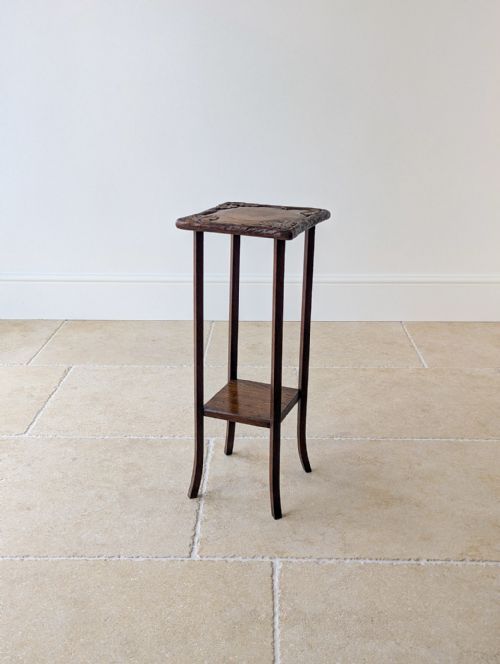
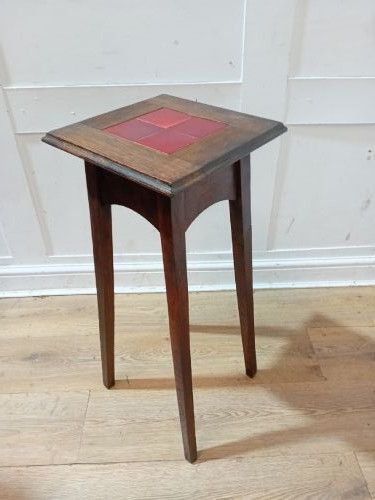
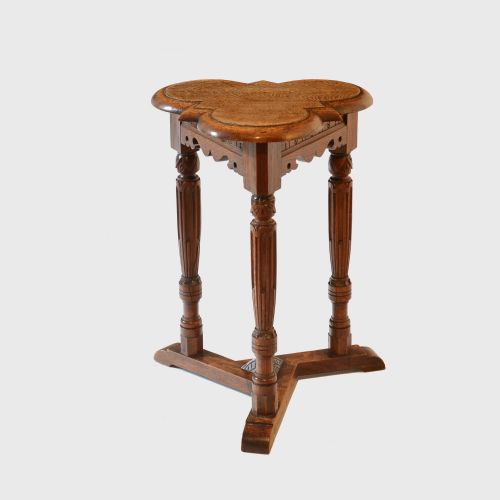


Oak Pedestal Display Stand
An oak pedestal display stand elevates sculpture and ceramic vessels, offering solid timber presence for interiors that favour architectural character.
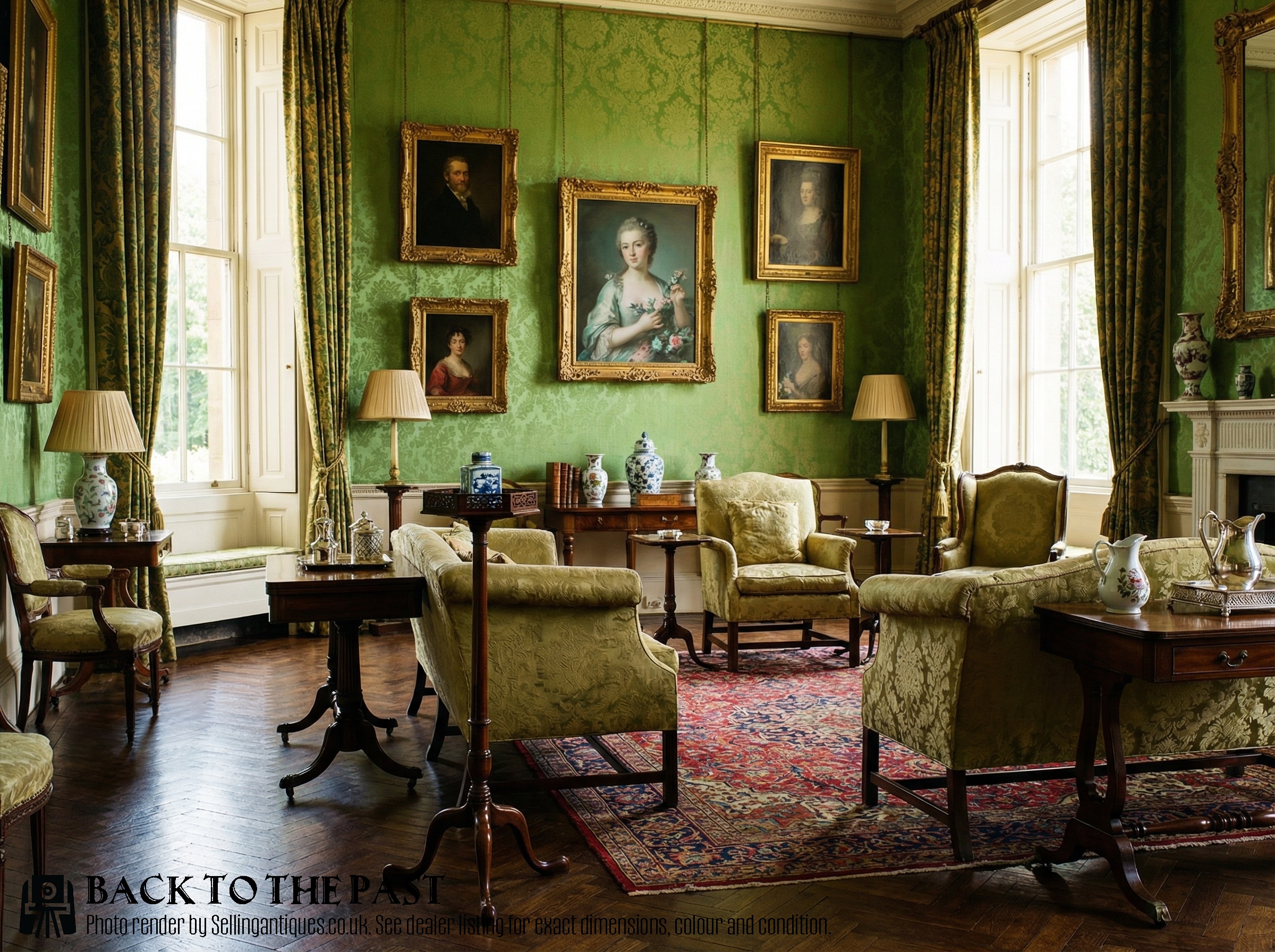
Oak Pedestal Display Stand
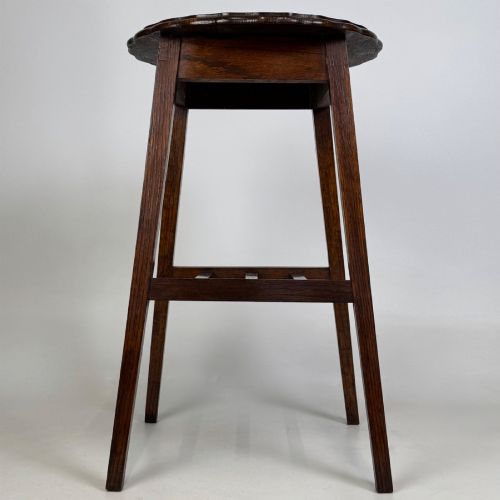
An oak pedestal display stand brings vertical height to display surfaces, appearing across periods from the eighteenth century through the Edwardian era in forms such as columns, plant stands, and torchers. The pieces on this page draw upon styles ranging from Arts and Crafts and Gothic Revival to Jacobean Revival and Baroque.
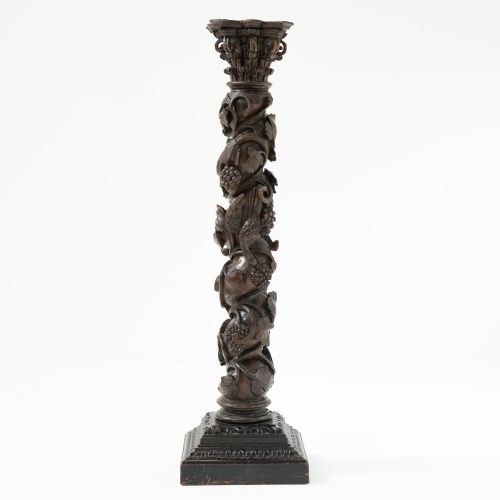
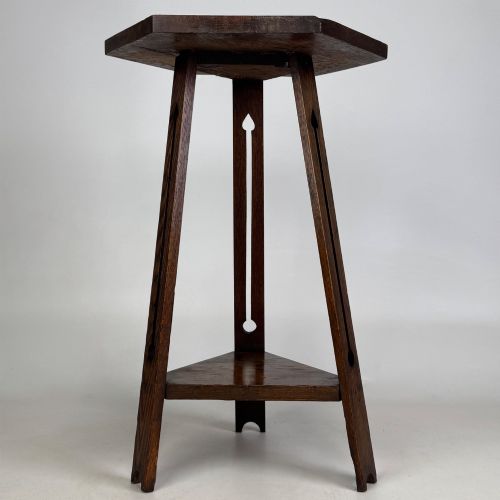
Buyers encounter distinct configurations, including barley twist legs, spiral pillars, solomonic columns, and two-tier plant stands. Many items function simultaneously as jardiniere stands, sculptor stands, or display plinths.
Origins span English workshops and French ateliers, utilising timber grains that vary from golden oak to deeper tones. These supports serve to elevate decorative objects within a room.
Materials and construction methods
The primary material across these listings is solid oak, occasionally augmented by carved hardwood, walnut, ebonised wood, ceramic, and metal components. Workshops utilised traditional joinery to ensure stability under heavy decorative objects or planters.
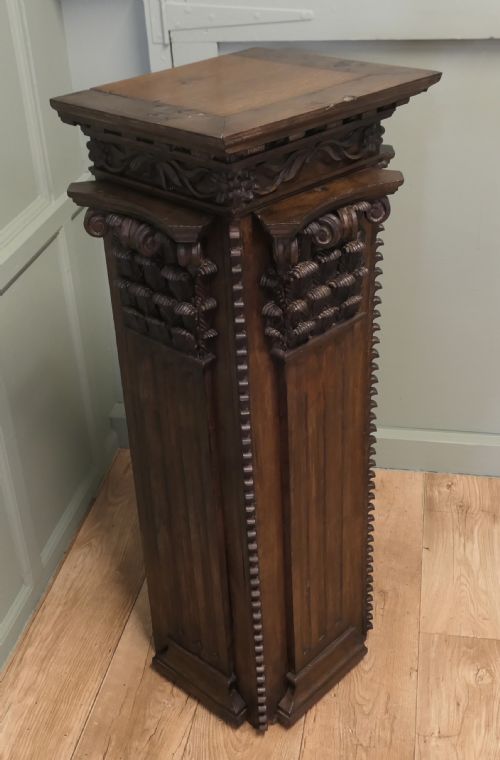
Carving defines many examples, displaying detailed motifs through manual chiselling on columns, plinths, and legs. Turned elements, such as spiral pillars and barley twist stems, required precision lathe work to achieve uniform pitch and proportion.
Listings feature oak alongside walnut, beech, and ebonised wood across the nineteenth and twentieth centuries.
Distinctions in quality
Quality rests upon the crispness of the hand-carved detail and the structural integrity of the central column or legs. Superior examples maintain firm joints and well-balanced platforms that support weight without wobble.
The choice of timber grain and the depth of the patination contribute significantly to a piece's visual standing. Subtle proportional harmony between the top plinth, the shaft, and the base separates standard utilitarian items from finer cabinetmaker output.
The Oak Pedestal Display Stand Glossary
- Solomonic column
- A twisted, helix-shaped shaft resembling a spiral vine, common in Baroque and revival furniture. This form creates dynamic movement along the vertical axis of a display stand.
- Torchere
- A tall, slender stand designed originally to hold a candle or light source, now frequently utilised for vases or small sculptures. It provides a slender footprint in compact spaces.
- Jardiniere stand
- A specialised table or pedestal intended to support a plant container or floral bowl. These items often feature waterproof inserts or reinforced upper tiers.
- Plinth
- The flat base or top slab of a pedestal upon which an object rests. It provides a stable horizontal surface to frame the displayed item.
- Caryatid
- A sculpted female figure serving as an architectural support in place of a column. They appear on select nineteenth-century revival pieces.
Oak Pedestal Display Stand: Frequently Asked Questions
How do I choose the right height?
Consider the scale of the object you intend to place on top and the overall proportions of the room. Taller columns suit statues and large urns, while shorter plant stands work well beside seating.
Matching the height to eye level ensures the displayed piece commands appropriate attention without disrupting the surrounding furniture layout.
Can these stands support heavy items?
Most solid oak stands are engineered with sturdy timber bases and robust central shafts designed to bear considerable weight. Antique plant stands and sculpture columns regularly held heavy marble or ceramic vessels in period interiors.
Check the width of the top plinth to ensure your object's footprint sits securely within the edges without overhang.
How do I care for antique oak?
Maintain the timber by dusting regularly with a soft, dry cloth to prevent grit accumulation on carved surfaces. Apply a quality beeswax periodically to nourish the grain and preserve the surface sheen.
Avoid placing oak stands near direct heat sources or rapid moisture fluctuations to prevent timber movement or splitting.
What is an Arts and Crafts stand?
An Arts and Crafts stand prioritises honest construction and visible material qualities over applied historical ornamentation. These pieces often feature simpler structural lines while retaining solid oak craftsmanship.
They reflect a design movement that valued utility and the character of the natural wood grain above complex revival styles.