
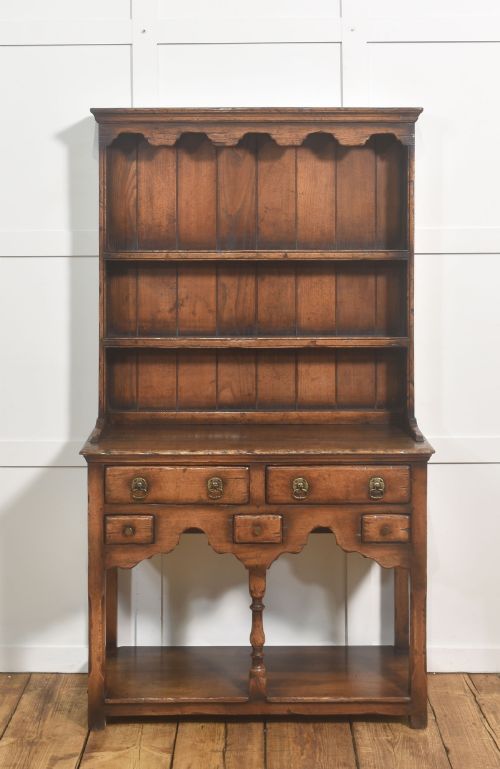
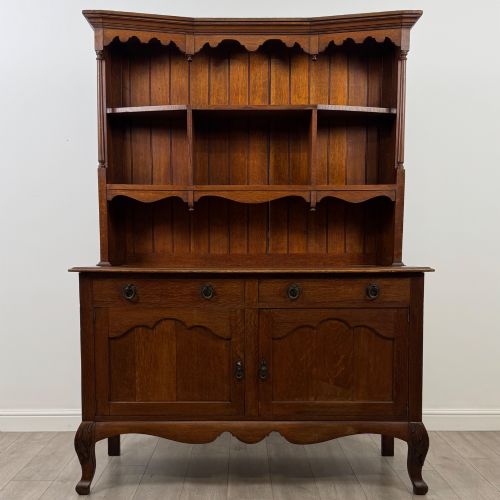
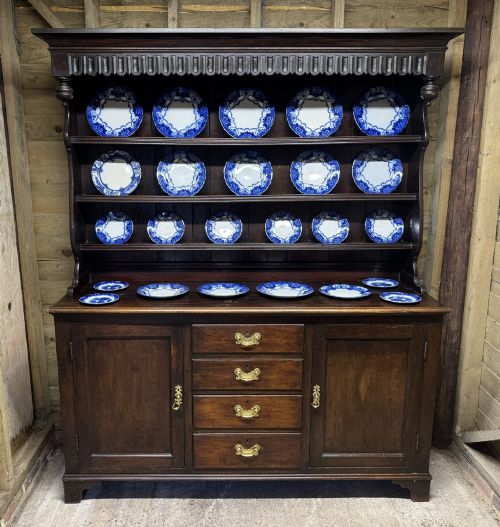
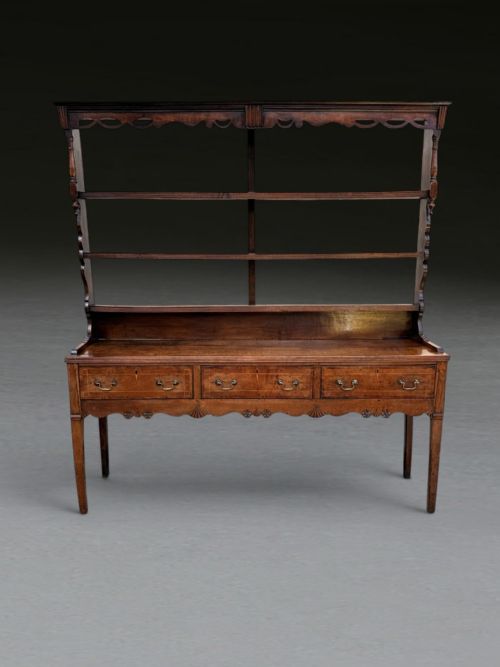
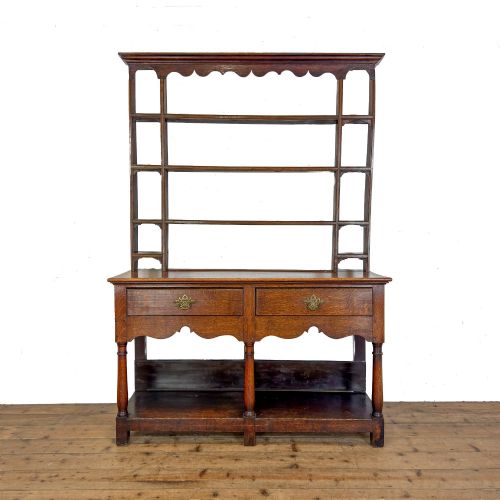
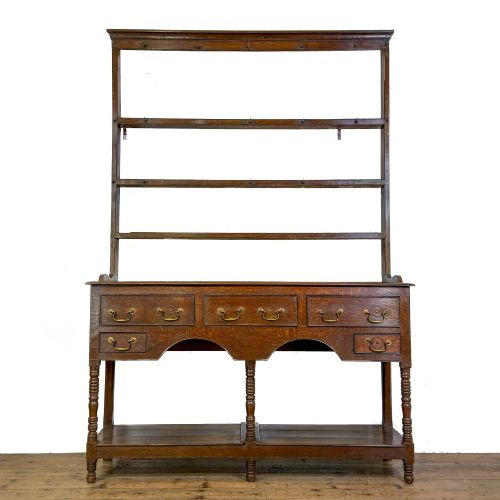
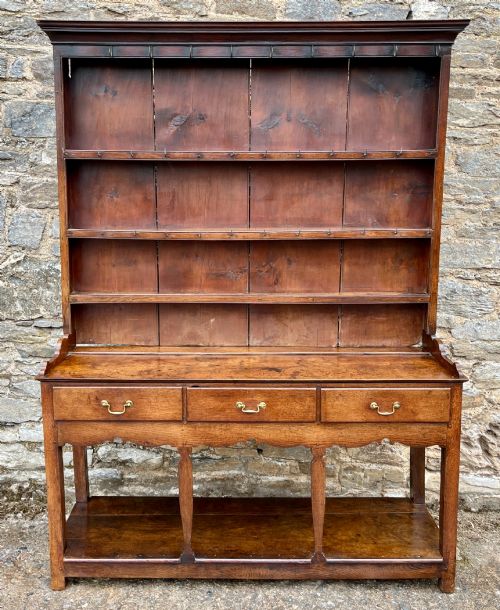
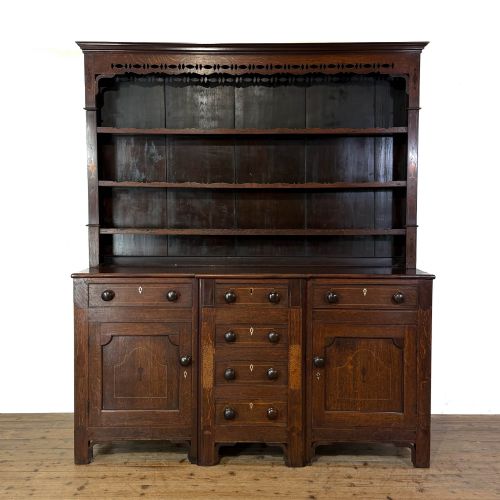
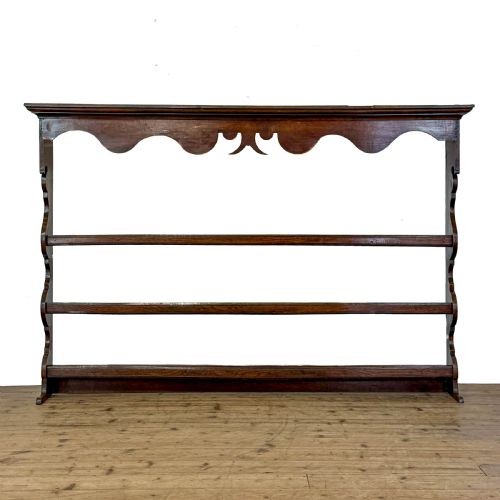


Oak Open Plate Rack
An oak open plate rack holds ceramics on display while bringing regional British vernacular tradition into the kitchen.
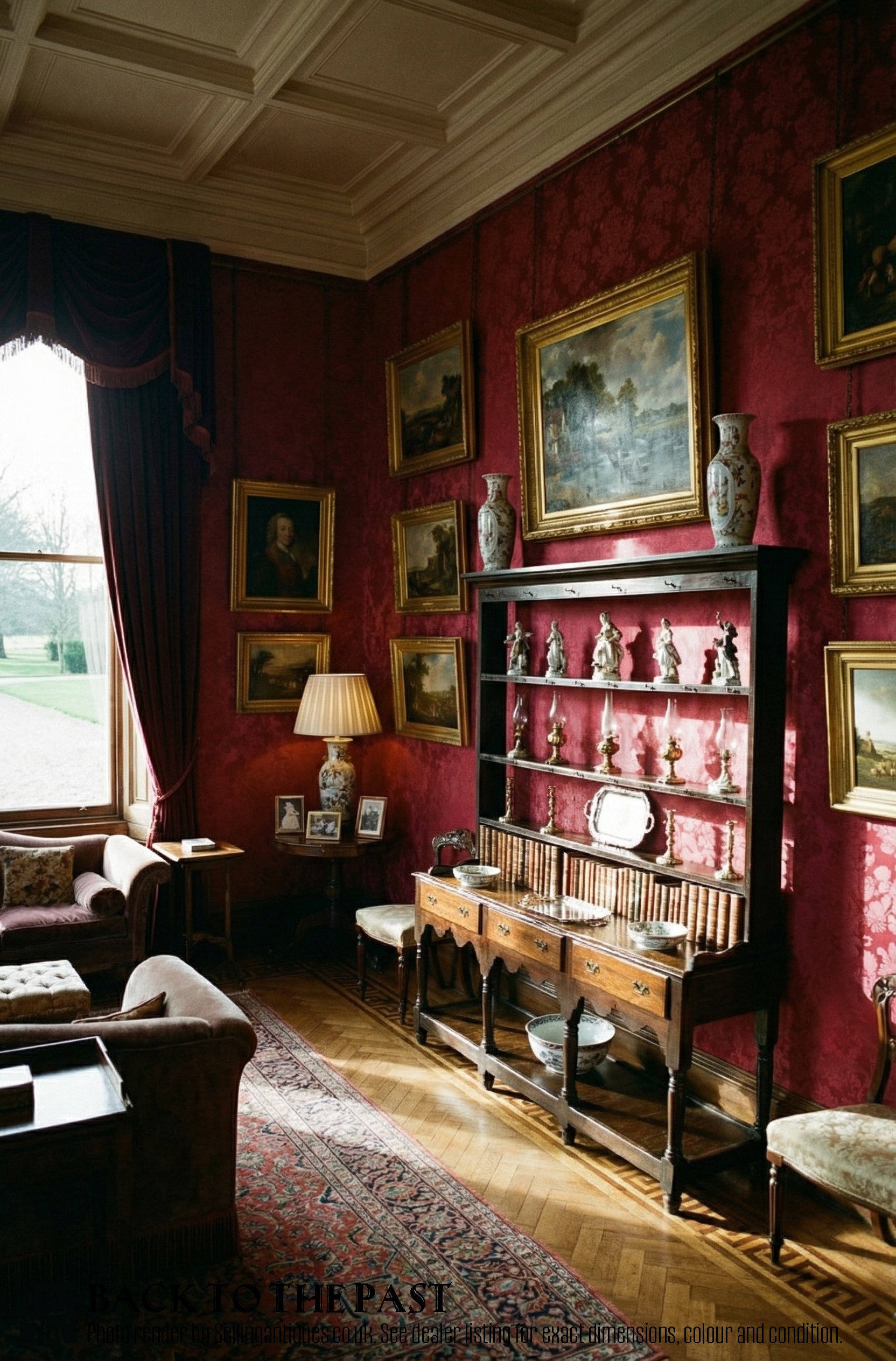
Oak Open Plate Rack
When you search for an oak open plate rack, you encounter wall-hanging shelves or the upper shelving portions integrated into full country dressers. The pieces span the eighteenth century, the nineteenth century, and the Edwardian era, originating from English and Welsh provincial workshops.
Most examples combine an open shelving superstructure with base units such as potboards or drawer arrangements, though standalone wall racks also appear. These forms reflect centuries of practical domestic storage where plates and platters needed to remain accessible yet secure.
The regional variety is substantial, ranging from North Wales and South Wales workshops to West Country and English country kitchens. Each piece demonstrates the utilitarian priorities of rural cabinetmakers working within distinct local traditions.
Materials and Construction
The primary material across all examples is native oak, occasionally supplemented with secondary timbers such as elm, pine, or mahogany in internal or lesser structural components. Cabinetmakers utilised plank construction for backboards and sturdy framing for plate rails.
Hardware details typically involve iron and brass hinges, hooks, or drawer pulls, reflecting the utilitarian origins of these kitchen furnishings. Some pieces incorporate painted wood surfaces or honey-toned finishes developed through decades of domestic use.
Listings span the eighteenth century, nineteenth century, and Edwardian period, featuring oak, brass, iron, and painted wood forms.
Distinctions in Quality
Quality in these pieces rests upon the integrity of the timber selection and the retention of original components, particularly whether the plate rack belongs to the base dresser from its creation. Regional proportions also influence standing, with provincial variants displaying distinct mouldings and board arrangements that elevate their character.
The sophistication of the joinery, from dovetail drawers to pegged framing, separates standard workshop production from finer cabinet work. Surface patination, developed organically over centuries of exposure in country settings, defines the visual standing of the better examples.
The Oak Open Plate Rack Glossary
- Potboard
- A lower open shelf positioned near the floor, traditionally used for storing pots and heavy kitchen utensils. This base design is characteristic of many regional dressers.
- Breakfront
- A piece of furniture featuring a central section that projects forward from the flanking sides. This configuration creates visual depth in larger dresser bases.
- Vernacular
- Architecture and furniture made by traditional local craftsmen using native materials for everyday functional needs. These pieces bypass metropolitan high-style fashions in favour of regional utility.
- Plate rack
- A wall-hanging or dresser-mounted frame fitted with horizontal grooved rails to hold plates upright. It keeps tableware visible and secure.
- Provincial
- Of or relating to the regions outside the capital city. Provincial furniture often displays robust local characteristics distinct from London designs.
Oak Open Plate Rack: Frequently Asked Questions
How are plate racks mounted?
Wall-hanging plate racks feature integrated fixing points or sturdy backboards designed to anchor securely into wall studs. They support the weight of heavy ceramics safely.
Standalone dressers incorporate the plate rack as an upper superstructure resting directly upon the base cabinet or secured with back posts.
What timber is used?
Native oak serves as the primary structural and visual timber across the majority of these pieces. Cabinetmakers selected it for its strength and durability in busy kitchens.
Secondary woods such as elm, pine, or mahogany occasionally appear in backing boards, drawer linings, or internal partitions.
Where were these made?
Workshops across Wales, including North Wales and South Wales, produced a significant proportion of these pieces. English regional centres, particularly the West Country, also contributed distinctive local forms.
These pieces reflect the vernacular traditions of rural communities rather than urban workshops.
How do I date a rack?
Dating relies on examining construction methods such as hand-cut dovetails, pegged joints, and the type of fixings used. Tool marks and timber shrinkage offer further clues to age.
Stylistic cues, including regional mouldings and overall proportions, align pieces with eighteenth-century, nineteenth-century, or Edwardian periods.