


Oak Log Store
An oak log store brings solid domestic history to the hearth, offering practical fireside storage built from durable timber.
Oak Log Store
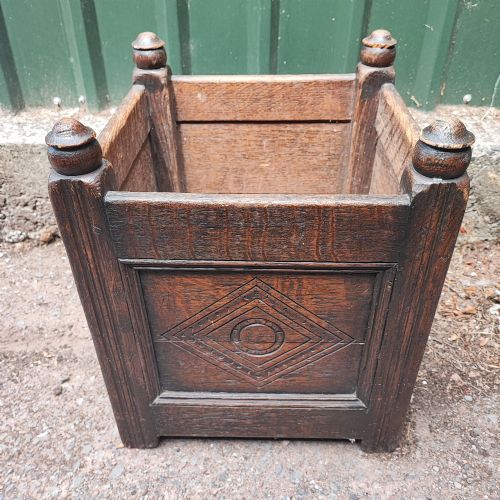
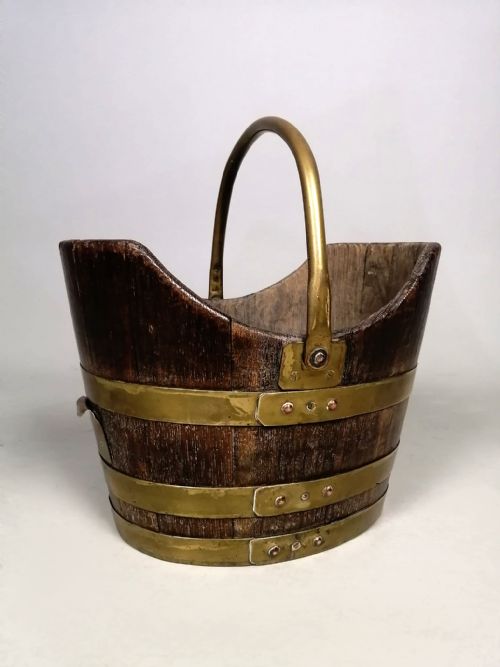
When searching for an oak log store, buyers encounter a robust array of functional vessels designed to hold fuel near the fireplace. The selections span simple country boxes and coopered buckets to carved Victorian coal boxes and Georgian bunkers.
Most examples originate from the Georgian and Victorian eras, alongside Edwardian and turn-of-the-century pieces. Forms range from lidded bins and purdoniums to repurposed garden well buckets and rocking cradles utilised for hearthside storage.
The materials reflect practical domestic utility, dominated by sturdy oak supplemented by elm, fruitwood, and mahogany. Metal fittings in brass, iron, and wrought iron appear frequently to reinforce staves and provide lifting handles.
Quality and Craftsmanship
Quality rests in the integrity of the timber selection and the precision of the joinery or coopering. Finer pieces display tight, well-fitted staves or crisp hand-carving, whereas simpler utilitarian items show straightforward plank construction.
The presence of original metalwork, such as solid brass bands or robust iron drop handles, elevates a piece above standard domestic replacements. Surface condition also plays a role, with pleasing patination on the oak showing decades of hearthside use.
Listings feature oak alongside elm, fruitwood, and mahogany, paired with brass and iron hardware.
Liberty London
The Oak Log Store Glossary
- Coopered
- Made by a cooper using curved wooden staves bound together with metal or wooden hoops. This technique ensures watertight or secure containment for dry fuel.
- Purdonium
- A specialised Victorian coal box or scuttle, often featuring a sloping front door and a built-in shovel compartment. These items sat neatly beside the fireplace.
- Bunker
- A large, heavy chest or box designed for bulk storage of fuel such as coal or peat. They typically feature sturdy lids to contain dust and debris.
- Staves
- The narrow vertical strips of wood fitted together to form the sides of rounded vessels like buckets and bins. Their tight alignment gives coopered items their strength.
Oak Log Store: Frequently Asked Questions
What is an oak log store used for?
These vessels serve as practical containers for holding firewood, coal, or peat close to the hearth. They keep domestic fuel tidy and accessible while adding traditional character to a room.
Historically, different forms accommodated different types of fuel, from large bunkers for coal to coopered buckets for logs and peat.
How do I date an antique oak log store?
Dating relies on examining the construction methods, hardware, and stylistic details present in the piece. Georgian and Victorian examples display distinct hand-tool marks, specific brass handle designs, and period-typical carving styles.
Reference points in the listings range from the eighteenth century through the Edwardian period, each carrying the hallmarks of its respective era.
Are these pieces strictly for firewood?
Many items designed as coal bins, well buckets, or even garden planters find a second life holding logs by the fireplace. Their robust construction makes them versatile for indoor fuel storage.
Some examples began as utilitarian items like garden containers or waste bins before being adopted for fireside use.
What styles are common in oak log stores?
Styles range from plain rustic country pieces to formal Georgian and carved Victorian designs. Arts and Crafts influences also appear, alongside Scottish coopered peat buckets.
This variety reflects regional traditions and the changing domestic fashions of the eighteenth, nineteenth, and early twentieth centuries.