


Oak Log Bin
An oak log bin keeps the hearthside tidy while bringing substantial timber grain and metal hardware directly into a room.
Oak Log Bin
An oak log bin serves as heavy-duty fireside storage for wood, coal, and peat, grounding the hearth with dense timber construction. When you search for an oak log bin, you encounter functional vessels spanning several centuries of British and continental design.
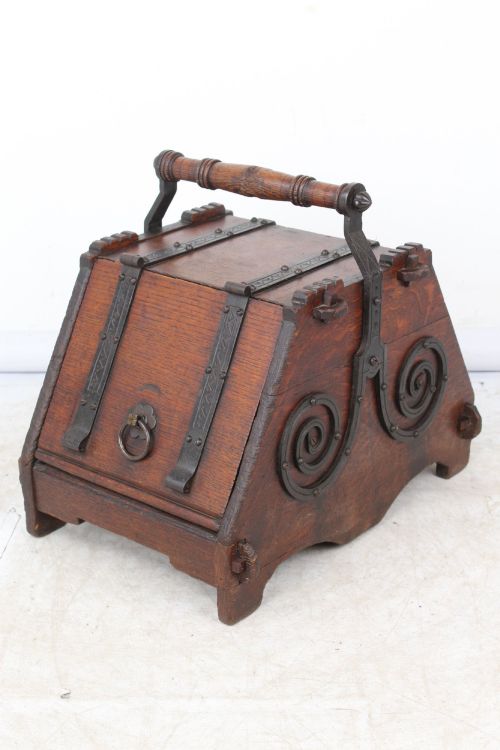
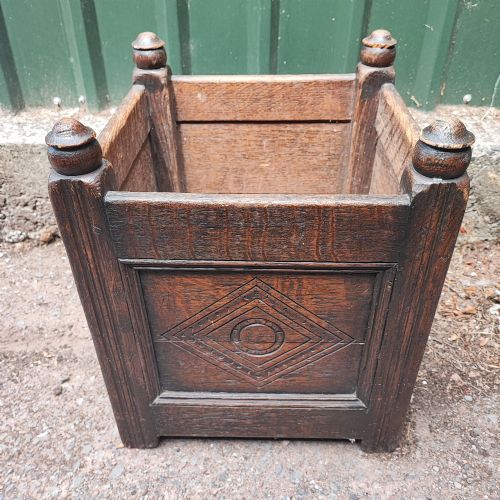
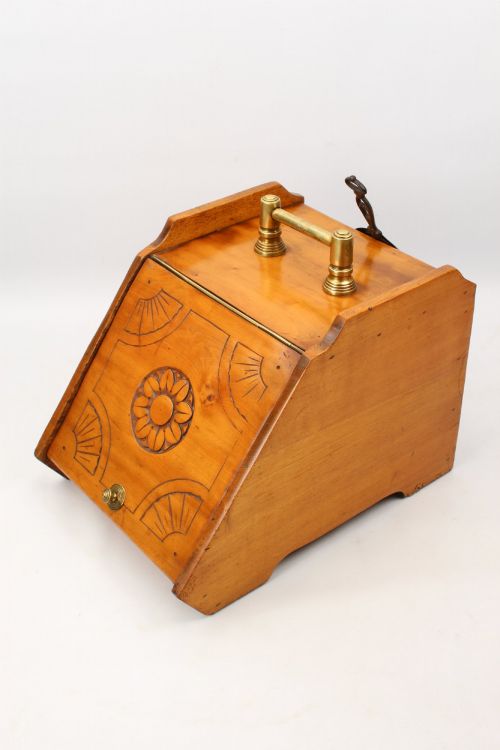
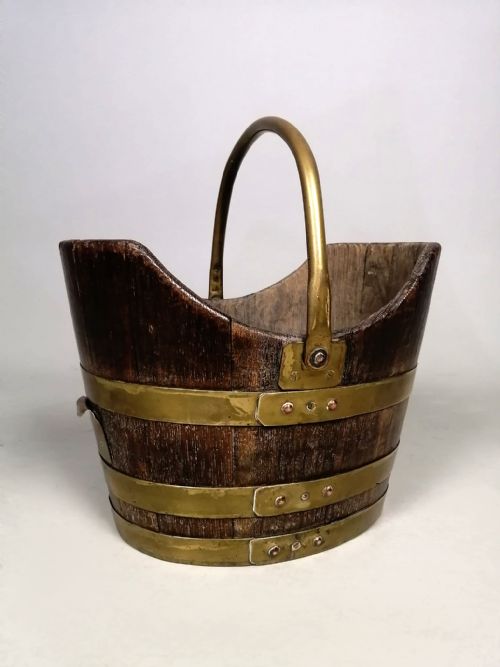
The versions most common on this page include sturdy Victorian and Edwardian examples alongside earlier Georgian pieces. These items take various shapes, ranging from coopered staved buckets to carved rectangular boxes and purdoniums.
Makers utilised durable hardwoods and structural metals to withstand heavy daily use beside domestic fireplaces. Many items bridge the gap between practical utility and decorative furnishing through carved panels or decorative banding.
Materials and construction techniques
Makers constructed these pieces primarily from solid oak, sometimes pairing the timber with fruitwood or mahogany accents. Metal components such as brass, copper, iron, and wrought iron provide structural reinforcement and functional handles.
Cooperage techniques shape many of the cylindrical bins, using curved oak staves held tightly together by metal bands or hoops. Other examples utilise pegged panel construction, carved box joints, or riveted metal panels.
Hardware elements like drop handles, hinges, and shovel loops are typically fastened directly to the oak body with iron or brass screws and rivets. Surface finishes rely on natural wax polish to protect the timber grain from hearthside soot and dryness.
Some Victorian coal bins doubled as secret seats when closed firmly, proving that nineteenth-century households loved multi-tasking furniture just as much as we do.
Judging build quality and character
Quality rests in the weight of the timber and the integrity of the structural joints. Pieces featuring thick oak staves or deep hand-carved panels demonstrate superior craftsmanship compared to simpler utilitarian boxes.
The refinement of the metalwork distinguishes finer examples from standard workshop production. Hand-beaten copper panels, dovetailed corners, and heavy brass banding indicate a higher grade of manufacture intended for prominent drawing rooms rather than back-of-house service.
Liberty London·Christopher Dresser·Hills of Willesden
The Oak Log Bin Glossary
- Coopered
- Made by a cooper using curved wooden staves bound together with metal hoops, much like a traditional barrel.
- Purdonium
- A specific type of Victorian coal box featuring a sloping drop-front door designed to chute fuel downward.
- Gothic Revival
- An architectural and decorative style drawing inspiration from medieval forms, often featuring pointed arches and tracery carving.
- Arts and Crafts
- A design movement prioritising traditional handcraftsmanship, simple structural forms, and visible metal accents such as copper panels.
Oak Log Bin: Frequently Asked Questions
What is an oak log bin used for?
An oak log bin provides a designated container for storing firewood, peat, or coal beside an active fireplace. It keeps hearth debris contained while keeping fuel close at hand.
Historically, these sturdy containers also doubled as general storage or waste receptacles when solid fuel was not in immediate use. Today, their robust build allows them to hold modern logs or serve as decorative umbrella stands and planters.
How do I date an oak log bin?
Dating relies on observing construction methods, hardware styles, and overall design motifs present in the piece. Georgian examples often feature simpler plank construction and brass swing handles, while Victorian items frequently incorporate elaborate carved panels or Gothic Revival details.
Edwardian and later pieces commonly exhibit Arts and Crafts influences, such as exposed copper panels and hammered hinges. Comparing the timber patination and screw types also helps narrow down the period of manufacture.
Are these bins waterproof inside?
Most antique oak log bins lack modern waterproof linings because they were designed to hold relatively dry fuel like seasoned logs or coal. Some coopered bucket variants feature metal liners to catch residual moisture or coal dust.
If you plan to use a bin as an indoor planter, you should place a modern waterproof tray inside to protect the historic oak timber from moisture damage and rot.
How do I maintain oak log bins?
Maintaining an oak log bin requires occasional applications of traditional beeswax to nourish the timber and prevent the dry air near a fireplace from splitting the wood. Avoid placing the bin directly against active heat sources or open fires.
Cleaning should be limited to dusting with a soft, dry cloth. Metal components like brass or copper can be left with their natural aged patina or gently polished depending on personal preference.