



Oak Library Bookshelf
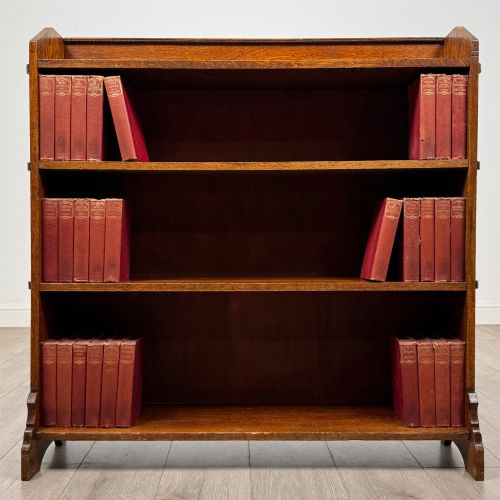
An oak library bookshelf organises volumes with open access, offering sturdy timber framing and practical shelving suited to heavy study collections.
Oak Library Bookshelf
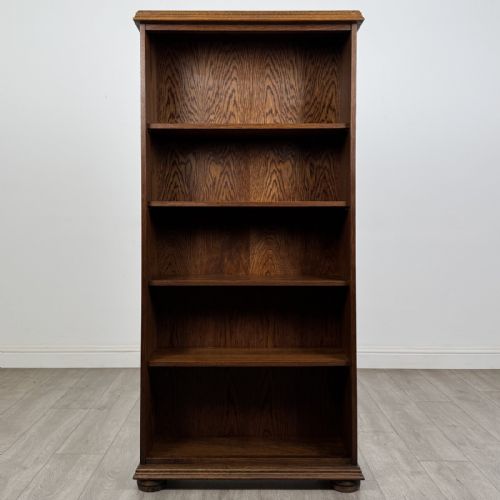
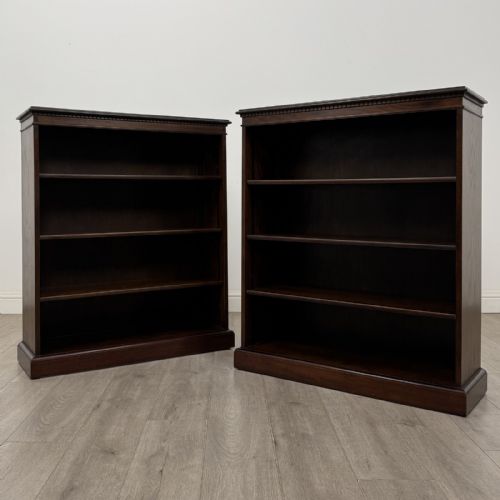
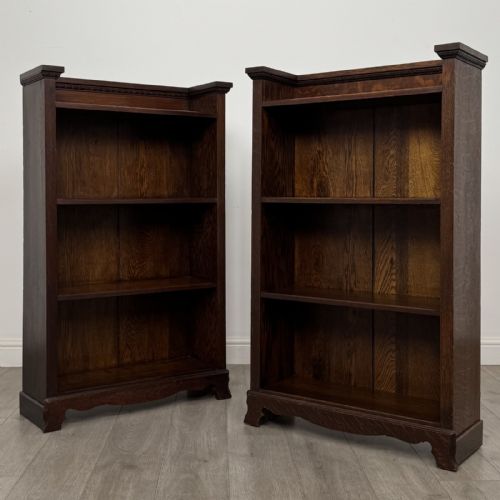
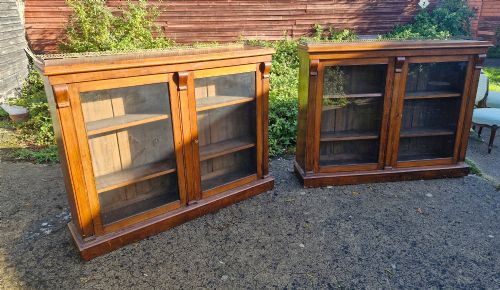
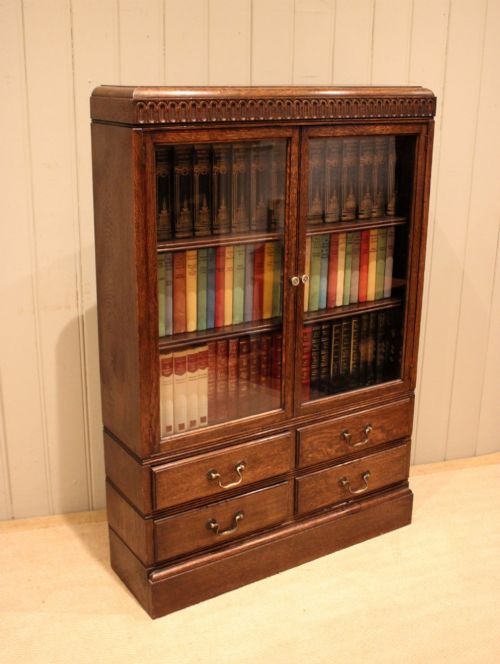
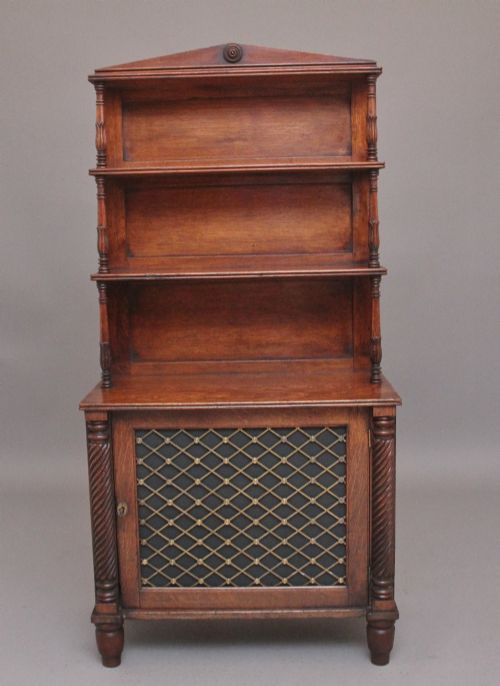
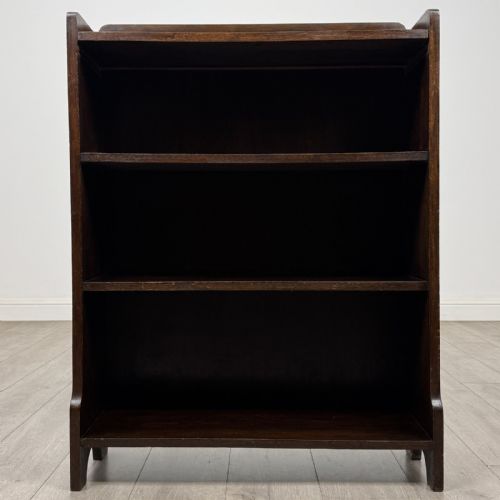
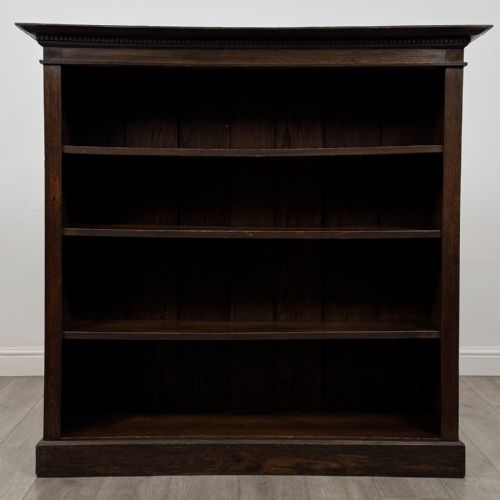
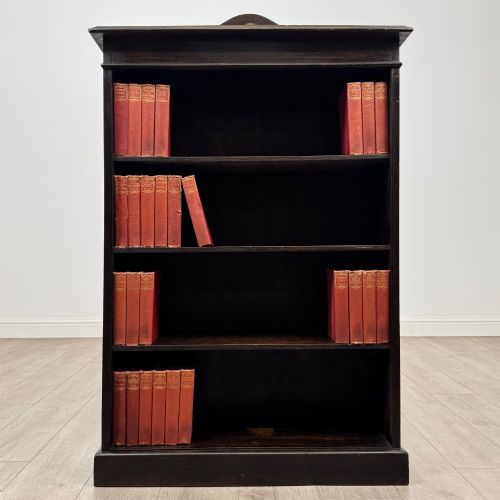
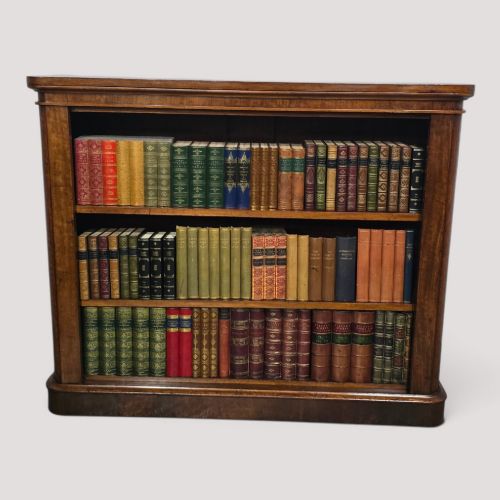
When searching for an oak library bookshelf, buyers encounter open formats ranging from compact Edwardian dwarf cases to tall Victorian designs. These pieces generally feature straightforward upright frames designed to display volumes clearly rather than enclose them behind glass doors.
The versions most commonly met on this page date from the nineteenth and early twentieth centuries, spanning Victorian, Edwardian, and interwar periods. They appear predominantly in solid oak or golden oak, occasionally incorporating revolving mechanisms or adjustable shelf systems for practical utility.
Originating in domestic studies, institutional libraries, and country houses, these bookshelves prioritize function and timber integrity. Makers constructed them to hold substantial weight, resulting in solid proportions that suit modern study spaces and living rooms alike.
Construction and Materials
Makers utilised solid oak alongside specialised variants such as ebonised oak and golden oak, pairing the primary timber with iron or brass fixings for structural reinforcement and adjustable shelf brackets. Cabinetmakers relied on sturdy joinery methods to support heavy rows of bound volumes without sagging.
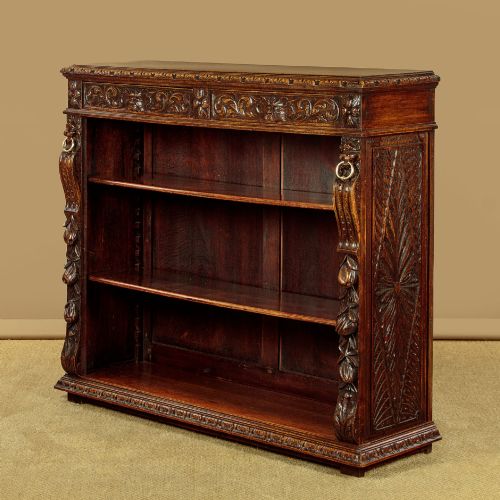
Surface treatments varied from carved relief panels and beaded edges to marquetry details and industrial styling, depending on the prevailing Victorian, Arts and Crafts, or Gothic Revival tastes. These decorative elements frame the open shelf bays without compromising the primary load-bearing function of the case.
Oak Library Bookshelf Retail Price Guide 2026
Typical asking prices for oak library bookshelf among the pieces listed under this phrase on Sellingantiques today, from the lower quarter to the upper quarter. They describe what is for sale here now, not the wider market.
The furniture forms on this page range from standard open bookcases and revolving models to low dwarf cases and specialised library steps.
Judging Quality and Execution
The distinction between standard utility cases and superior examples rests on the depth of timber selection and the precision of the joinery. Finer pieces display carefully figured oak grain, substantial thickness in the vertical uprights, and refined carved detailing rather than mass-produced uniformity.
Integration of mechanical elements, such as smooth-turning revolving platforms or robust adjustable shelf racks, separates basic joinery from higher-grade library furniture. The integrity of the backboards and the crispness of edge mouldings further indicate the original workshop standard.
The Oak Library Bookshelf Glossary
- Adjustable shelf
- A shelving board supported on movable brackets or ratchets that allows the internal height of bays to change. This feature accommodates books of varying heights.
- Dwarf bookcase
- A low open bookshelf designed to sit beneath window height or within smaller rooms. These cases often feature integrated top surfaces for display objects.
- Revolving bookcase
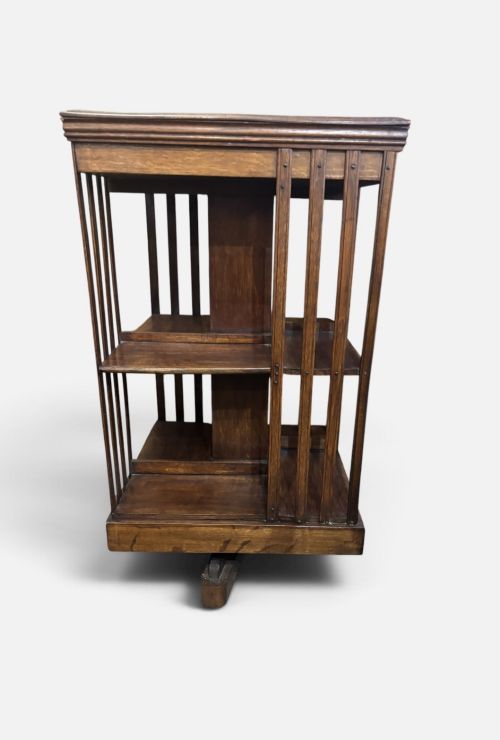
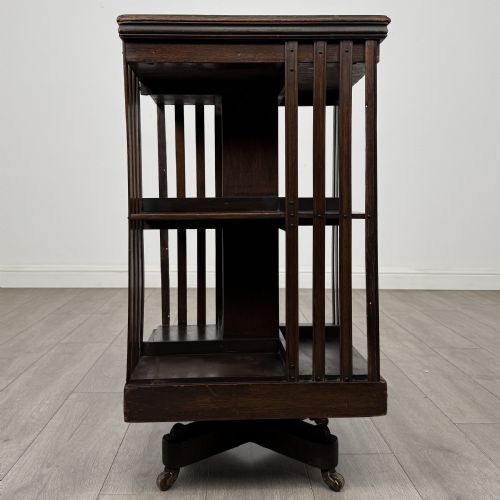
- A freestanding tabletop or floor-standing case mounted on a central pivot and cruciform base. Users can spin the entire unit to access books from multiple angles.
- Golden oak
- A bright, warm timber finish popular during the Edwardian period that highlights the natural medullary rays of the wood. It provides a lighter visual weight than earlier dark finishes.
- Ebonised oak
- Oak timber treated with chemical stains or dark pigments to imitate costly ebony wood. This finish frequently appears on Aesthetic Movement and late nineteenth-century pieces.
Oak Library Bookshelf: Frequently Asked Questions
How do I adjust the shelves?
Many period bookcases use internal wooden rack strips, metal pins, or brass shelf supports that allow boards to be repositioned at different heights.
Lifting the shelf slightly usually releases it from the retaining slots, letting you slide the support to a new position to fit taller volumes.
Are these shelves strong enough for heavy books?
Solid oak construction provides high natural load-bearing capacity, making these bookshelves well-suited for heavy reference volumes and dense collections.
Thicker timber boards resist bowing over time, though checking the span and support brackets ensures safe storage for very weighty texts.
How do I tell Victorian from Edwardian cases?
Victorian examples often feature heavier proportions, deeper carved ornamentation, and darker finishes reflecting Gothic or Renaissance revival styles.
Edwardian pieces generally lean towards lighter golden oak tones, cleaner lines, and simpler geometric or Arts and Crafts influences.
How do revolving bookcases work?
Revolving models sit upon a concealed ball-bearing mechanism or iron pivot base housed within a sturdy wooden cross-base.
This central pivot allows the entire multi-sided book compartment to turn smoothly with a gentle push, granting easy access from a desk or armchair.