
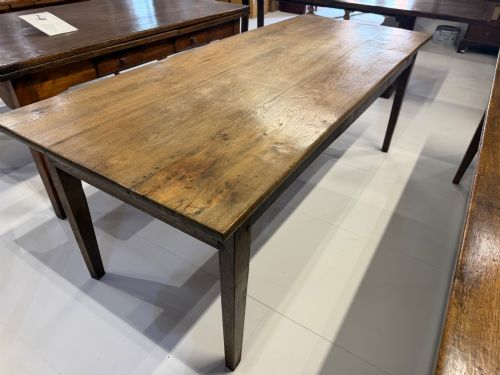
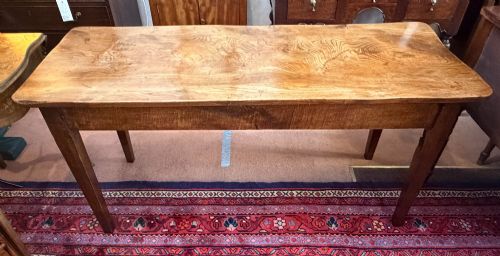
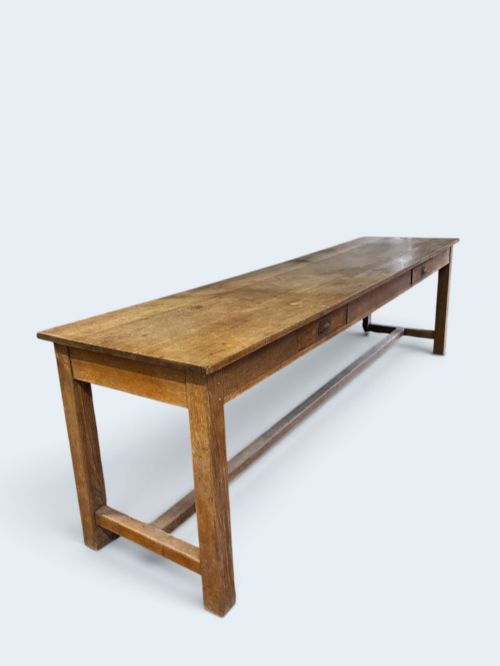
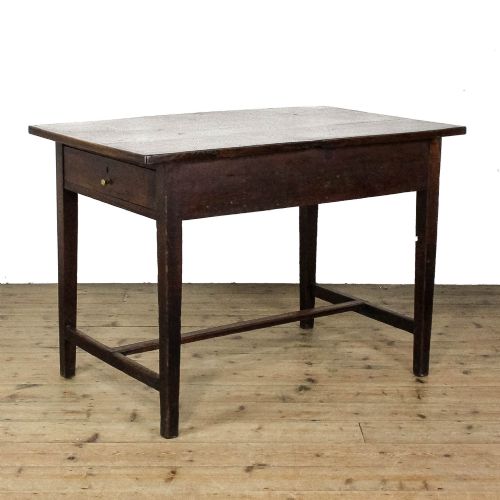

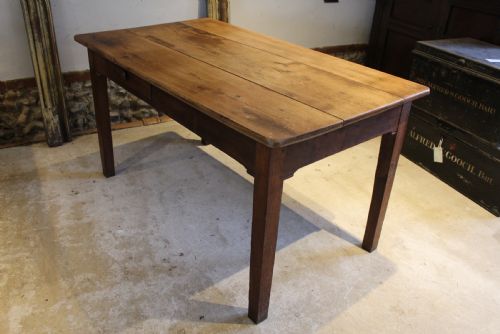


Oak Kitchen Prep Table
An oak kitchen prep table brings solid timber and centuries of utility straight into the heart of a home.
Oak Kitchen Prep Table
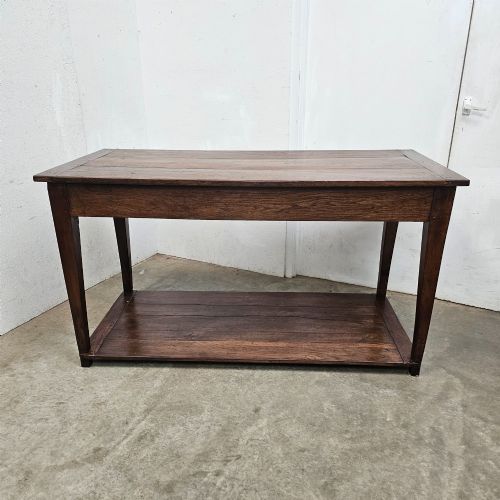
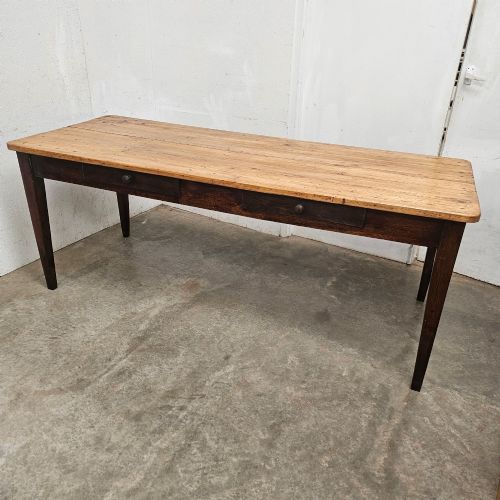
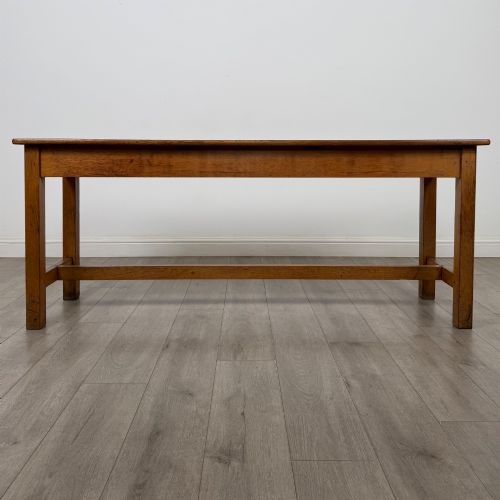
An oak kitchen prep table is a heavy-duty working surface designed for heavy culinary tasks and daily domestic use. When searching for this phrase, buyers encounter robust pieces dating from the eighteenth, nineteenth, and early twentieth centuries, spanning Victorian and Edwardian periods as well as regional English, Welsh, Scottish, and French provincial styles.
Origins vary widely across domestic and continental workshops, ranging from Welsh estate kitchens and English country houses to French provincial farmhouses. These tables reflect the specific demands of historic food preparation, featuring thick timber boards built to withstand decades of chopping, kneading, and serving.
How they were made
Construction relies heavily on solid oak timbers, often paired with secondary woods like pine, beech, poplar, and pitch pine for framing, stretchers, and interior drawer components. Cabinet makers and joiners utilised sturdy mortise and tenon joints to ensure the tables could endure heavy downward pressure without flexing.
Surfaces frequently feature thick scrubbed oak or bleached oak tops designed for direct food contact and repeated cleaning. Metal hardware such as iron brackets, brass fittings, and bronzed mounts appear on specific industrial or commercial formats like butchers blocks and patisserie display tables.
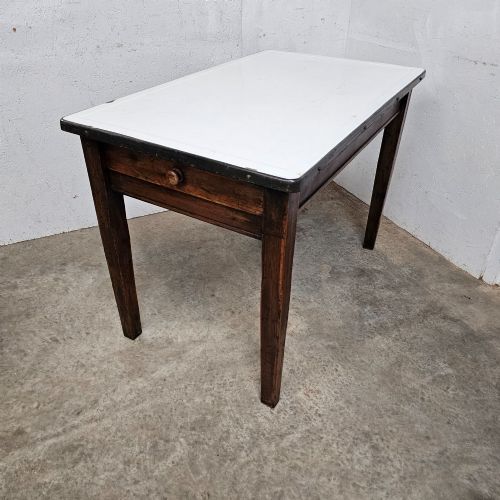
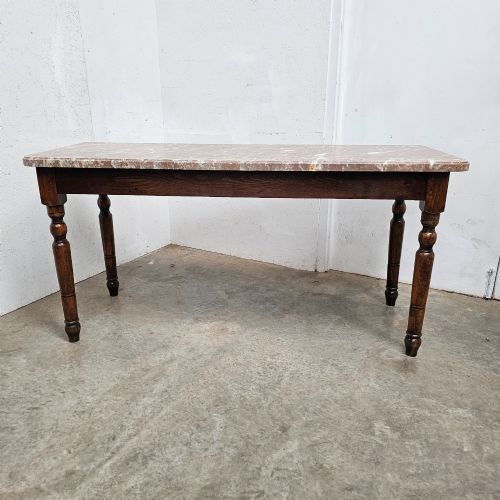
Many examples show evidence of hand planing and traditional pegged joinery, while others incorporate specialised insertions like white marble tops or enamel panels for pastry and confectionery work. Painted finishes and natural wax coatings protect the structural hardwoods while accommodating the knocks and stains of daily kitchen use.
Several tables carry the permanent impressions of heavy cleavers and flour dust from French pastry kitchens.
What varies in quality
Quality in an oak kitchen prep table rests primarily in the integrity of the timber and the honesty of its wear. Pieces with thick, solid oak top boards that retain their original thickness and balanced proportions sit at the higher end of the scale, whereas heavily reduced tops or extensive timber replacement alter the character.
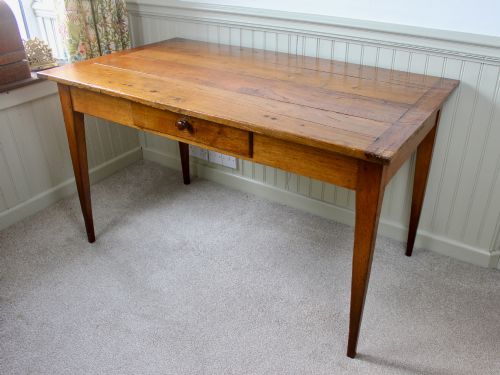
The sophistication of the joinery and the presence of original working elements distinguish standard regional tables from exceptional workshop pieces. Well-fitted drawers with hand-cut dovetails, original iron or brass hardware, and sound structural underframes indicate superior craftsmanship from the outset.
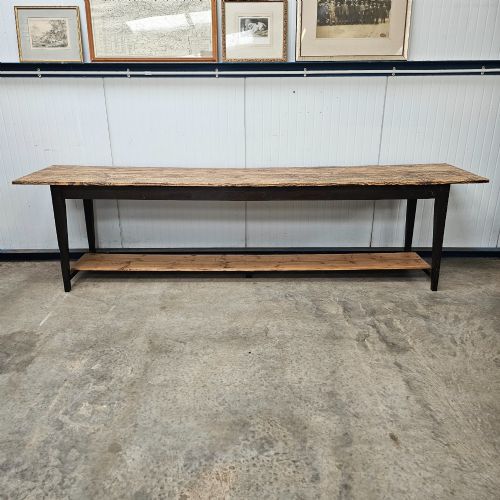
Provenance and form heavily influence distinction, particularly in rarer configurations such as monumental drapers tables, multi-tiered harvest tables, or signed commercial butchers blocks. The visual harmony between the aged oak top and its base structure determines the overall success of the piece.
Trussant & Cie·Hennes France
The Oak Kitchen Prep Table Glossary
- Drapers table
- A long, often multi-tiered wooden table originally utilised in textile shops for folding cloth, prized today for generous proportions and deep lower shelves suitable for kitchen storage.
- Butchers block
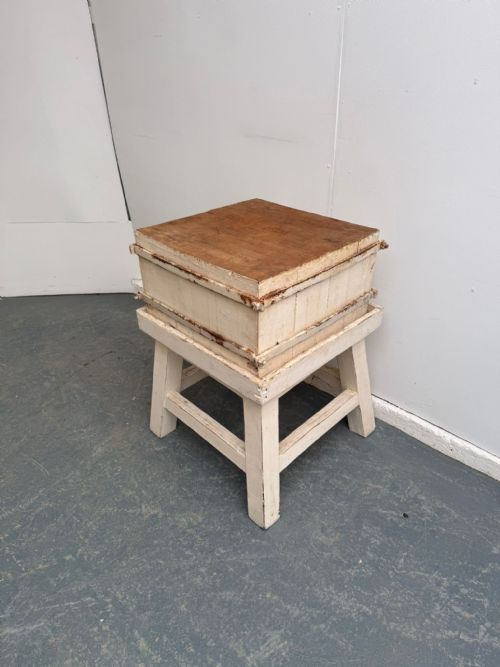
- A freestanding, exceptionally thick wooden block mounted on a sturdy stand, designed for heavy meat chopping and butchery work.
- Harvest table
- A long, narrow dining or work table traditionally used during seasonal farm gatherings, often featuring slender legs and substantial length to seat many people.
- Bleached oak
- Oak timber that has been lightened through historic scrubbing, sun exposure, or chemical treatment, resulting in a pale, matte surface finish.
- Refectory table
- A long, narrow dining table historically used in communal dining halls, characterised by substantial length and structural stretchers for stability.
Oak Kitchen Prep Table: Frequently Asked Questions
What is the difference between a prep table and a dining table?
Prep tables are built specifically for working tasks, featuring thicker timber tops, work surfaces like marble or enamel, and often lower shelves or drawers for utility items. Dining tables prioritize legroom and seating comfort over heavy-duty working durability.
Historic prep tables often display the scars of food preparation, such as knife marks and scrubbed patinas, which distinguish them from formal dining furniture.
How do I care for an antique oak work surface?
Maintain antique oak surfaces by wiping them clean with a damp cloth and avoiding harsh chemical cleaners that strip the historic patina. Periodic application of natural beeswax helps nourish the dry timber and protects against moisture.
Keep these tables away from direct heat sources and extreme humidity swings to prevent the solid oak boards from splitting or warping.
Can I use an old butchers block for cooking?
Many historic butchers blocks remain structurally sound for food preparation, provided the surface is thoroughly cleaned and treated with food-safe oils or waxes. Assess the depth and hygiene of the timber before using it for direct food contact.
Some collectors prefer to preserve the untouched dry patina of a nineteenth-century block as a decorative or display element rather than subjecting it to modern culinary use.
How do I date an antique oak kitchen table?
Dating relies on examining construction methods, tool marks, timber selection, and overall design characteristics. Hand-sawn boards, pegged mortise and tenon joints, and hand-cut dovetails generally point to nineteenth-century or earlier manufacture.
Comparing the style against regional vernacular forms, such as French provincial or English farmhouse traditions, helps narrow the period of origin.