

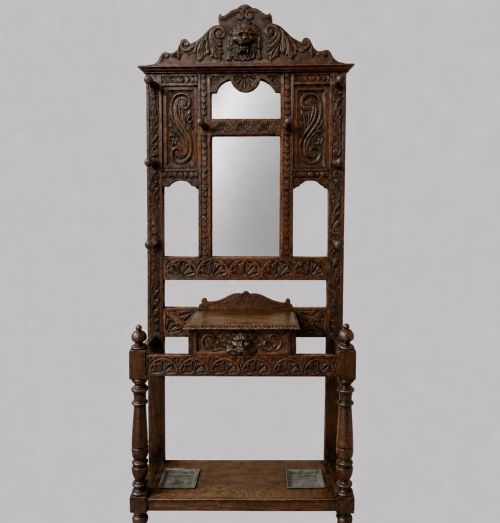


Oak Hat Tree
An oak hat tree brings immediate utility and grounded character to a hallway, keeping coats and hats organised in solid style.
Oak Hat Tree
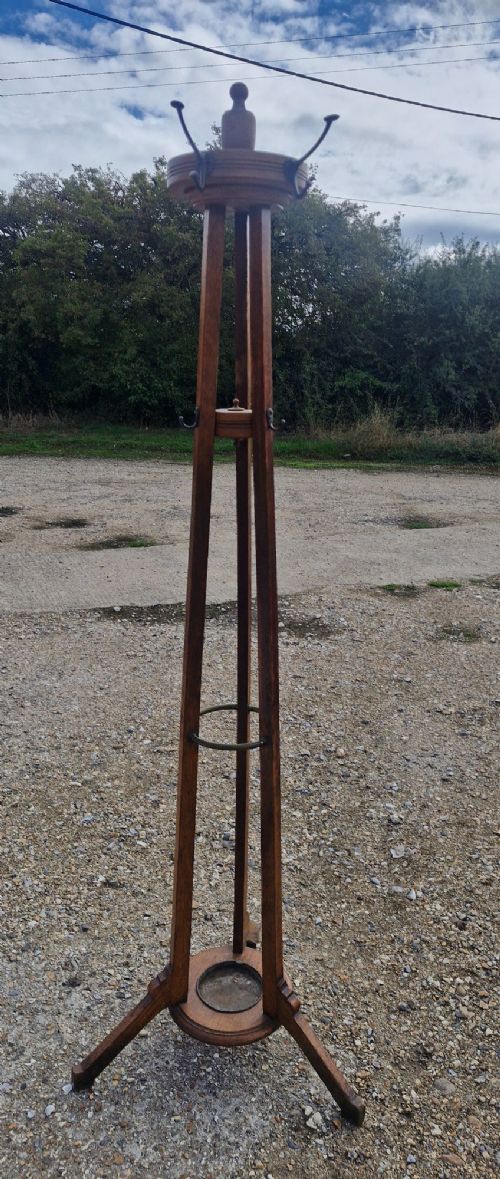
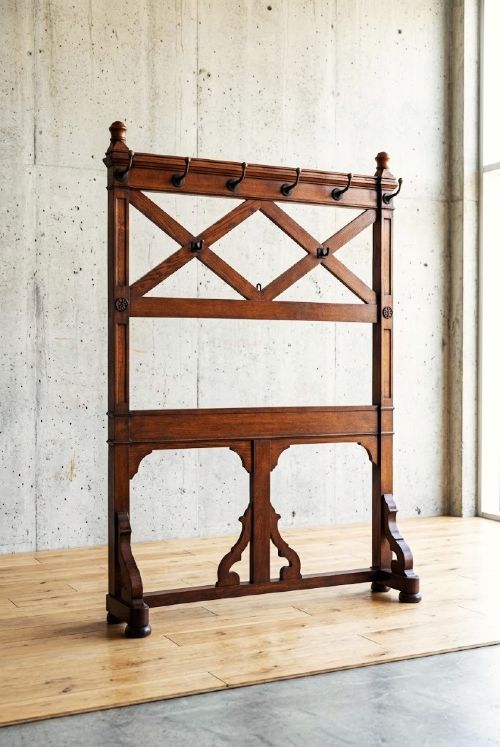
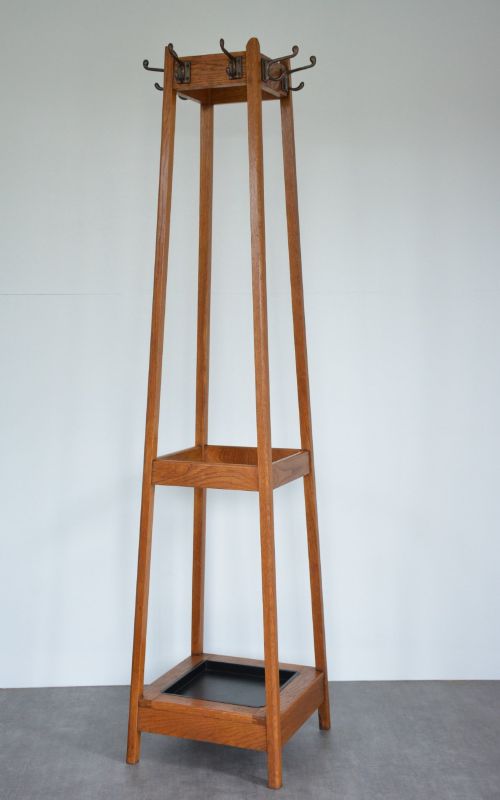
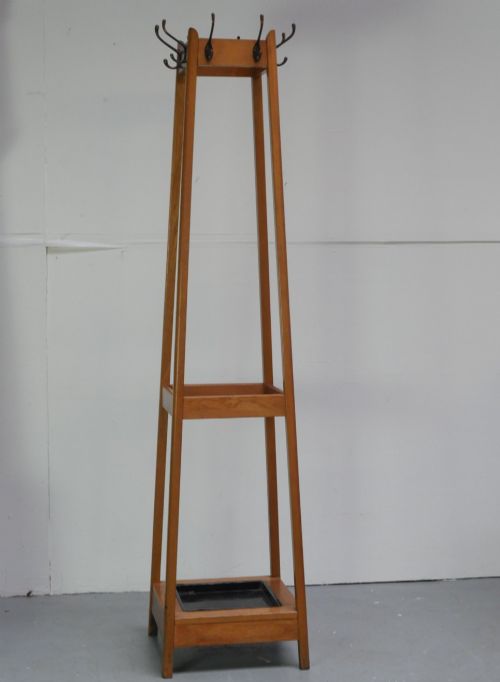
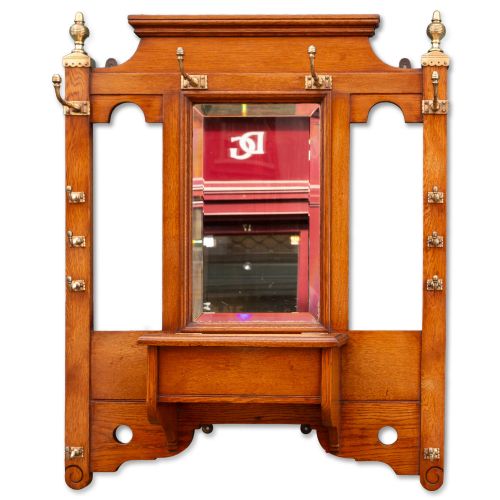
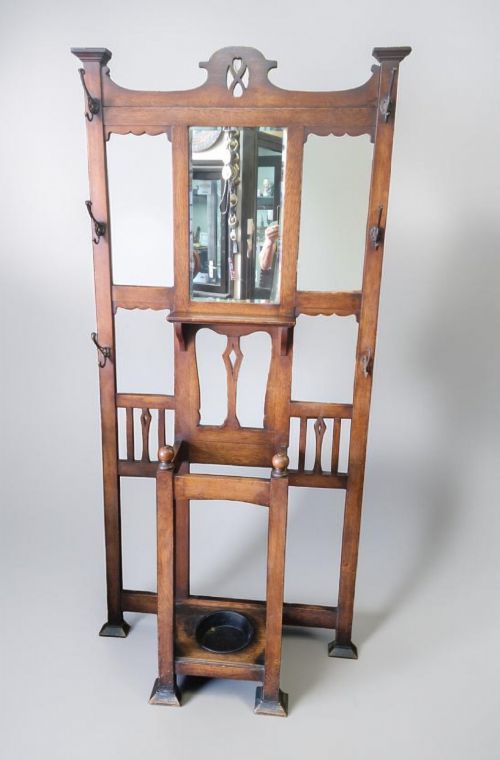
An oak hat tree serves as a practical hallway fixture designed to suspend garments, hats, and umbrellas while grounding the entranceway in timber. When you search for an oak hat tree, you encounter sturdy freestanding furniture and wall-mounted variations spanning the nineteenth and twentieth centuries.
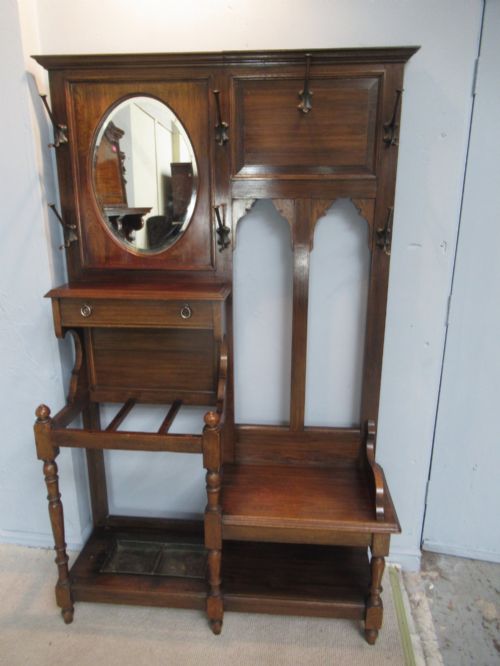
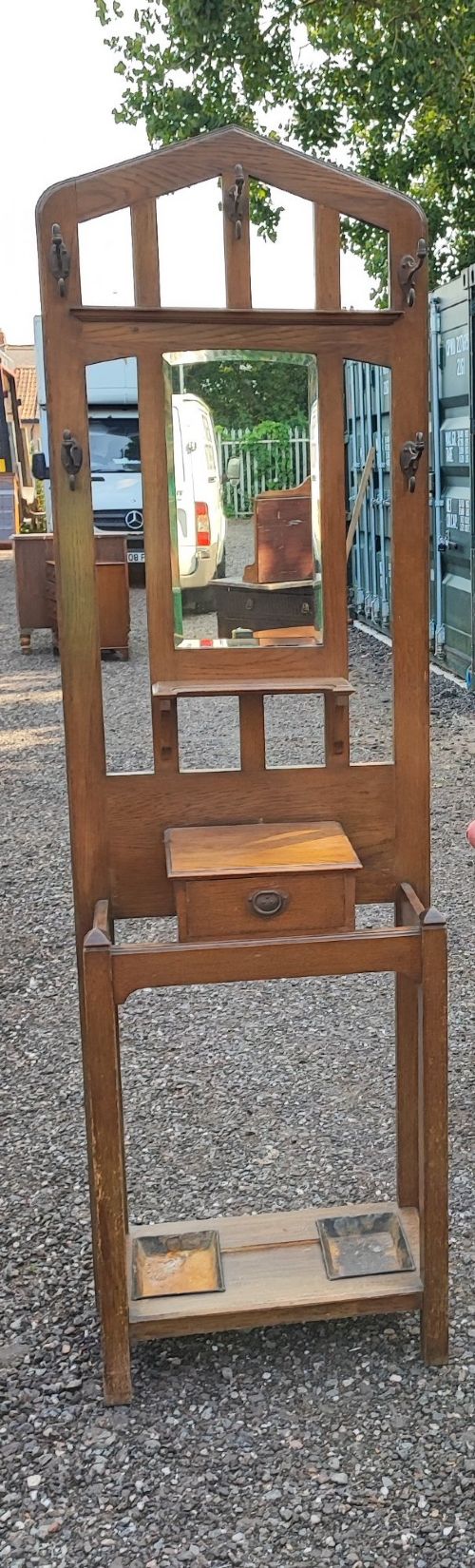
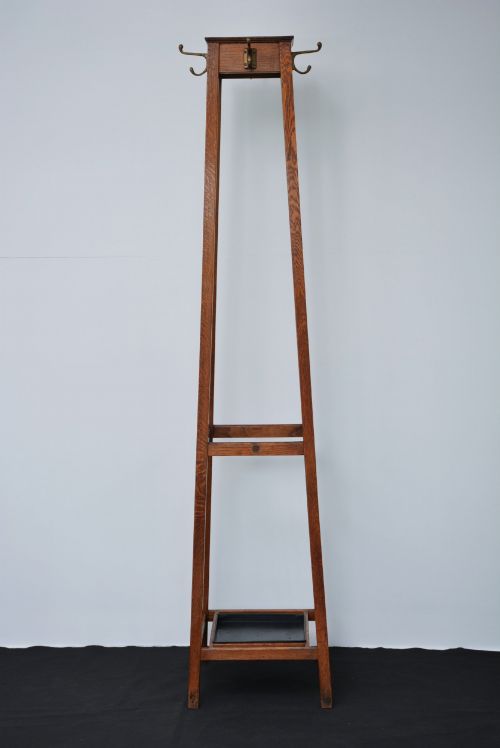
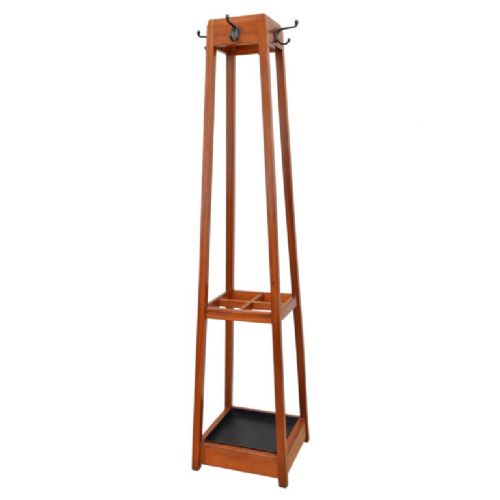
The pieces on this page lean heavily towards Victorian, Edwardian, and Arts and Crafts iterations. Forms range from revolving stands and modest wall racks to monumental carved hallstands incorporating mirrors and umbrella trays.
Origins stretch across English workshops, continental European studios, and Flemish designs. The prevailing aesthetic relies on substantial timber framing shaped to meet domestic hallway demands.
Materials and construction
Solid oak forms the primary structural body of these stands, often selected in golden or darker carved variations. Workshops utilised brass, cast iron, and metal for coat hooks, hinges, and drip trays.
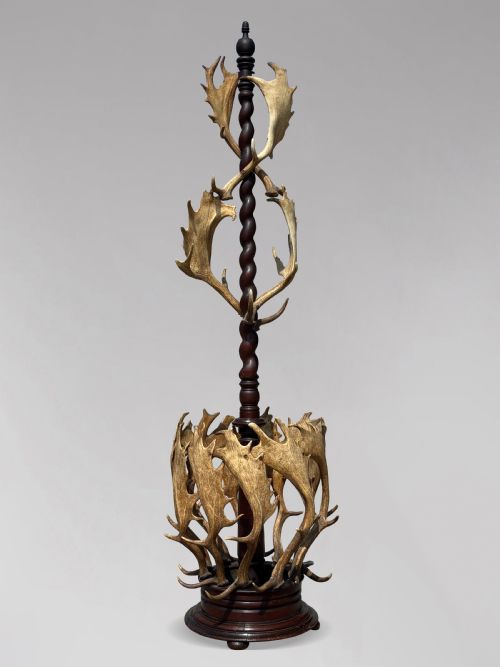
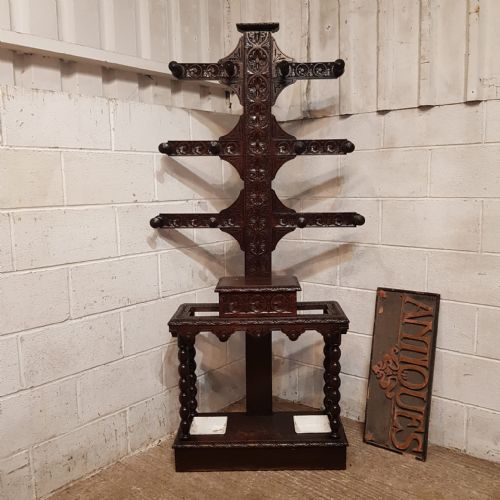
Accents of horn, glass, and marble appear on specific regional or period examples to enhance utility and visual contrast. Carvers applied deep relief work, depicting natural motifs such as Green Man faces or botanical details into the timber.
Listings feature oak combined with unexpected materials including cow horn, glass, and marble across Victorian and Edwardian periods.
Standards of craftsmanship
Quality reveals itself in the structural integrity of the timber joints and the weight of the oak utilised. Superior examples maintain balance and stability even when fully laden with heavy coats.
Carving depth and clarity distinguish exceptional pieces from simpler utilitarian items. The integration of original brass hardware, intact mirror plates, and functional drip trays elevates a piece's standing.
J. Parker of Woodstock·Astrola·Fischel·William Whiteley
The Oak Hat Tree Glossary
- Hallstand
- A composite hallway furnishing combining coat hooks, a hat shelf, an umbrella holder, and frequently a central mirror. It anchors the entrance hall.
- Green Man
- A sculptural motif depicting a human face disgorged from foliage, common in Victorian carved oak furniture. It draws on medieval architectural traditions.
- Arts and Crafts
- A design movement prioritising handcraftsmanship, simple structural forms, and vernacular materials. It rejected mass-produced industrial ornamentation.
- Drip tray
- A metal or ceramic basin positioned at the base of a stand to catch moisture from wet umbrellas. It protects the surrounding wooden floorboards.
- Revolving stand
- A rotating framework allowing easy access to multiple coats and hats arranged around a central axis. This mechanism required precise engineering.
Oak Hat Tree: Frequently Asked Questions
How do I secure a heavy oak hat tree?
Freestanding examples rely on a broad, heavy base or umbrella wells to maintain balance on level flooring. Placing heavier garments evenly around the stand prevents tipping during daily use.
Wall-mounted racks require firm fixing into solid masonry or stud work using appropriate brackets to bear the load of winter coats.
Are these stands suitable for small hallways?
Many period pieces, including narrow nineteenth-century hallstands and wall-mounted racks, suit compact entrance spaces without obstructing movement. Revolving designs also utilise vertical space efficiently.
Selecting a model without bulky umbrella wells reduces the floor footprint while retaining hanging capacity.
How do I maintain the oak finish?
Dust the carved timber regularly with a dry cloth to prevent grime accumulation in deep recesses. Apply a traditional beeswax periodically to nourish the grain and maintain a soft sheen.
Avoid placing damp garments directly against untreated timber surfaces for extended periods to prevent water marking.
What is the difference between an Edwardian and Victorian stand?
Victorian stands typically feature heavier, darker oak with elaborate carvings, Green Man motifs, and Gothic or Flemish influences. They project a sense of monumental presence.
Edwardian pieces often embrace lighter oak tones and simpler Arts and Crafts lines, favouring functional geometry over dense ornamentation.