








Oak Hall Bench Chest
These oak hall bench chest examples combine seating and storage in heavy timber, offering a practical entryway piece that collectors prize for period carving.

Oak Hall Bench Chest
An oak hall bench chest serves as a dual-purpose entryway furnishing, combining a wooden seat with an integrated storage compartment beneath. When searching for an oak hall bench chest, buyers encounter items varying from monastic settles to hinged coffer seats.
The pieces appearing on this page span several centuries and revival movements, stretching from 18th century Flemish craftsmanship to Victorian and Edwardian interpretations. Victorian Gothic Revival and Jacobean Revival pieces dominate the selection, bringing heavy architectural moulding and panelled construction into domestic hallways.
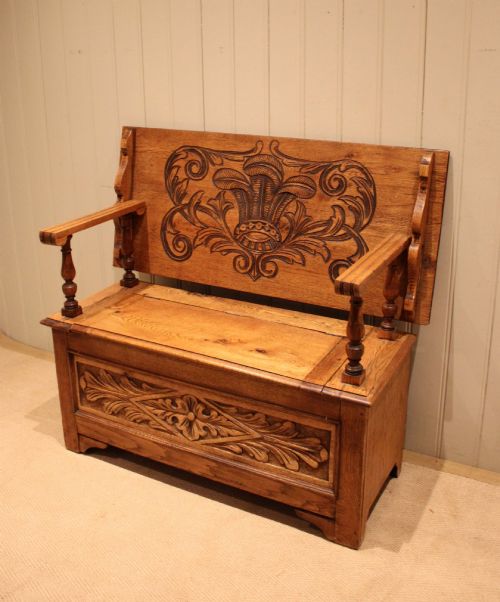
Makers utilised solid timber and incorporated hinged lids, straight backs, and folding tabletops that transform a settle into a table. The resulting forms function equally as hall seats, monks benches, and blanket chests within traditional interiors.
Materials and construction methods
Solid oak provides the structural foundation for these pieces, selected for its dense grain and durability in high-traffic hallways. Craftsmen joined panels using traditional framing methods to accommodate the natural movement of the timber over decades of use.
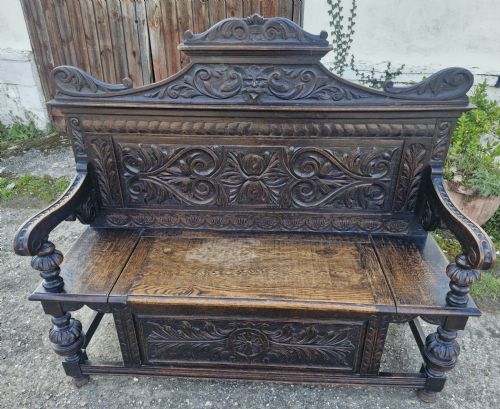
Iron and brass hardware, including hinges, latches, and decorative mounts, secure the lids and folding components of the storage compartments. Carving work ranges from geometric panel moulding to elaborate figures such as Green Man motifs and Flemish scrollwork.
Oak Hall Bench Chest Retail Price Guide 2026
Typical asking prices for oak hall bench chest among the pieces listed under this phrase on Sellingantiques today, from the lower quarter to the upper quarter. They describe what is for sale here now, not the wider market.
Listings feature solid oak combined with iron and brass hardware, spanning periods from the 18th century through to the 1930s.
Factors that separate examples
The depth and crispness of the hand-carving distinguish standard production items from superior workshop output. Sharply defined relief work on panel fronts and armrests indicates skilled joinery rather than later machine routing.
The integrity of the timber and the retention of original hardware influence the overall character of each piece. Examples preserving their authentic hinges, patinated solid oak surfaces, and original structural joins hold greater interest for collectors.
Lambs Manchester
The Oak Hall Bench Chest Glossary
- Settle
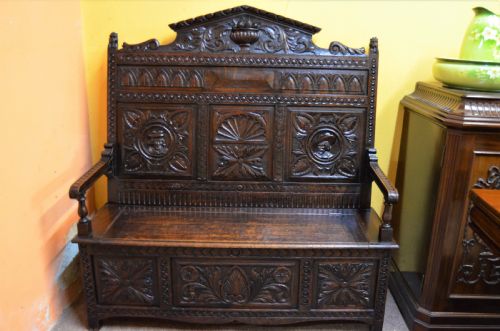
- A wooden bench with a high back, solid arms, and a box seat underneath for storage. This form kept draughts away from people sitting in unheated hallways.
- Monks bench
- A convertible seat featuring a hinged back that folds down flat to form a table surface. It combines a chest base with a multi-functional top.
- Coffer
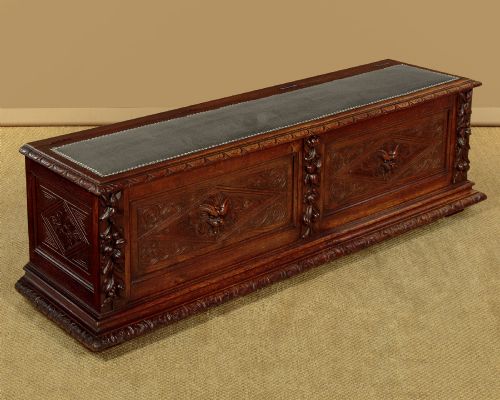
- A heavy wooden chest used for storing valuables or textiles, frequently adapted with a backrest to serve as a hall seat. It forms the storage foundation of many bench designs.
- Green Man
- A sculptural architectural ornament depicting a human face surrounded by or sprouting from foliage. This motif appears frequently on Victorian and revival carved panels.
- Jacobean Revival
- A 19th-century design style copying the heavy geometry, strapwork, and dark finishes of 17th-century English furniture. Makers utilised these motifs to give Victorian pieces an antique appearance.
Oak Hall Bench Chest: Frequently Asked Questions
What is a monks bench?
A monks bench is a convertible furniture piece that operates as both a storage chest with a seat and a table. By pivoting the high backrest forward, the top rests flat upon the arms to create a flat surface.
Craftsmen built these items primarily from solid oak, providing a compact unit suitable for hallways and smaller living spaces where dual functionality mattered.
How do I date an oak hall settle?
Dating relies upon examining the construction marks, timber patination, and stylistic revival cues present in the framework. Earlier 18th-century examples display hand-split panels and pegged joints, whereas Victorian and Edwardian revival pieces show machine-sawn elements and standardised hardware.
Design motifs also offer clues, as Gothic Revival and Renaissance Revival details point directly to 19th-century workshop revivals rather than the Tudor or Stuart periods.
Were these benches used in hallways?
Historical hall benches provided a secure spot for storing outdoor garments, boots, and blankets while offering a seat for guests. Their heavy oak construction prevented them from sliding on stone or tiled entrance floors.
The enclosed chest base kept contents free from dust and dampness typical of unheated period entryways.
What does Green Man mean?
The Green Man is a decorative carving motif representing a face made of or sprouting leaves, vines, and branches. It symbolizes rebirth and springtime in architectural and furniture design.
Victorian craftsmen frequently incorporated this imagery into the backrests and panels of revival oak seating to impart a sense of age and folklore.